Top Diabetic Vision Researcher: I Found The Real Reason Your Eyes Keep Getting Worse — Even When Your Blood Sugar Is Good
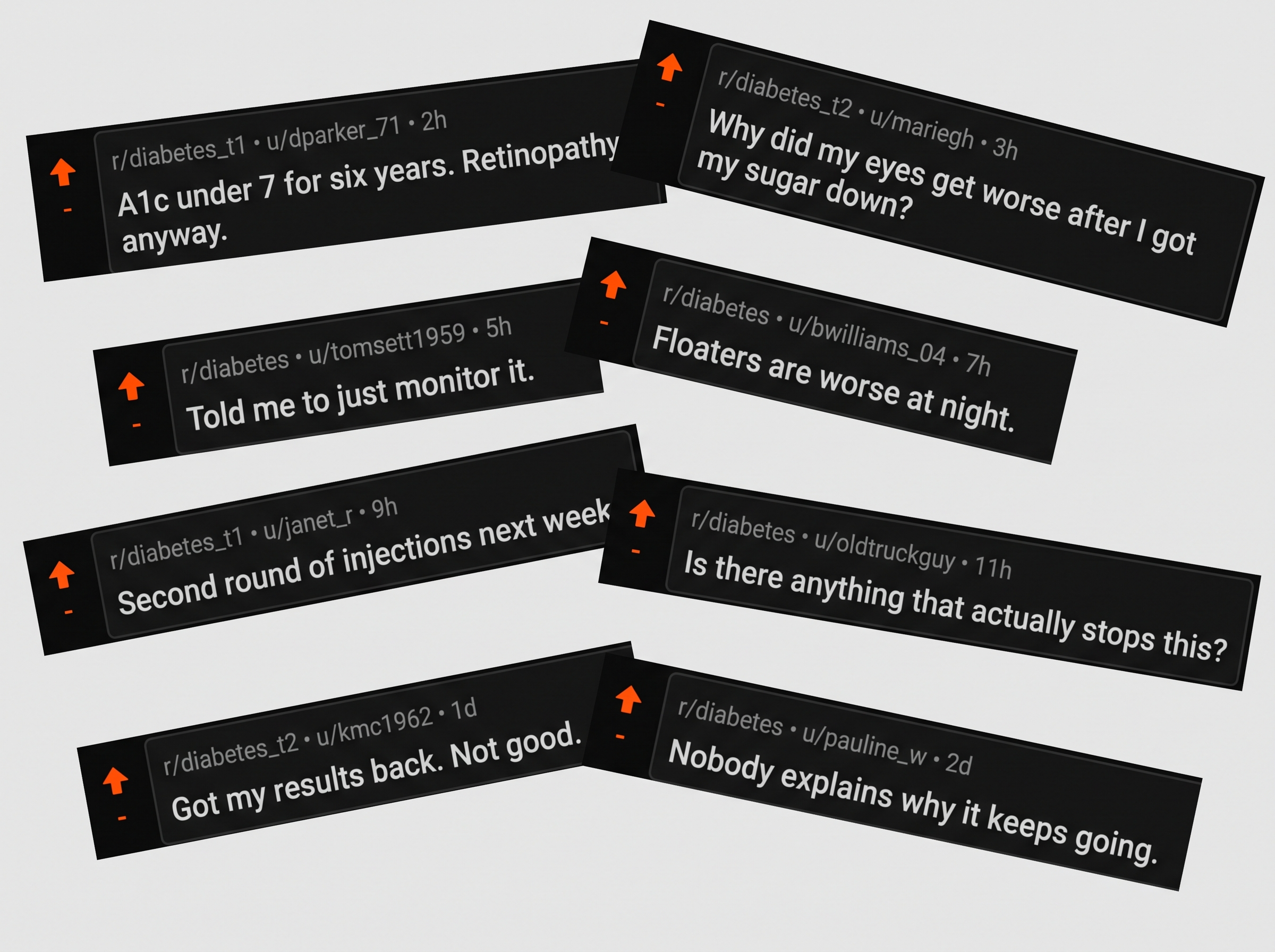
We were all failing for the same reason. I studied 38,204 diabetics with retinopathy — and it explained the one thing the injections and the eye vitamins quietly never touch.

I was diagnosed with type 2 at forty-one. I did what they told me. All of it.
I lost thirty-two pounds. I cut the carbs. I checked my sugar twice a day for eleven years and wrote every number in a spiral notebook, because that is the kind of person I am.
My A1c sat at 6.4 for six straight years. My doctor used the word "textbook."
And on a Tuesday morning in a dark little room, a retina specialist looked into my eyes for about ninety seconds and told me I had moderate non-proliferative retinopathy in both of them.
I asked him what I had done wrong.
He said — and I have never forgotten the flatness of it — "Nothing. Sometimes it just progresses. We'll monitor it."
That was the whole appointment. Eleven years of notebooks, and the answer was we'll watch it get worse.
I went home and sat in my truck in the driveway for a long time. My daughter was pregnant with my first grandchild. All I could think about was whether I would be able to see her face.
Nothing I had done had mattered.
Then I went looking — and found 38,204 people living the exact same story.
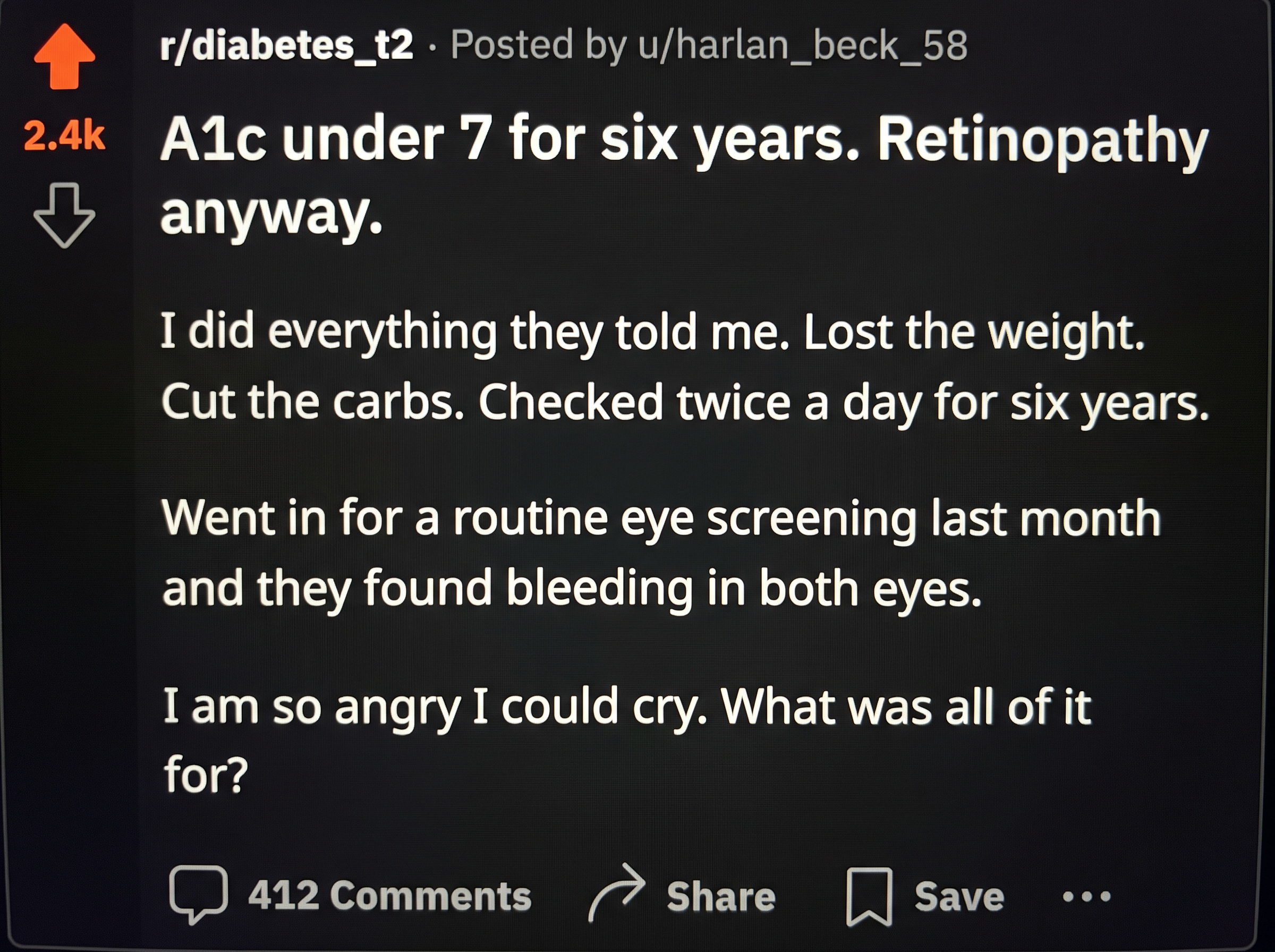
I opened that thread at eleven at night expecting the usual advice. Watch your diet. Take your lutein. See your specialist every six months.
Instead I saw thousands of people using my exact words:
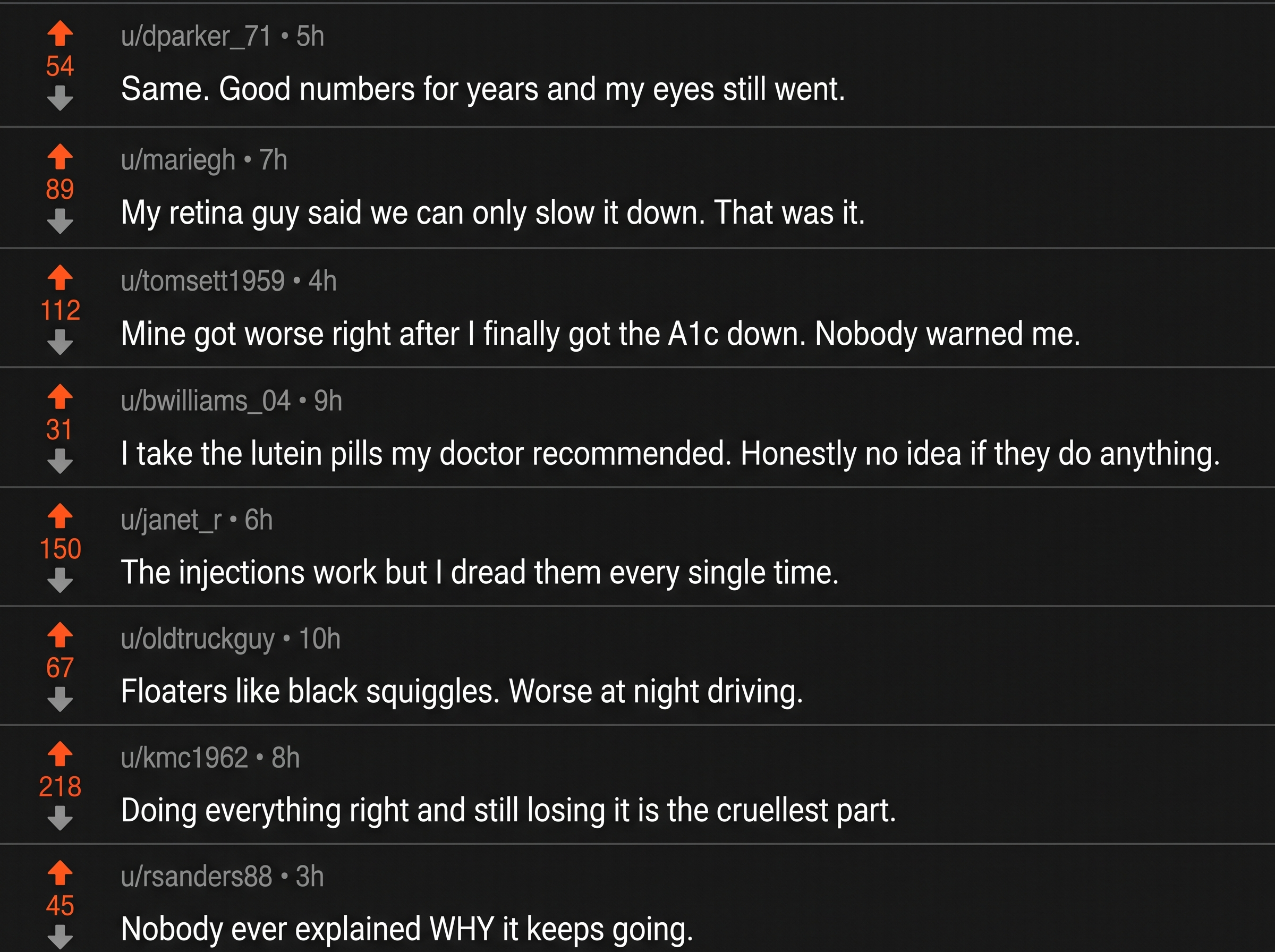
Different ages. Different histories. Type 1, type 2, thirty years in, three years in. But they all described it with the same words.
Not similar words. The exact same ones.
"Good numbers for years and my eyes still went." Over and over and over. And buried four hundred comments deep, one reply that reorganised everything I thought I knew.
Then I Saw Something That Made No Sense
No pitch. No links. Just a few tired lines from someone who had clearly stopped expecting anyone to listen.
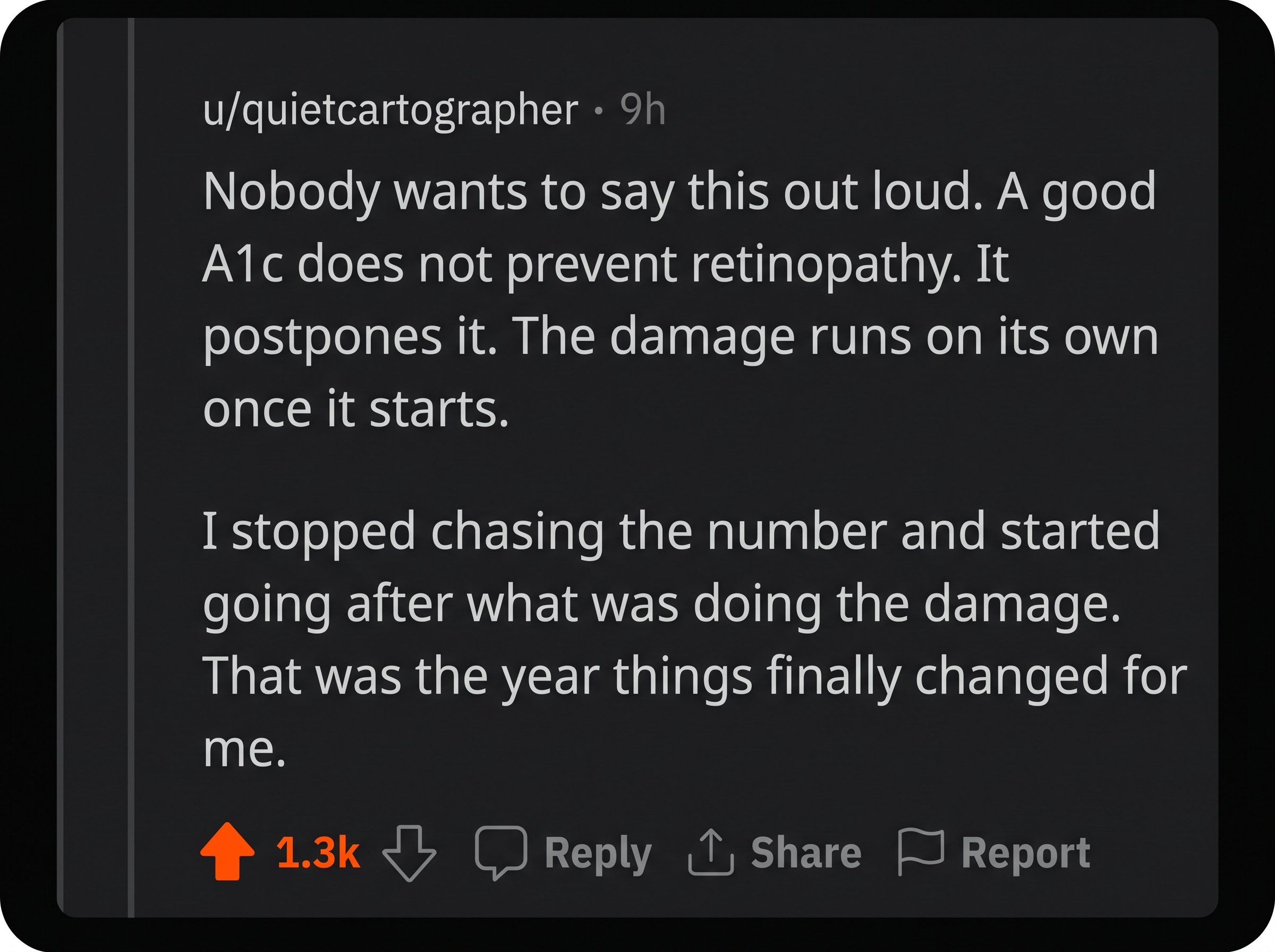
I read it maybe fifteen times.
Postpones it. Not prevents it. Postpones it.
If that were true, then getting my sugar down was never going to be enough on its own — because something else was still running. Something my A1c could not see and my specialist was not measuring.
I had spent eleven years chasing a number. Nobody had ever told me the number was not the damage. The number was just the fuel.
At 2 a.m. I found the research. And it changed everything.
It Wasn't Your Fault. It Was Biology.
What I found in the literature had a mouthful of a name — glyco-oxidative vascular damage. After a year of explaining it at kitchen tables I started calling it what it actually looks like under a microscope: Sugar Rust.
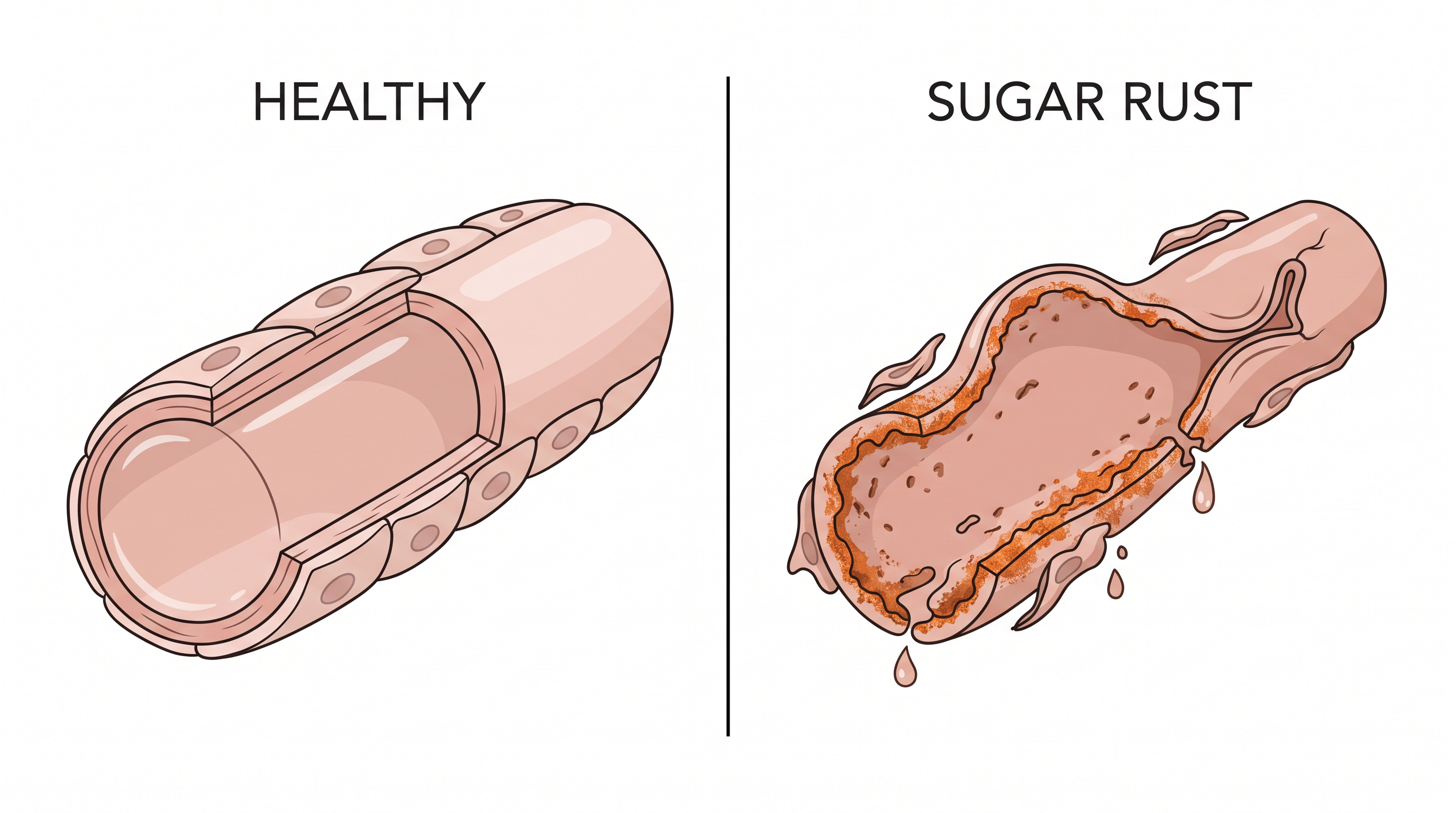
Your retina is fed by blood vessels finer than a human hair. Years of high sugar throw off a constant spray of free radicals inside those vessels. They corrode. Like a pipe rusting from the inside.
And here is the part nobody says out loud: rust does not stop when the water is turned off. Once the corrosion is under way it keeps running on its own chemistry — which is exactly why your eyes kept slipping the year your A1c was finally perfect.
The Three Things Sugar Rust Was Doing — Simultaneously
1. It kills the scaffolding first
Every tiny vessel in your retina is wrapped in support cells called pericytes. They are the hoops on the barrel. Oxidative damage kills them off years before you notice a single symptom — and once the hoops are gone, the vessel wall goes soft.
2. Soft vessels leak, then choke
A soft-walled capillary bulges and weeps fluid into the retina. That is the smear, the blurry patch, the floaters. Then the most corroded ones close off entirely, and the tissue behind them starts to suffocate.
3. The panic signal — and why everything you've been given misses
Starved retina screams for new blood supply. It gets fragile, badly-built vessels that bleed. This is where the whole industry finally shows up: injections quiet that panic signal. Laser burns off the starving tissue. Pigment pills sit in the macula filtering light. Every one of them arrives at step three. Not one of them touches the rust at step one.
One upstream problem. Three visible symptoms. And an entire category of products aimed at the smoke instead of the fire.
What Didn't Work — And Why
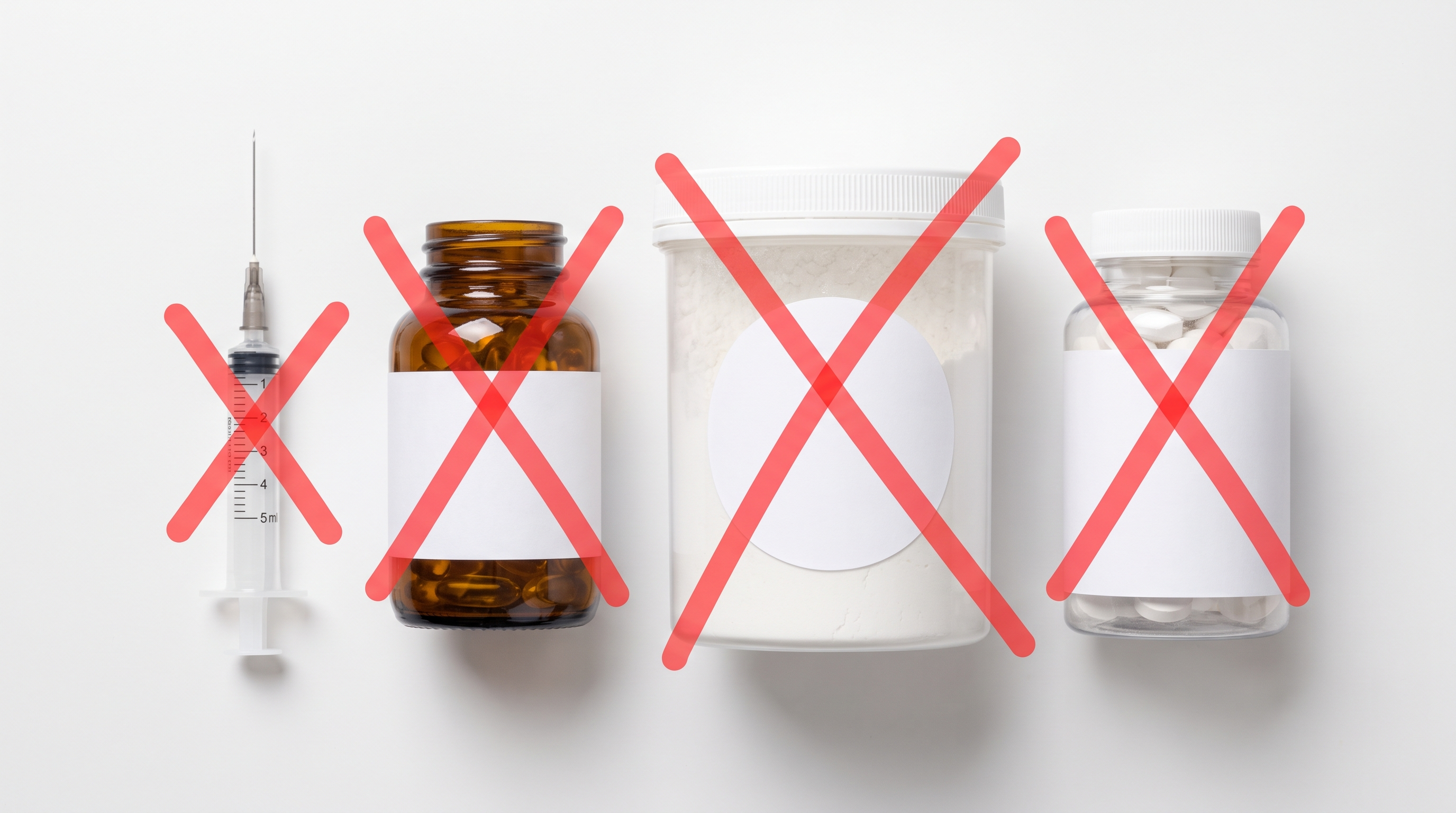
The injections. They are real medicine and I am not telling anyone to refuse them — they can save sight that is actively being lost. But they intercept a distress signal after the damage is already done. That is why it is never one. It is one every six to eight weeks, indefinitely, at $1,200 to $1,800 a year, and 27% of patients quit over the cost and the dread alone.
The lutein and zeaxanthin "eye formulas." Fifteen ingredients, a doctor's shrug, $45 a bottle. Those pigments deposit in the macula and filter light. That is genuinely all they do. It is tinting the windshield while the engine burns. The most telling detail I found in the whole category: the leading diabetic-specific eye brand advertises that its formula does not affect blood sugar. They are proud of missing the cause.
The cheap alpha-lipoic acid off the shelf. This one made me angry, because it was so close. ALA is the right molecule. But nearly every bottle sold is racemic — a 50/50 mix of R-form and S-form. Your body makes and uses the R. The S is a synthetic mirror image that came along for the ride during manufacturing because separating them is expensive. Half of what you paid for does not fit the lock. And the pigment brands that do include ALA bury 50 or 150 milligrams of it under fourteen other things.
That is why "I tried ALA and felt nothing" is the most common sentence in this entire market. They never took it. They took half of it.
I Tried To Buy Exactly What I Needed. It Didn't Exist.
I knew what I wanted by then. Pure R-form. A real dose. Something absorbable.
I read labels for four months.
Racemic. Racemic. "Alpha lipoic acid complex." Racemic with a nicer font.
Two bottles claimed R-form and would not answer an email asking which isomer they tested for.
Nine hundred dollars of supplements went in my kitchen drawer.
So I stopped shopping and went back to the research.
What the studies used was never the shelf version. It was the stabilised R-(+) isomer — the bioactive half your body actually recognises — at a meaningful daily dose.
There is a reason nobody sells it cheaply. Isolating the R-form from the S-form is the single most expensive step in making this compound, and it is the first step every mass-market brand skips.
So I found a small formulation lab that specialised in chiral separation, and I drove there to watch them do it.
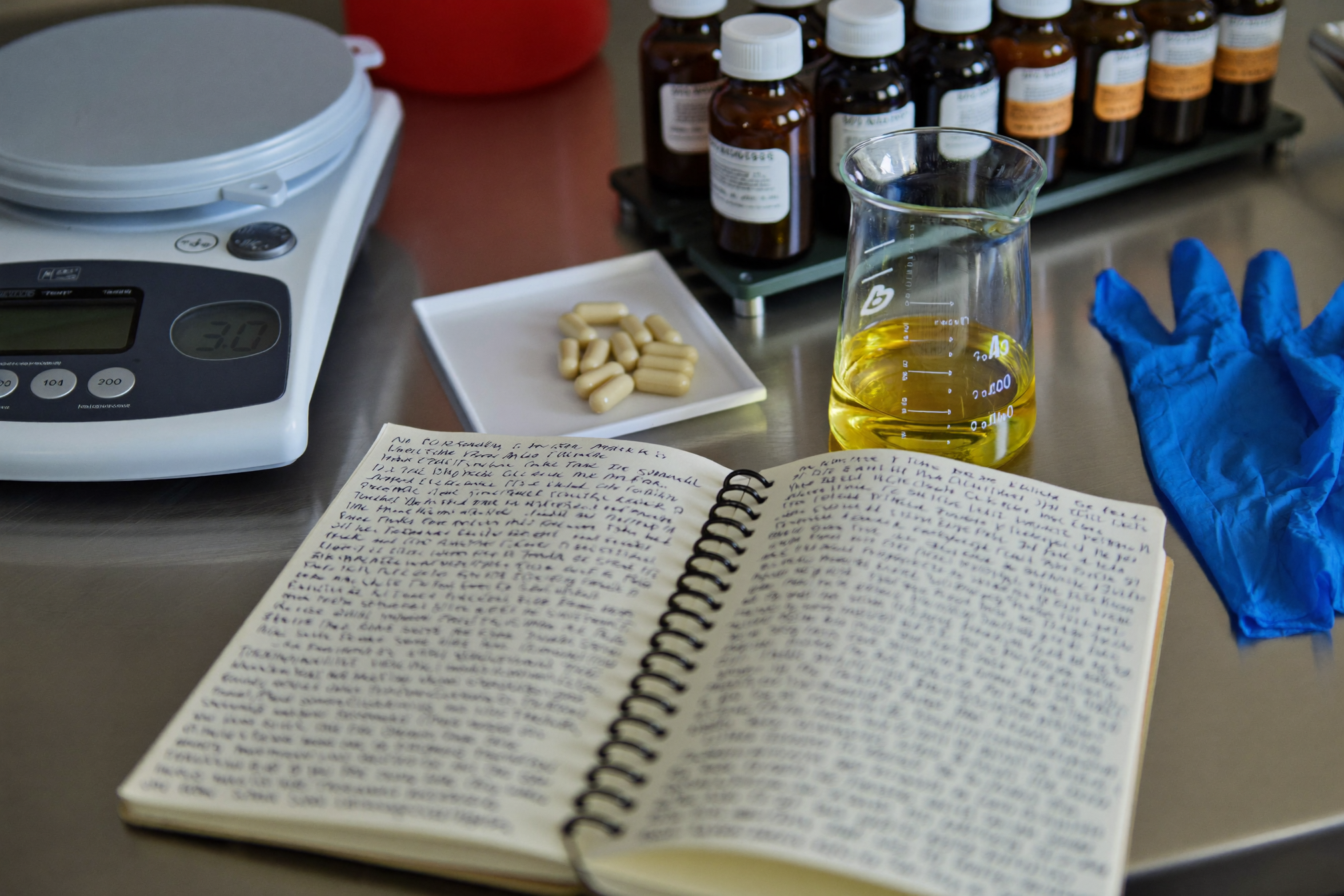
The first four batches failed. R-ALA is notoriously unstable — it degrades in heat, it clumps, it oxidises before it ever reaches you. That instability is the other reason the industry defaults to the racemic powder.
But it worked.
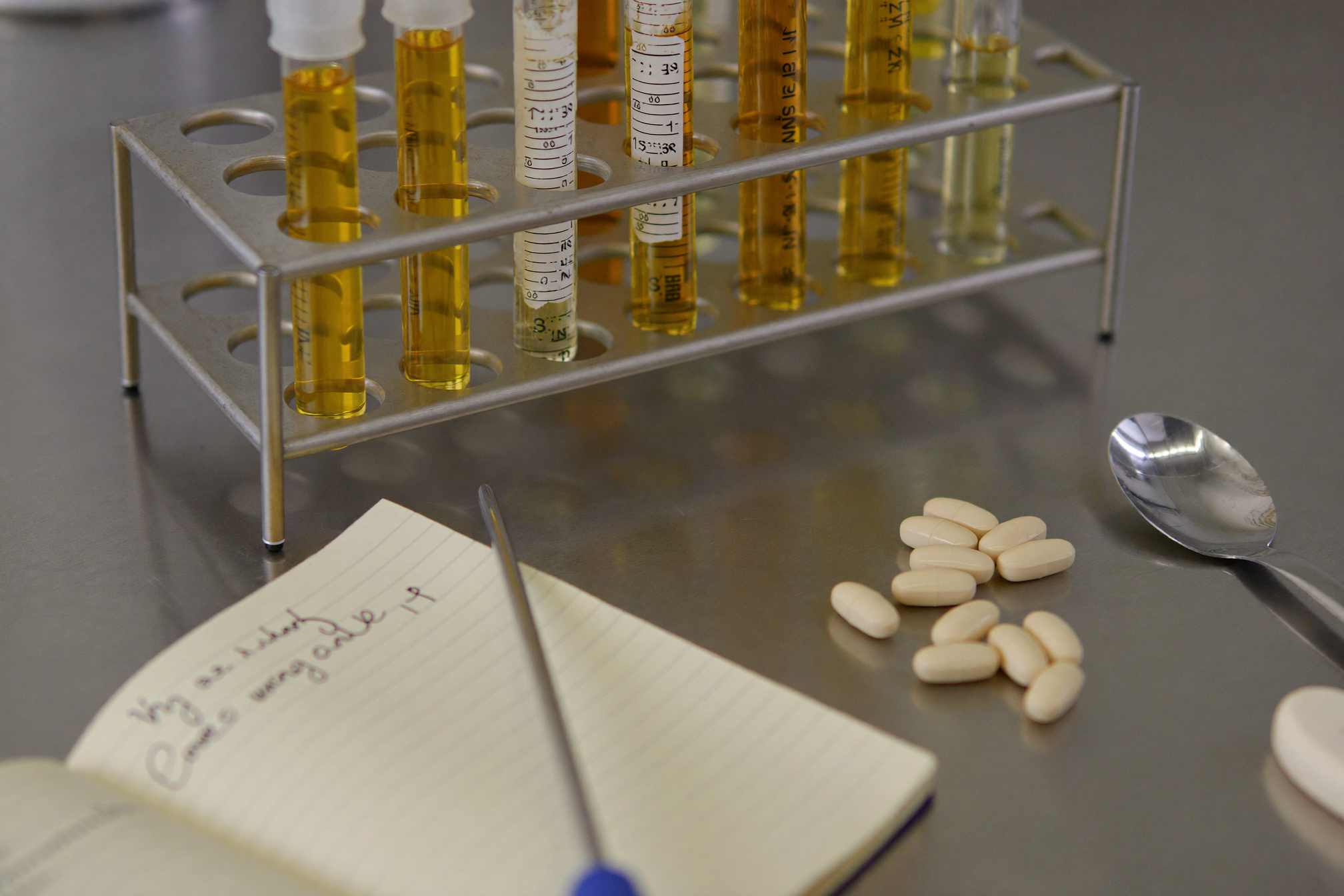
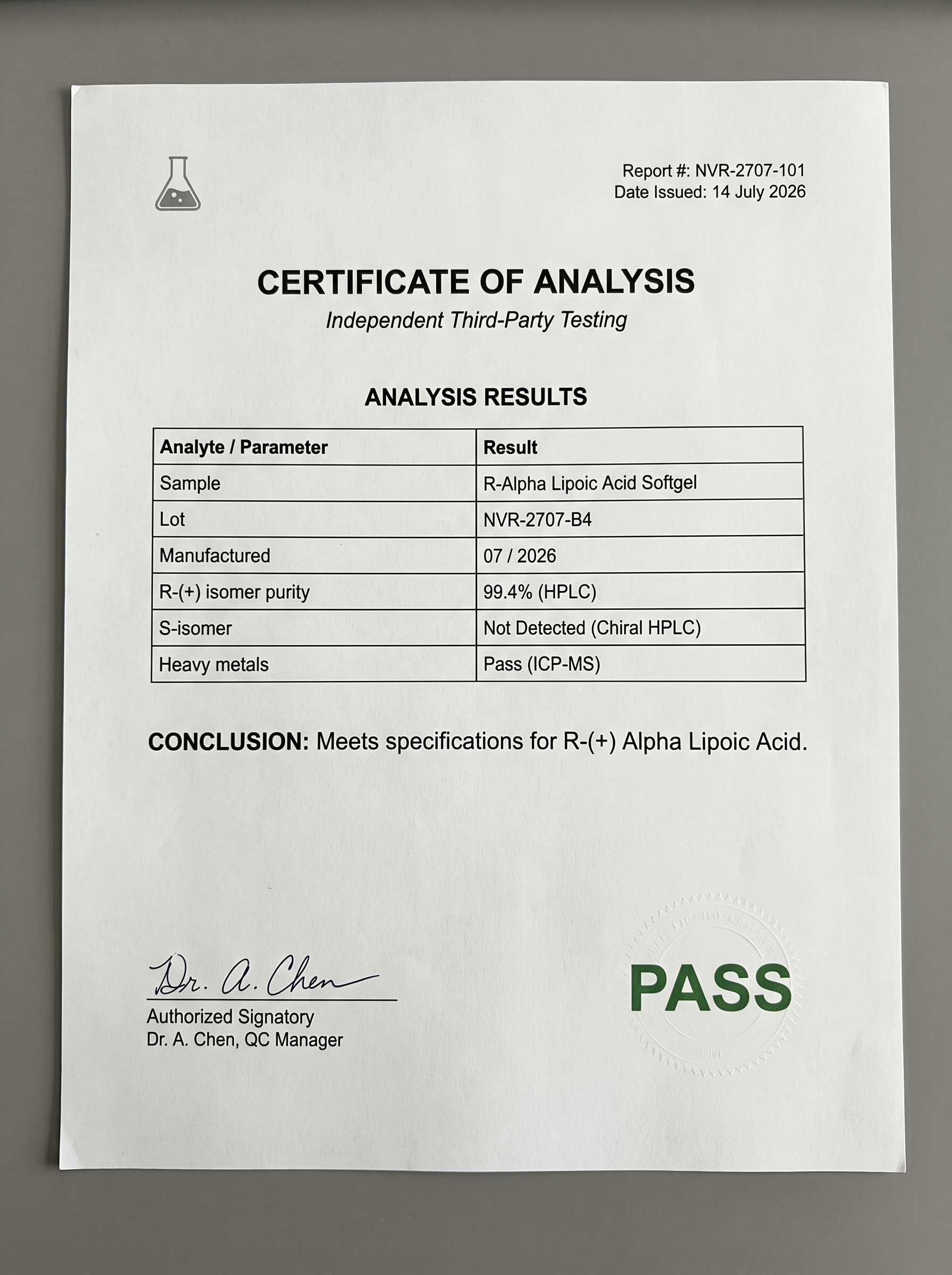
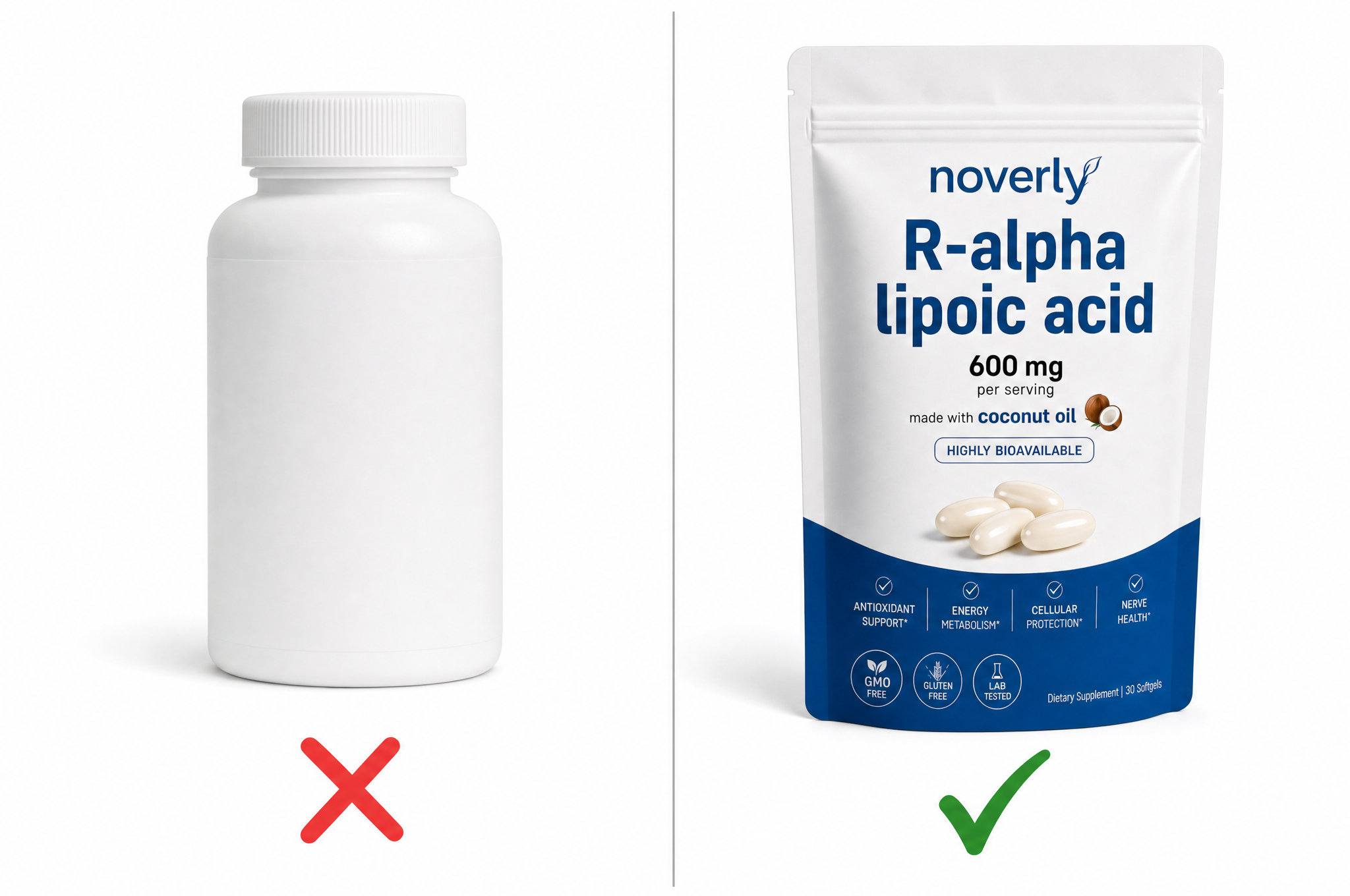
Pure R-(+) isomer. 600 mg per serving. Suspended in coconut oil, because it is fat-soluble and a dry powder in a capsule largely goes to waste. Every batch tested by an outside laboratory that does not work for us.
The Night I Finally Tried It. Changed Everything.
One softgel with dinner. That is the entire protocol. There is nothing else to it.
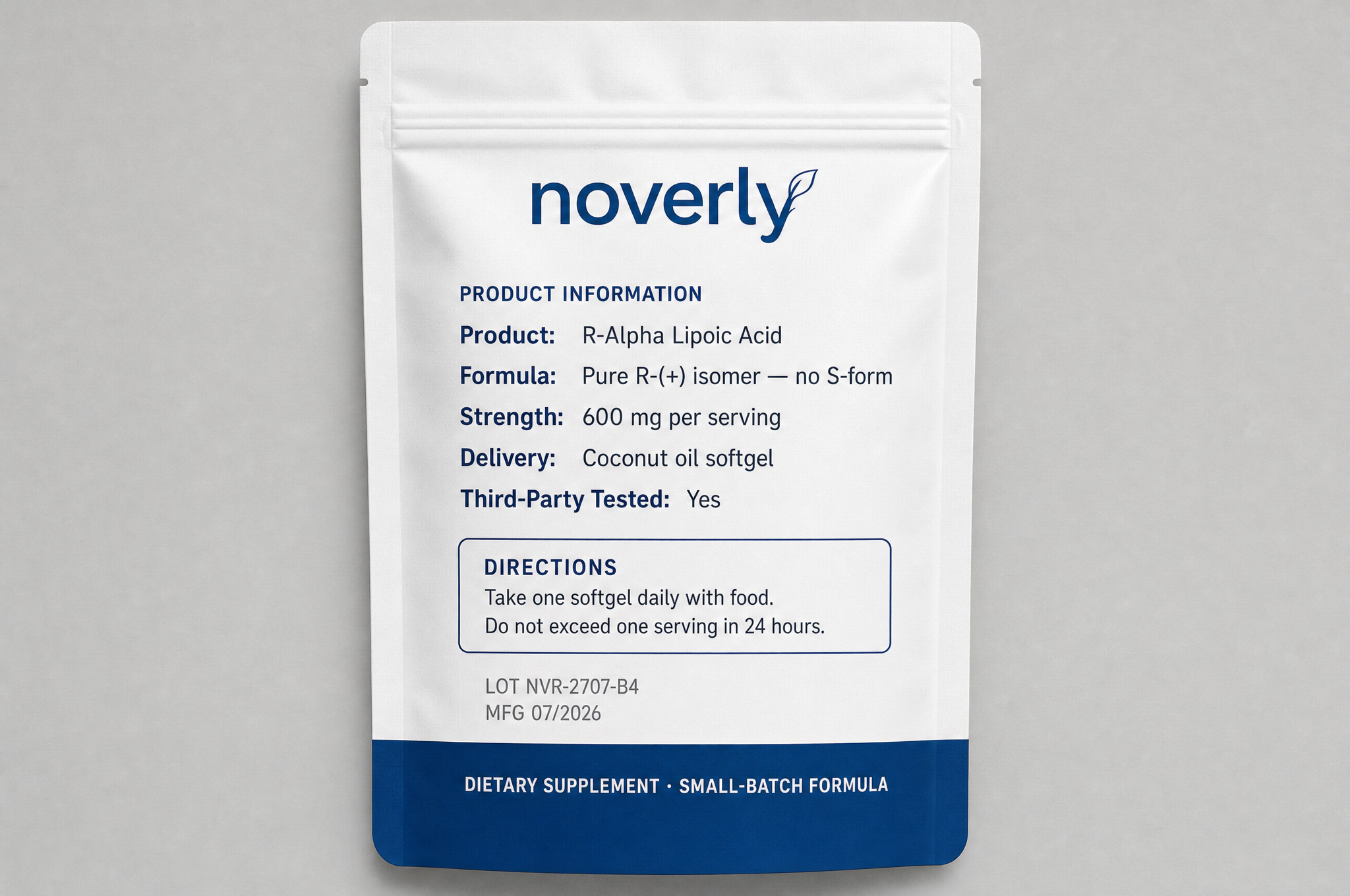
Honestly, nothing. I wrote "no change" three nights in a row and felt like a fool for hoping.

Mornings got easier. The first hour of the day had been a haze I had quietly written off as getting older. It thinned out.
I read a restaurant menu without turning on my phone light. My wife noticed before I said anything.
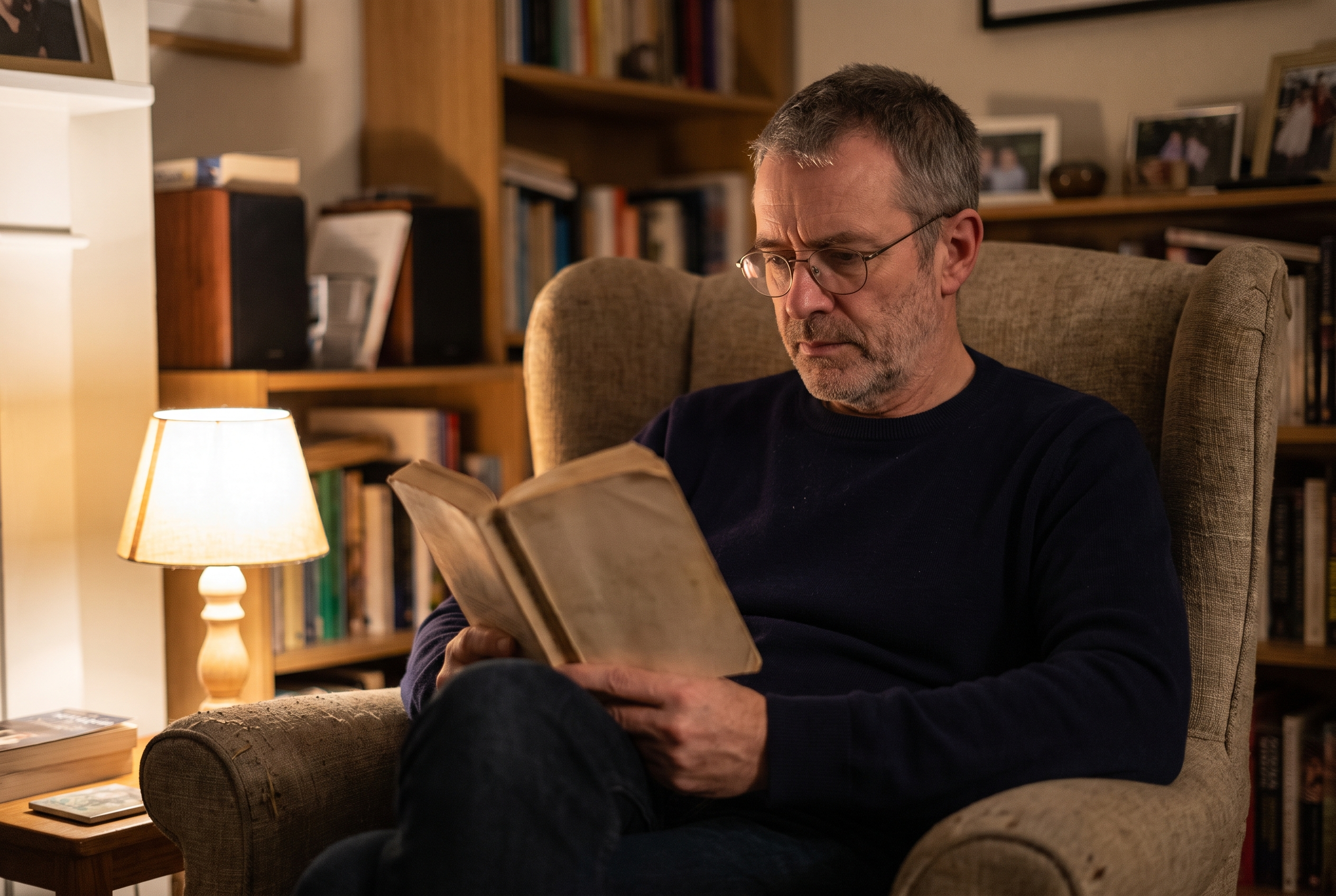
Headlights stopped starbursting the way they had for two years. I texted my daughter from a parking lot at nine at night: "I just drove here in the dark."
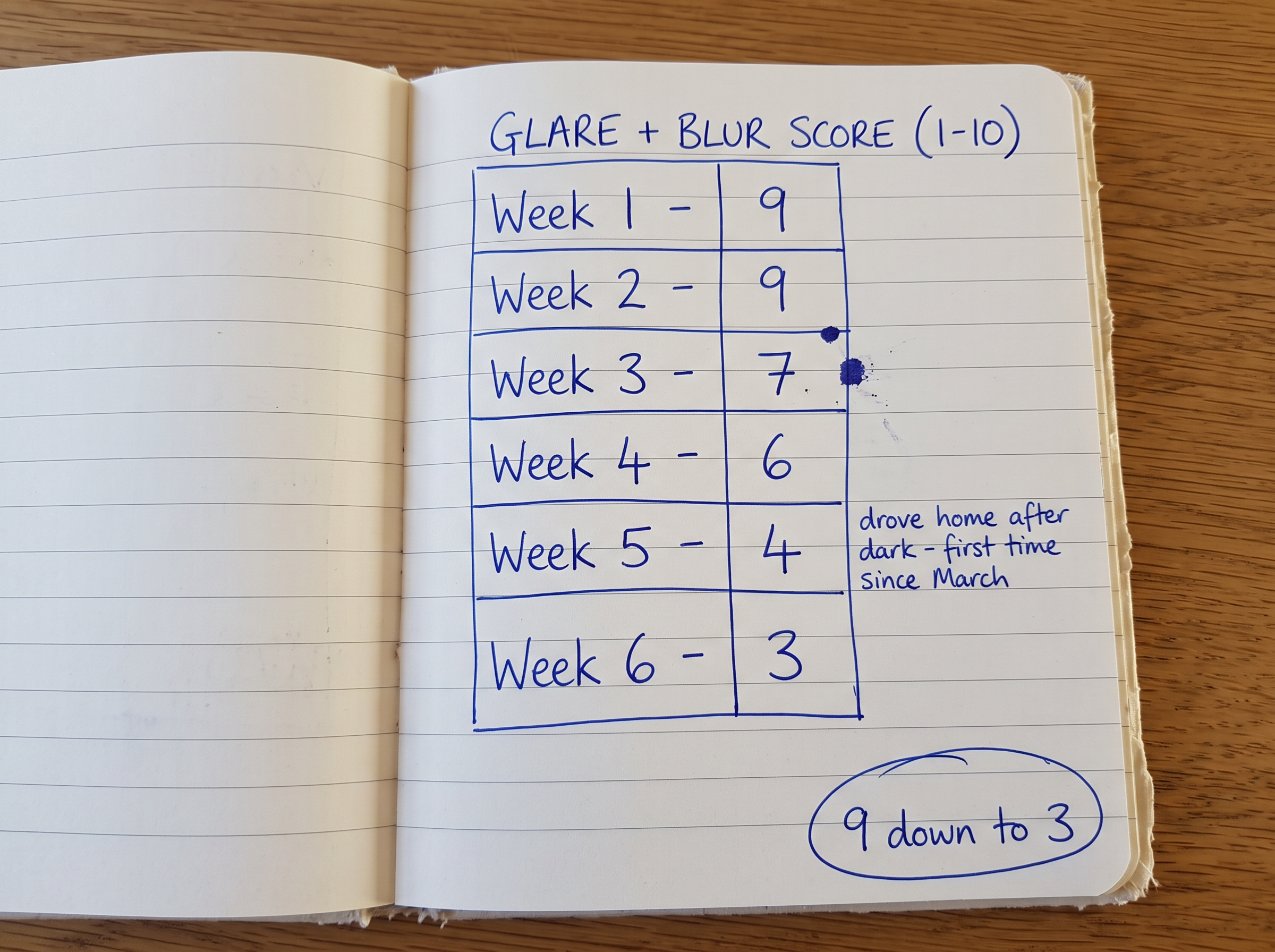
Eleven years of writing numbers in a spiral notebook, and I had never once tracked how my eyes actually felt. I started scoring glare and blur out of ten. It went from a 9 down to a 3.
You Can Get Your Independence Back. Forever.
I did not want to be another guy on the internet with a story. So I went back to the thread that started it and made everyone the only offer I would have believed myself.
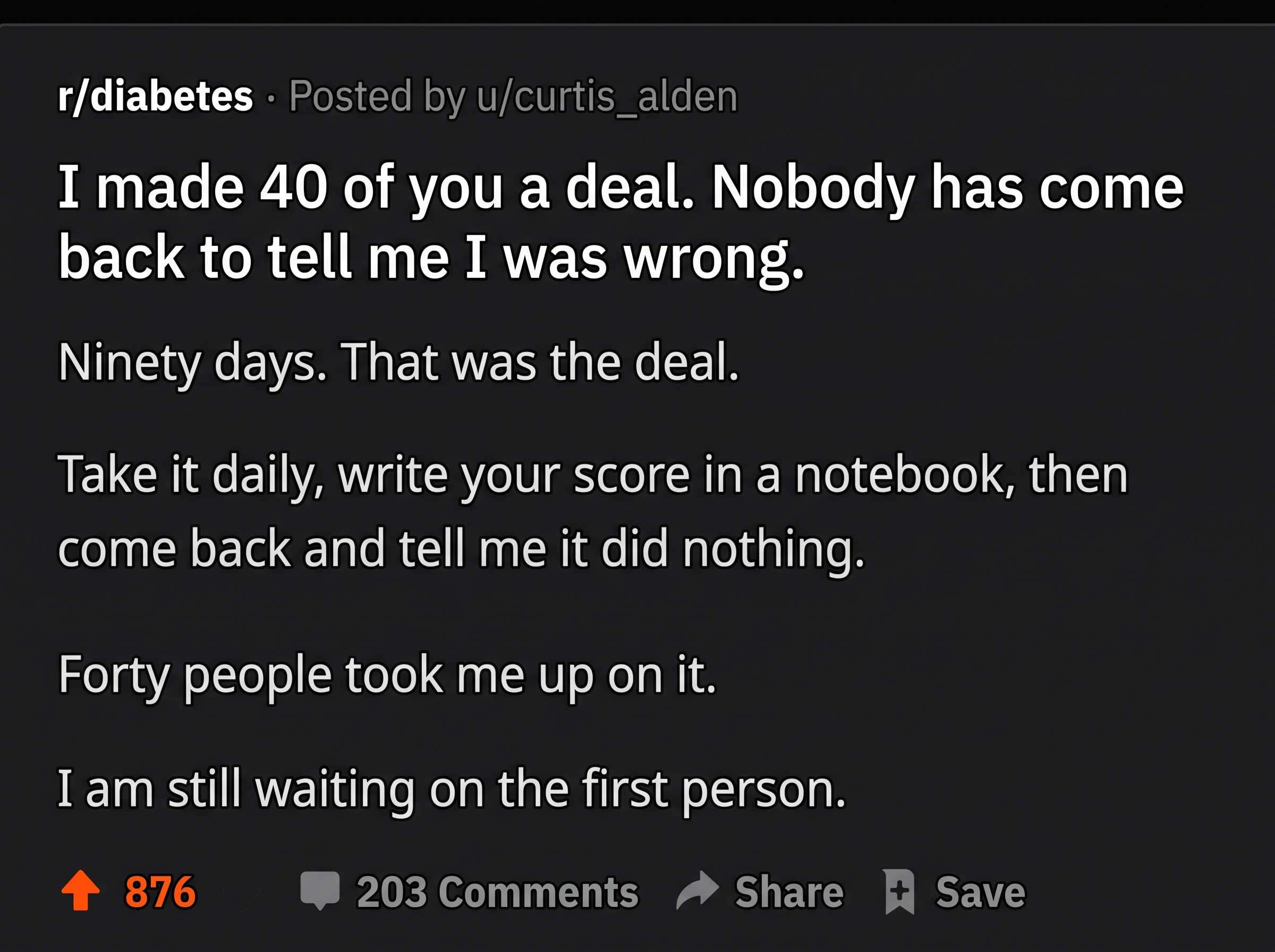
Forty people took the deal. Not one came back to tell me I was wrong.
What came back instead was the same story in different handwriting. The morning haze. The menu. The drive home in the dark. Then it was hundreds. Then it was thousands.
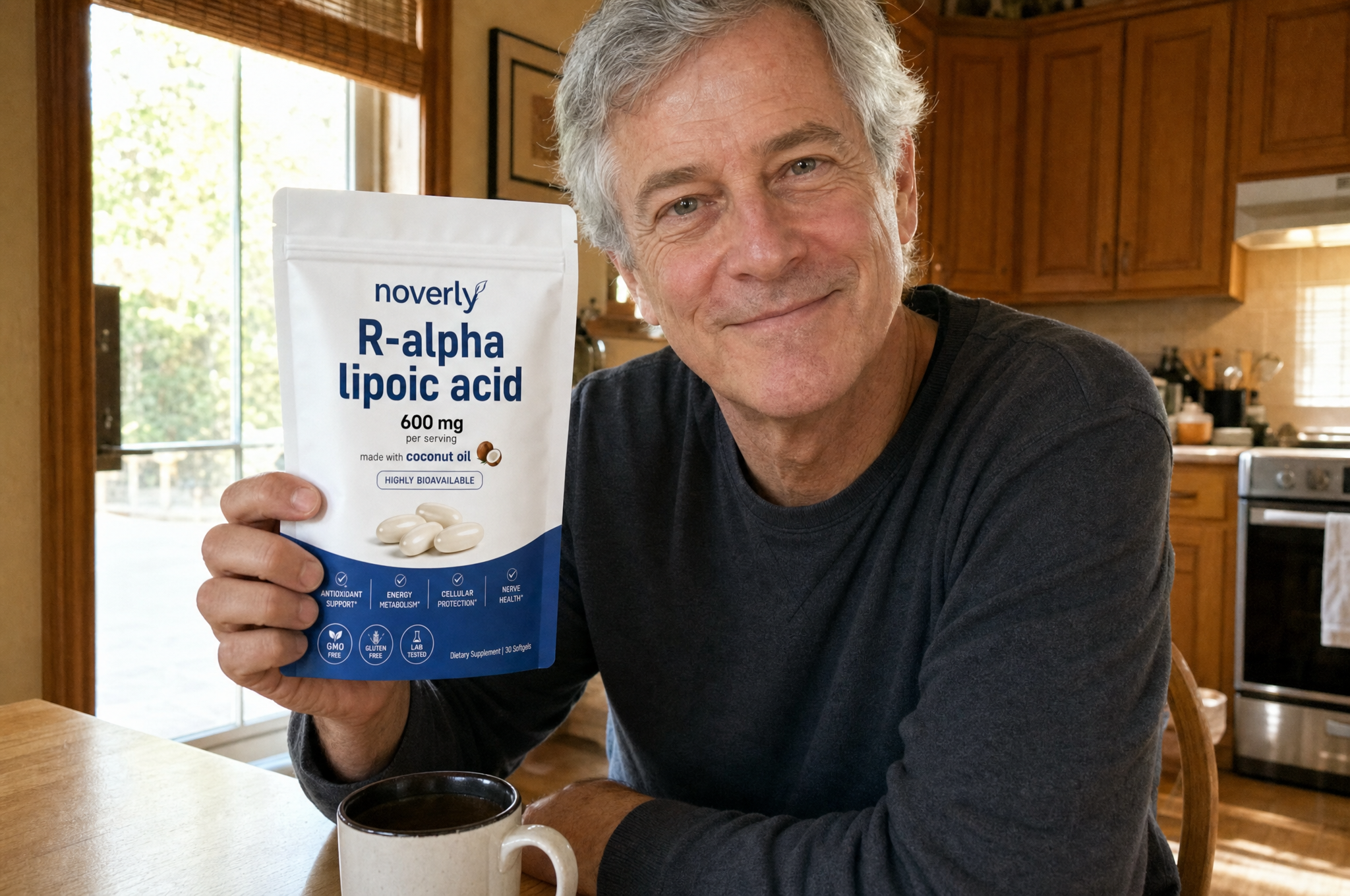
Don't Take My Word For It — Take Theirs
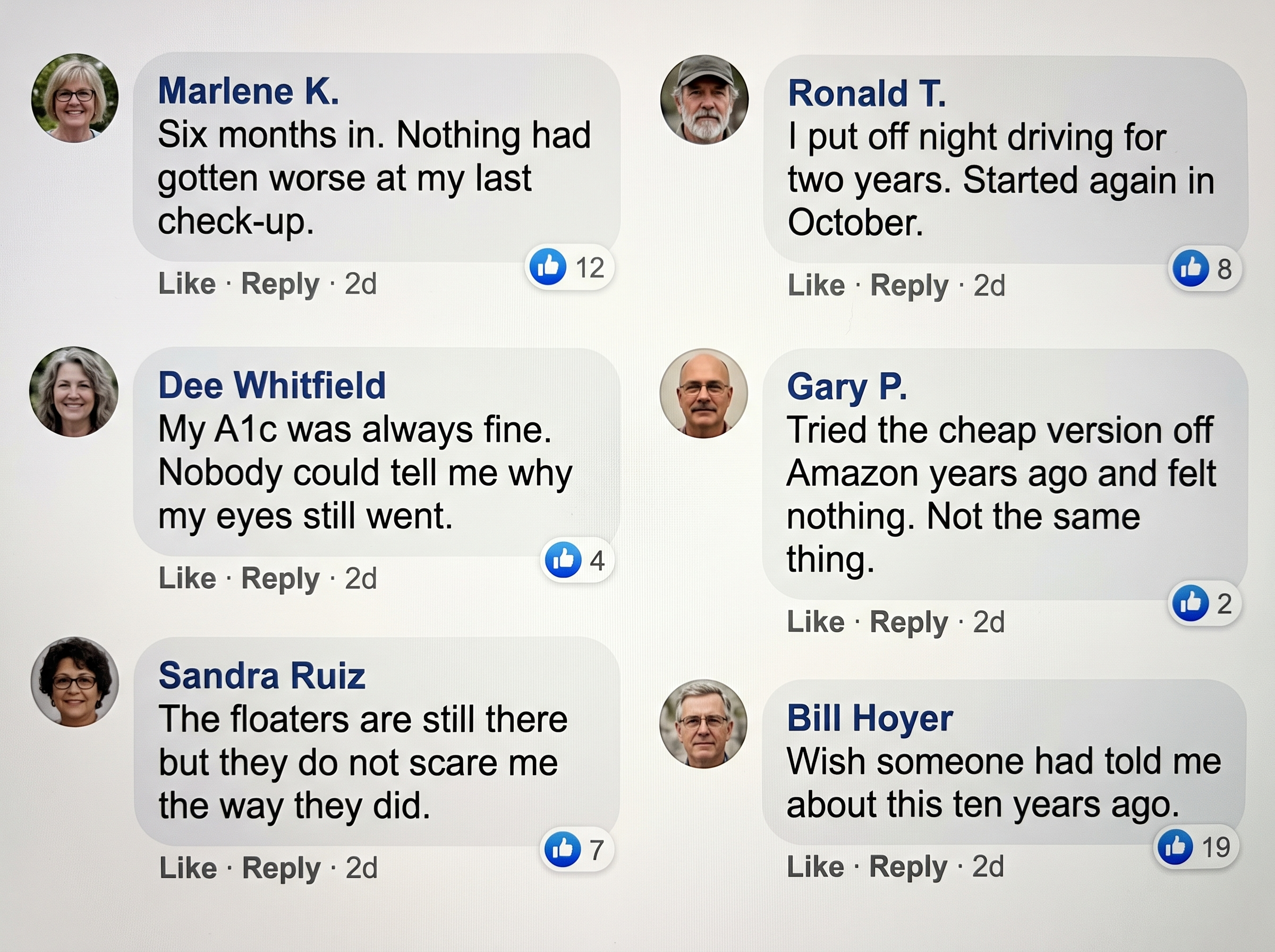
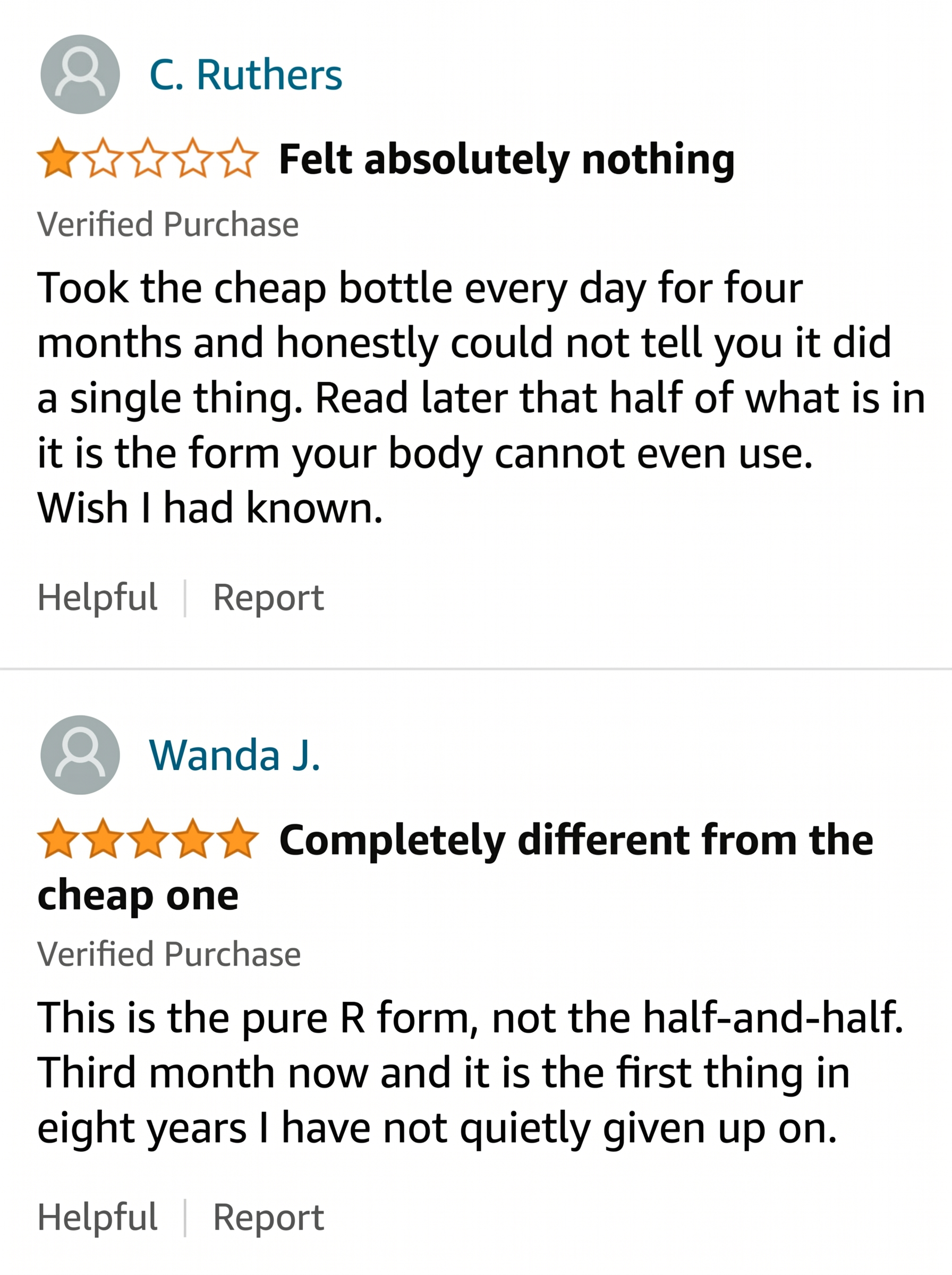

"My A1c has been good for nine years and my eyes still got worse every single check-up. Nobody could explain that to me. This finally did."

"I handed my wife the car keys two winters ago and told myself it was temporary. I drove us home from my son's place last Thursday, after dark."

"I was taking the lutein pills my eye doctor recommended and never once thought to ask whether they did anything about the blood sugar side. They don't."

"Tried alpha lipoic acid off Amazon back in 2019 and swore it was junk. Turns out I'd been taking the dead half for six months. Not the same product at all."
You Have Two Choices Right Now
Keep monitoring it
Another six-month appointment. Another "we'll keep an eye on it." The rust keeps working in the dark whether or not anyone measures it.
Test it for 90 days
Pure R-form at the studied dose, alongside everything your doctor already has you on. If nothing changes, you pay nothing.
I'm Not Selling You Hype. I'm Showing You What Worked.
Ninety days. If you feel no difference, you email us and every penny comes back — and you keep the pouch, empty or not. I do not want money from someone it did not help.
- Pure R-(+) isomer only — zero synthetic S-form filler
- The full 600 mg, not a fairy dusting buried in a 15-ingredient blend
- Suspended in coconut oil because it is fat-soluble and dry powder is largely wasted
- Every batch third-party tested — and we will send you the certificate
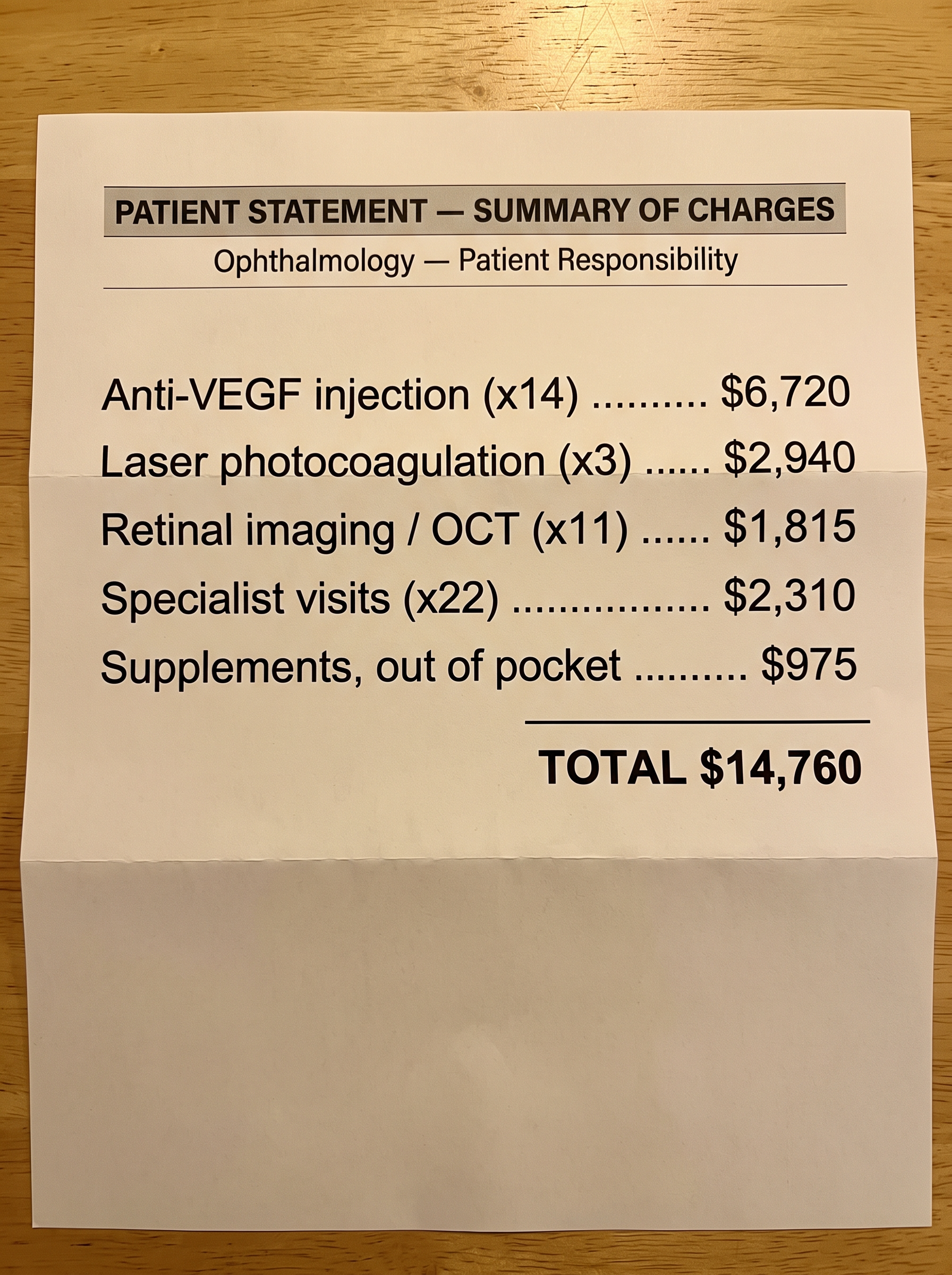
I have the itemised statement from those years in a folder. I keep it because it reminds me what "we'll monitor it" actually costs.
Here's Exactly What Happens When You Order
You pick your supply below and confirm. That is the whole thing — no consultation, no subscription trap.
It ships with tracking. Discreet box, no branding on the outside.
One softgel with your evening meal. Keep taking everything your doctor has prescribed. This sits alongside your care, it does not replace it — and if you take insulin or a sulfonylurea, tell your doctor you are starting this and keep monitoring, because it can affect blood sugar.
This is where most people write and tell us something. Usually it is the glare at night, or the first hour of the morning.
No difference? One email. Full refund. Keep the pouch.
One more thing: everyone gets the First Week Guide free — the six questions people ask us most, including exactly what to say to your eye doctor and why the timing of your dose matters.
That is it. No stack, no protocol, no thirty-day cleanse. Just the isomer that was studied, at the dose that was studied.
This Isn't Amazon. We Make Small Batches.
Two Questions To Ask Yourself
If the answer to both is no, here is the whole thing in one line:
If it doesn't work, you get your money back. If it does, you get your independence back.
That thread is still there. It still finds two or three new people every week — someone freshly out of a ninety-second appointment, sitting in their car, typing the same sentence I typed.
P.S. — People ask why we do not just mass-produce this and put it in every pharmacy. Because the expensive step is separating the R from the S, and that is precisely the step you have to skip to make it cheap. Skip it and you are selling the same half-dead powder as everyone else. We would rather make less of the real thing.
You've Been Burned Before. Here's Why This Is Different.
Ninety days. Full refund, any time inside that window, for any reason. Keep the pouch. You do not have to ship anything back and you do not have to explain yourself.
I know what it feels like to spend another sixty dollars on hope and then quietly put the bottle in the drawer with the others. I have a drawer like that. It cost me nine hundred dollars.
Of 38,204 people, 3 have asked for their money back. Either this does something for you, or you pay nothing. That is the entire deal.
So wherever you are right now — freshly diagnosed, or ten years in and tired of being told there is nothing to do but watch — you can be the next person that thread finds.
The night I first tried it, I almost didn't. It was sitting on the counter next to the salt and I remember thinking: this is the last thing I try, and when it does nothing I am going to stop looking.
My granddaughter is three now. Last month she held a drawing up to my face — close, the way they do — and asked me what colour the dog was.
I could tell her. That is the whole thing. That is all I wanted.
Maybe you are where I was: eleven years of doing it right, a folder of appointments, and a specialist who says nothing is wrong with how you have handled this and also nothing can be done. I would give yours the same ninety days I gave mine.
— Curtis Alden, Metabolic Vision Researcher & Educator
© 2026 Noverly · Terms · Privacy · Contact