Top TRT Researcher: I Found The Real Reason Your Blood Pressure And Cholesterol Keep Going The Wrong Way On Testosterone And Nothing Helps
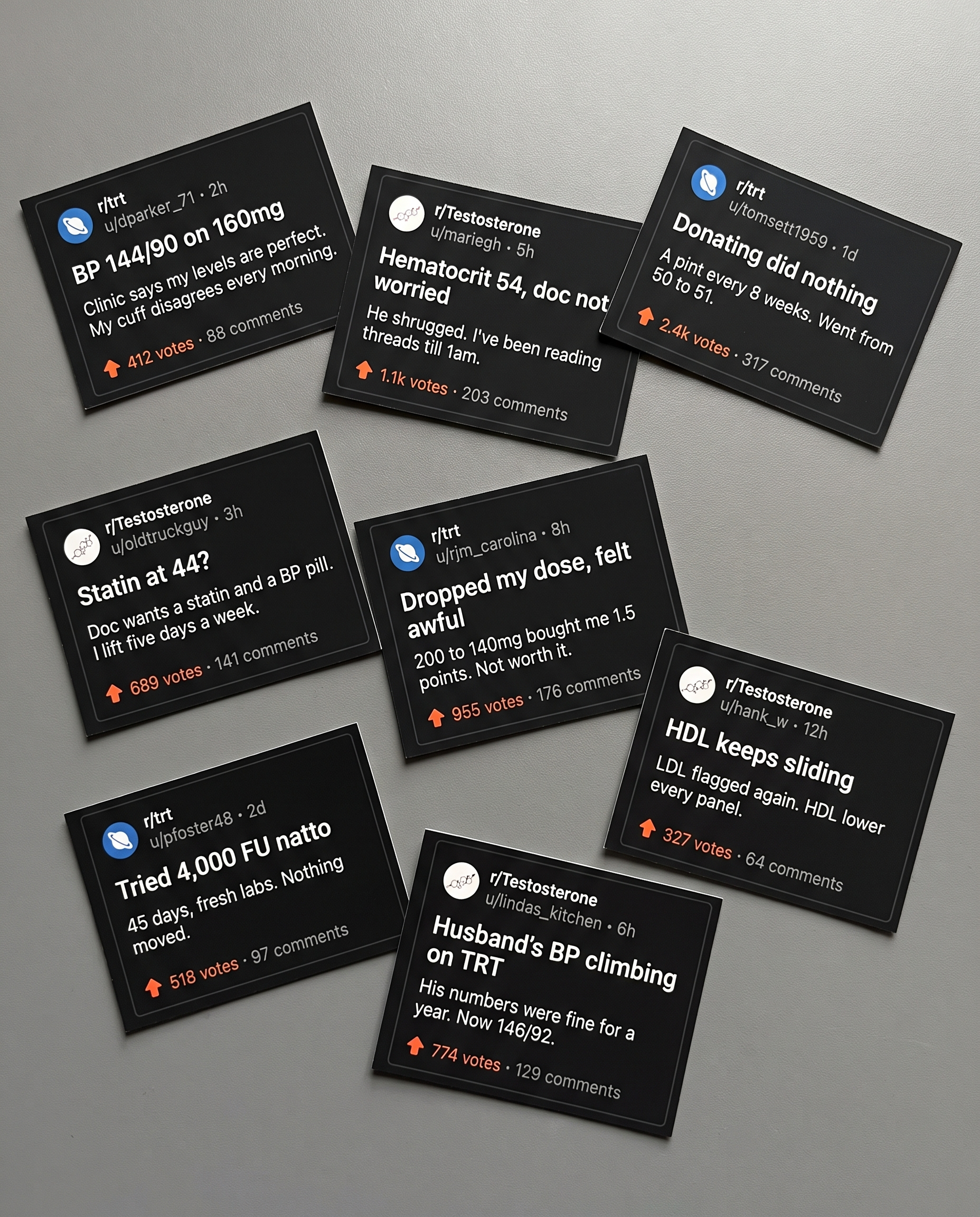
We all kept failing for the same reason. I studied 27,418 men on testosterone with climbing blood pressure and bad lipid panels — and it explained the one thing every statin, blood-pressure script and trip to the blood bank quietly misses.

Blood pressure that climbs every quarter on the testosterone that gave you your life back.
LDL flagged. HDL sliding. A hematocrit of 54 and a doctor who shrugs.
And a quiet fear that shows up every time the lab email lands.
Nothing works.
And I didn't understand why. It seemed like I was doing everything right — and my numbers only got worse.
I felt cheated. Like the one thing that fixed my life came with a bill nobody warned me about. Nobody gets what it does to you — how it takes over every lab day.
For everyone else it's a line on a lab report. For me it was the math I did at 1 a.m.
I felt exactly like that for two years. Until…
I found 27,418 men living the exact same numbers.
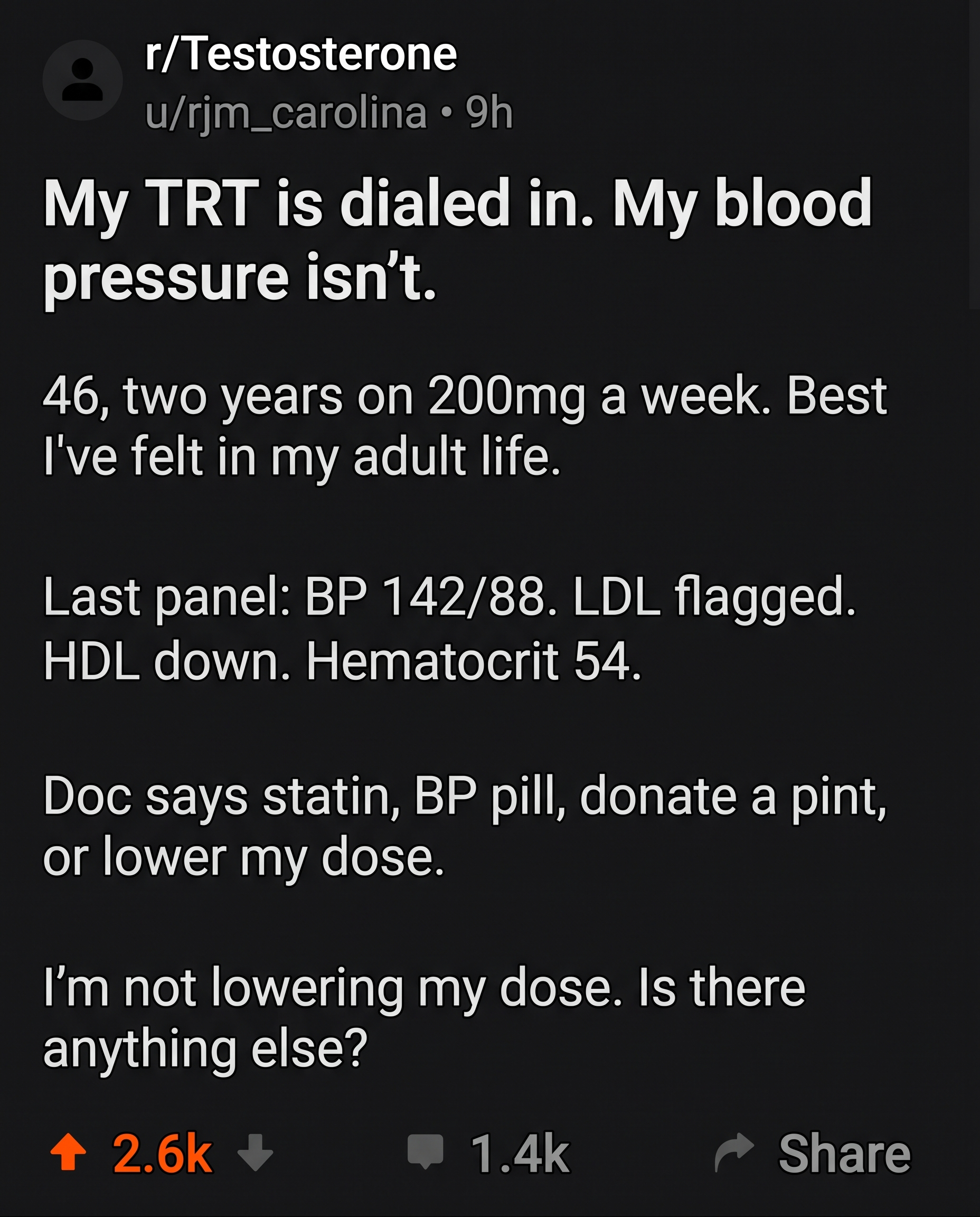
I opened the thread expecting the usual advice. Drink more water. Donate a pint. Just lower your dose.
Instead I saw thousands of men using my exact words:
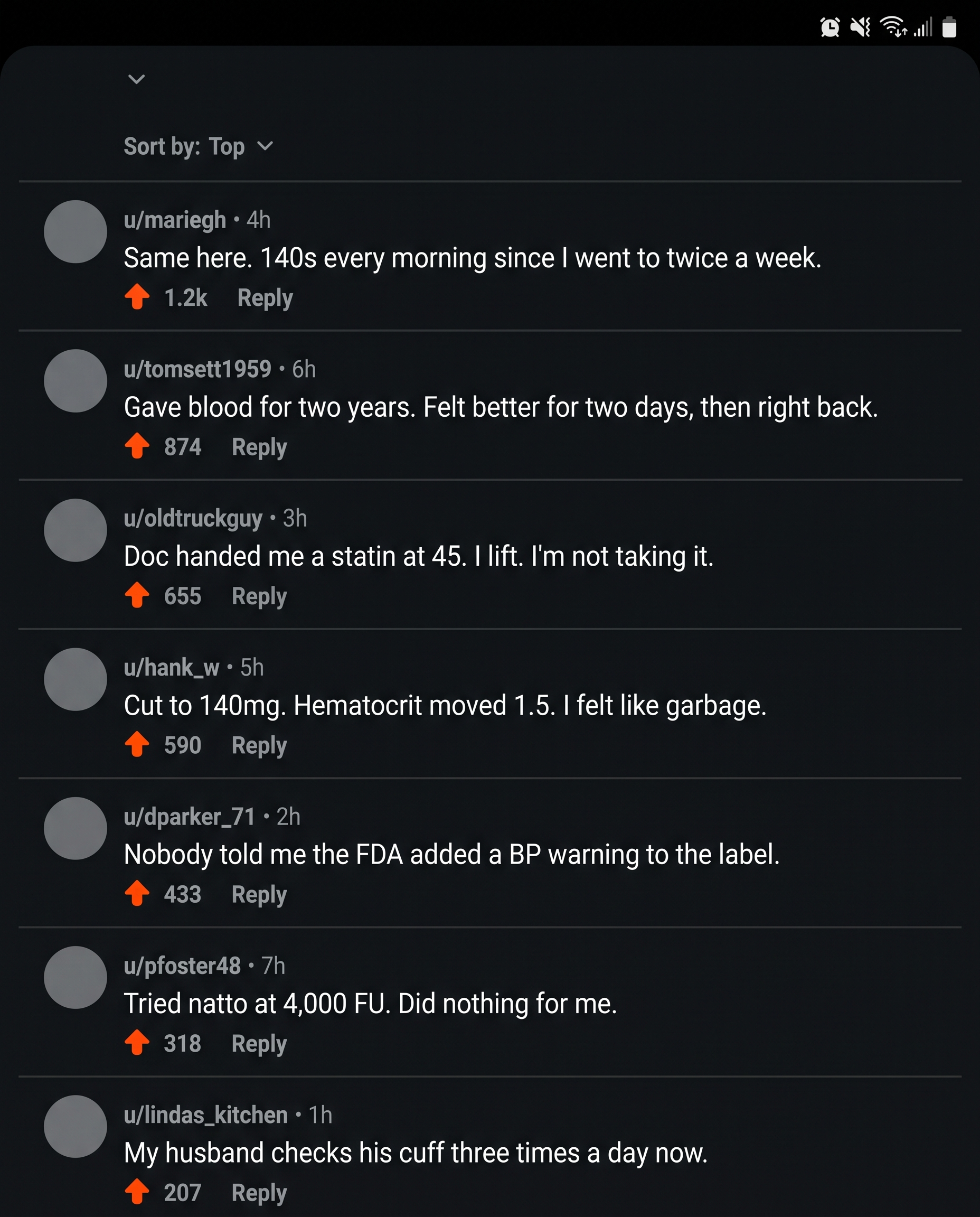
Different men. Different clinics. But everyone described it with the same words.
Not similar words. The exact same ones.
There was a reason for that. And buried in the replies, one man explained why every single thing we'd tried had failed.
Then I Saw Something That Made No Sense
One reply. No pitch, no product, no explanation — just a few lines, like he was tired of repeating it.
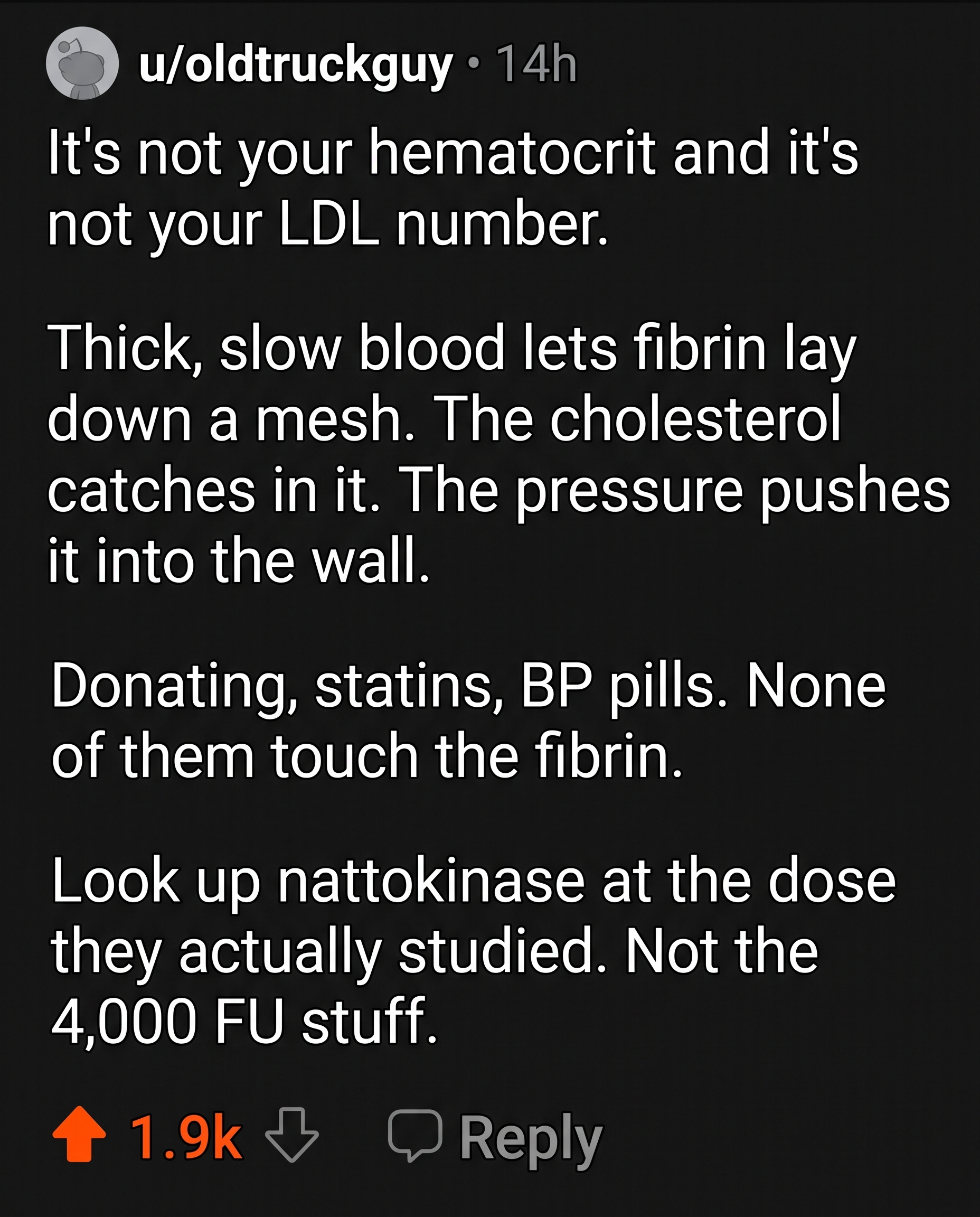
I stared at it for twenty minutes.
The fibrin? Not my hematocrit? Not my LDL?
I'd spent two years chasing numbers. A pint of blood every eight weeks. A statin script I never filled. A 4,000 FU bottle of nattokinase that did nothing.
And it wasn't any of that — it was a scaffold nobody had ever measured?
At 2 a.m., I found the research. And it changed everything.
It Wasn't Your Fault. It Was Biology.
On testosterone, your blood doesn't just "get thick." It builds a scaffold — three ways at once. I ended up calling it the Three-Number Trap.
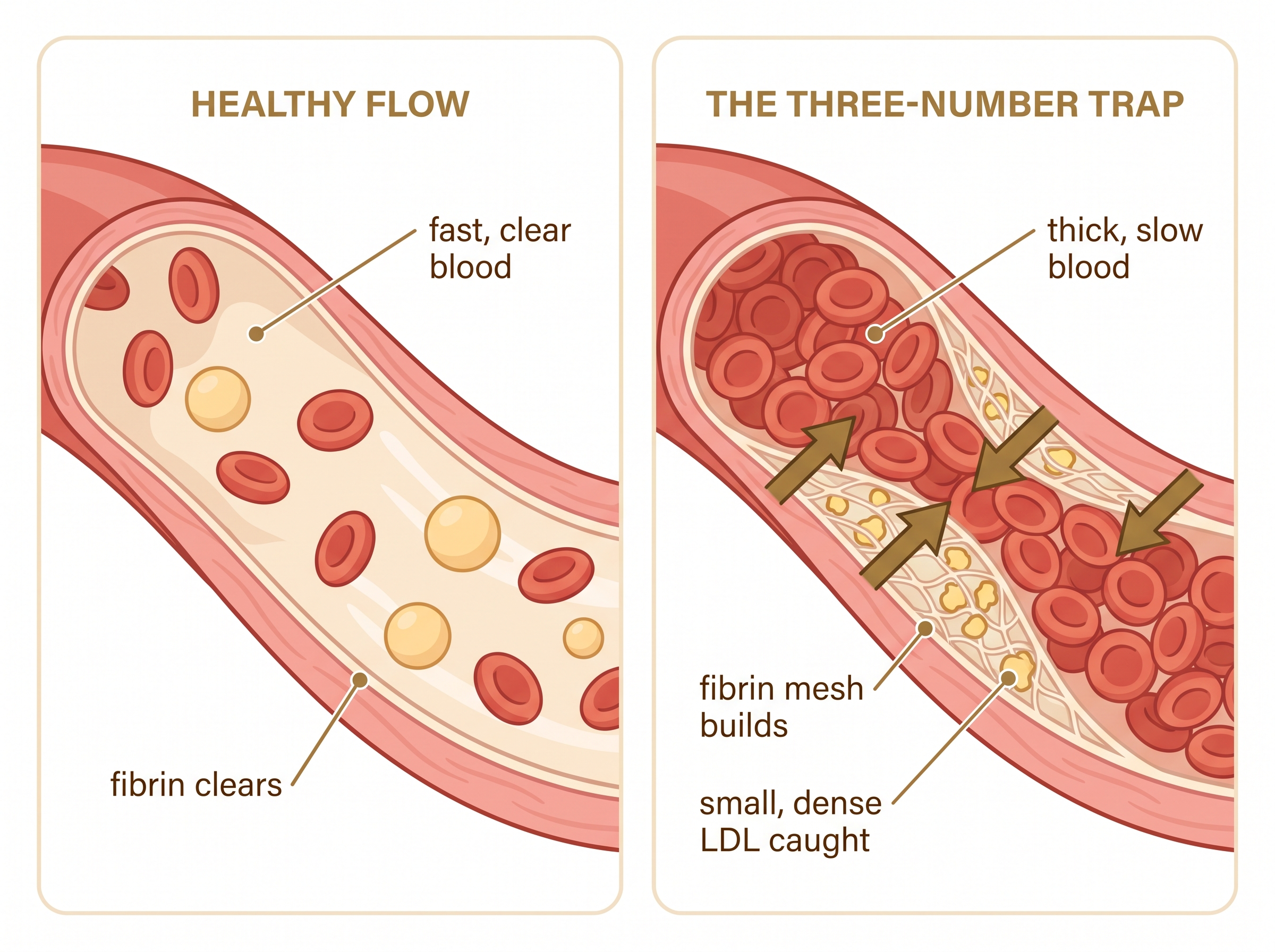
The Three Things The Three-Number Trap Was Doing — Simultaneously
1. The Syrup That Pushes The Pressure Up
Testosterone tells your body to build more red blood cells — up to 66% of men on weekly injections run a high hematocrit. Thicker blood means your heart pushes against more resistance. That's why, in February 2025, the FDA added a blood-pressure warning to every testosterone product in America.
2. The Mesh That Catches The Cholesterol
In slow, crowded blood, fibrin — the mesh your body lays down and is meant to clear — builds up instead. At the same time testosterone cuts your SHBG in half within two weeks, and low SHBG means smaller, denser LDL: the kind that slips into the wall. Your total can read "fine" while the particles catch in the mesh.
3. The Fixes That Never Reach The Mesh
Drain a pint. Take a statin. Add a BP pill. Cut your dose. Every answer on the list is aimed at a number — not one of them touches the fibrin scaffold the numbers are sitting on. That's why you've been managing three numbers and fixing none.
Three numbers. One upstream problem. All unresponsive to fixes aimed at the reading instead of the scaffold.
And to be fair to testosterone: the FDA's own 5,246-man trial, TRAVERSE, found no rise in heart attacks. What it did find was more clots in the lungs and more atrial fibrillation. Clots and pressure — exactly the scaffold.
What Didn't Work — And Why
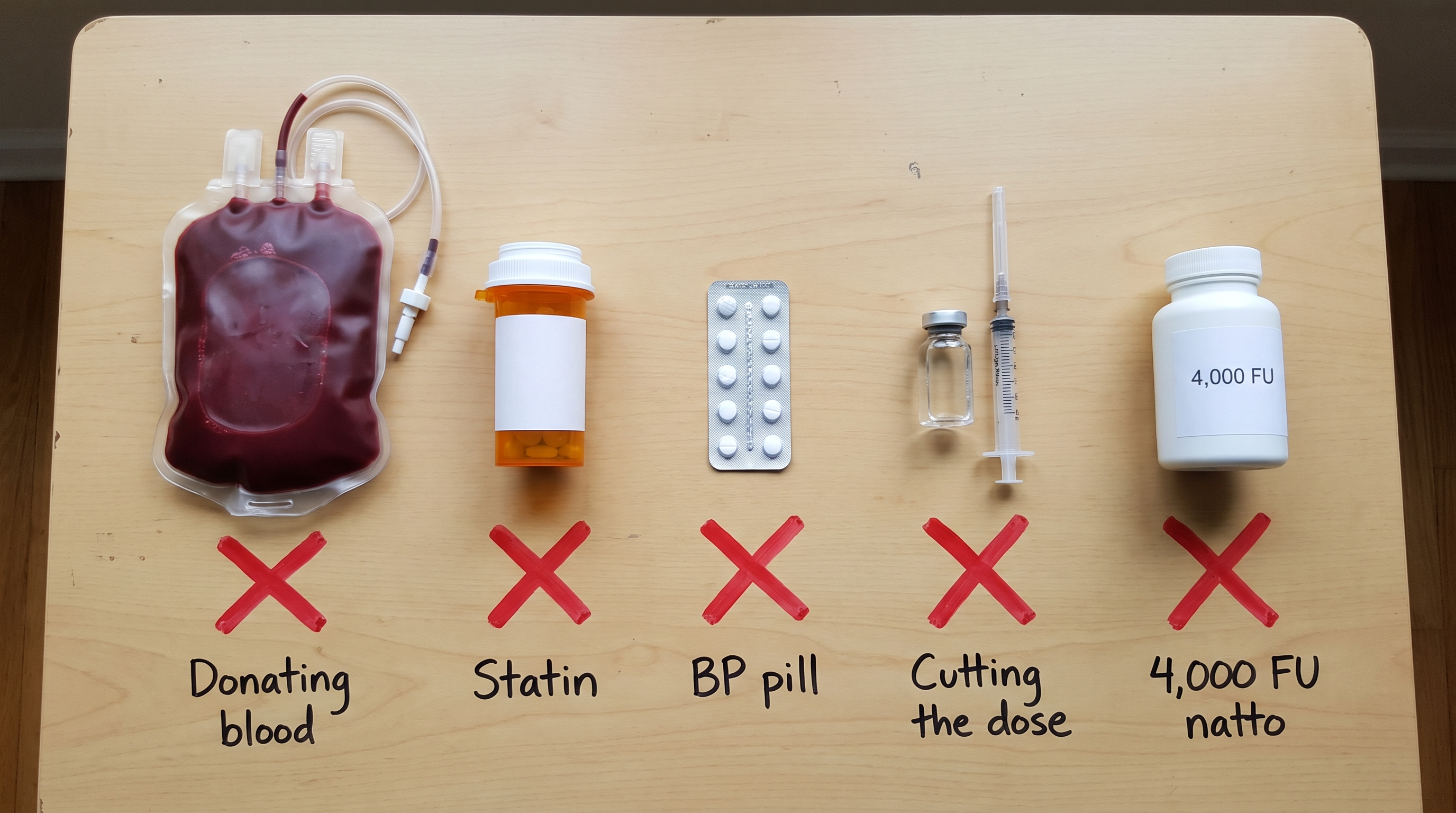
Donating blood & cutting the dose moved a proxy and ignored the scaffold — two days of relief per pint, 1.5 points for a lower dose, and the energy you went on TRT for, gone.
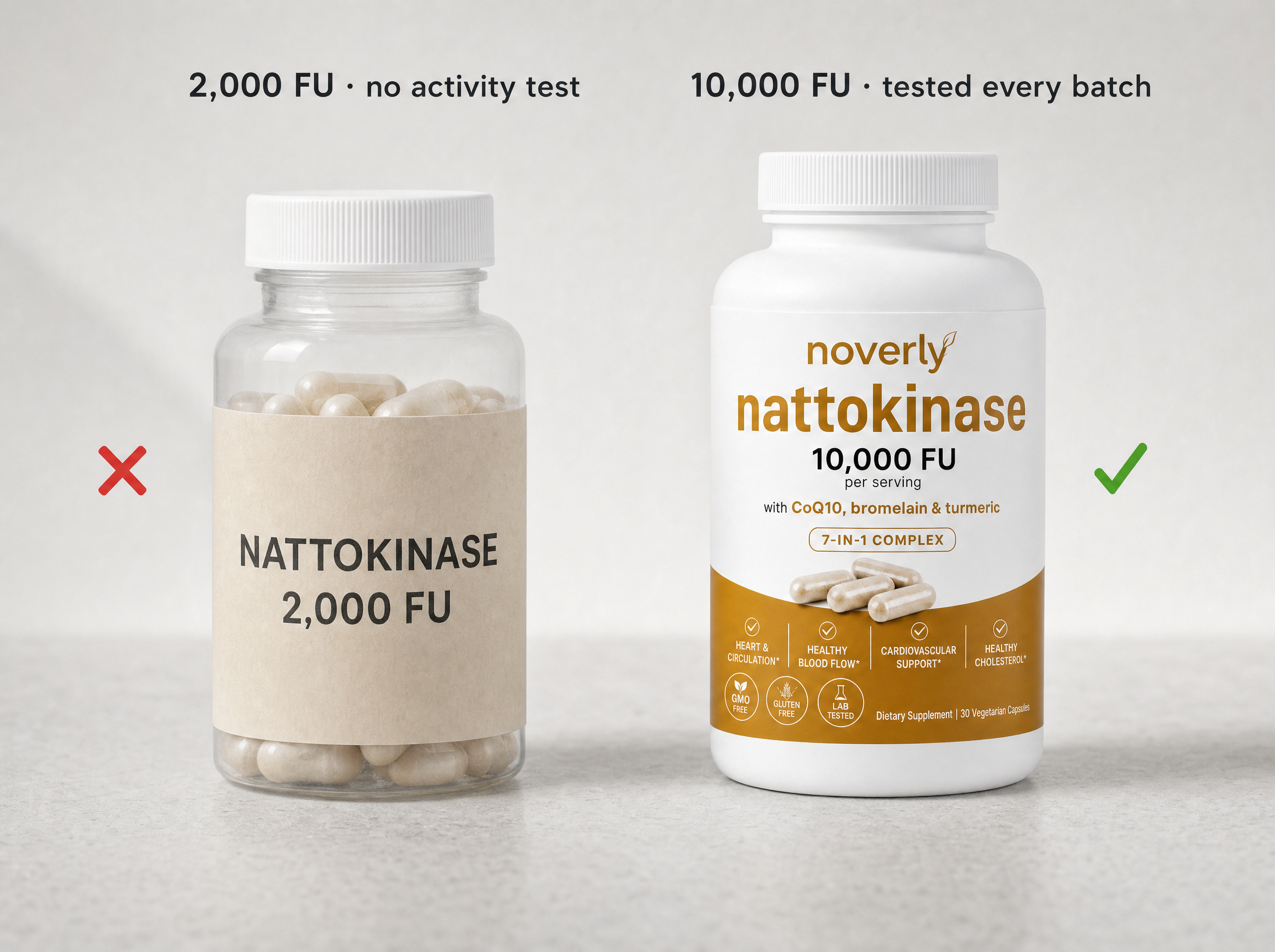
Cheap 4,000 FU "nattokinase" is well under the studied dose. 2,000 FU nudges blood pressure, but the 1,062-person study that looked at artery walls ran near 10,800 FU — and found 3,600 FU did nothing. That's why so many men swear "natto does nothing."
Statins, BP pills, water and cardio each moved one number without touching the scaffold running all three at once. They're real medicine — keep what your doctor prescribed — they just aren't aimed at the mesh.
I Tried To Buy Exactly What I Needed. It Didn't Exist.
So the next morning, I went to buy nattokinase at the studied dose. Or I tried to.
Every bottle I could get my hands on. The 2,000 FU tubs. The "heart support" blends with a dozen extras and no FU on the label. The 4,000 FU capsules you'd need a fistful of.
A couple hundred dollars, gone.
And after 45 days and a fresh panel? Nothing I'd stake anything on.
I started second-guessing the whole thing. Maybe I'd read it wrong.
So I went back to the research one more time.
That's when I found what actually works.
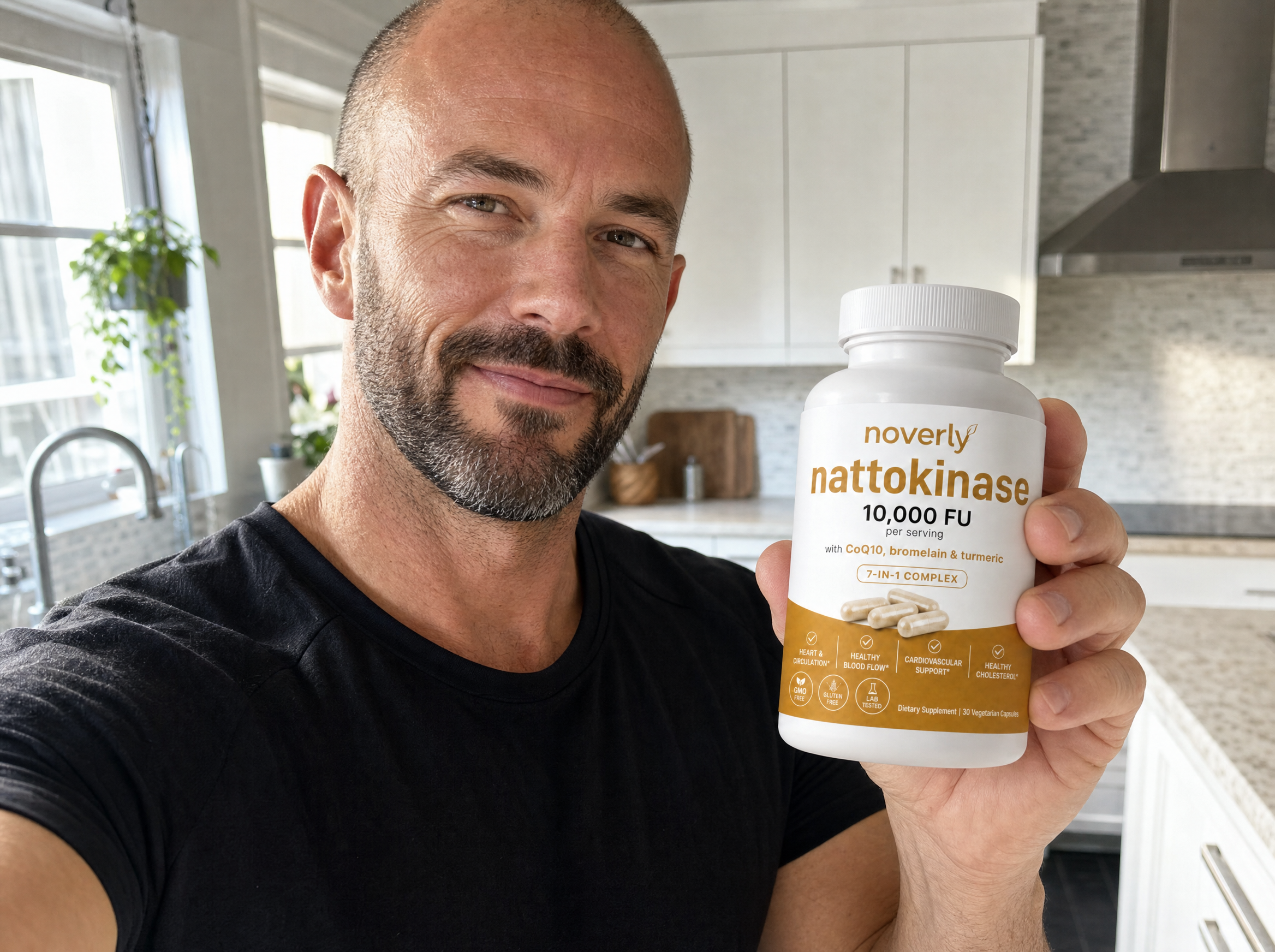
The version that actually works isn't just "nattokinase." It's 10,000 FU of real enzyme activity, near the dose the research actually used, fermented properly so the number on the label is real.
Low-FU bottles are a fraction of the dose. "Proprietary blends" hide the number. Rushed ferments ship powder with no activity at all.
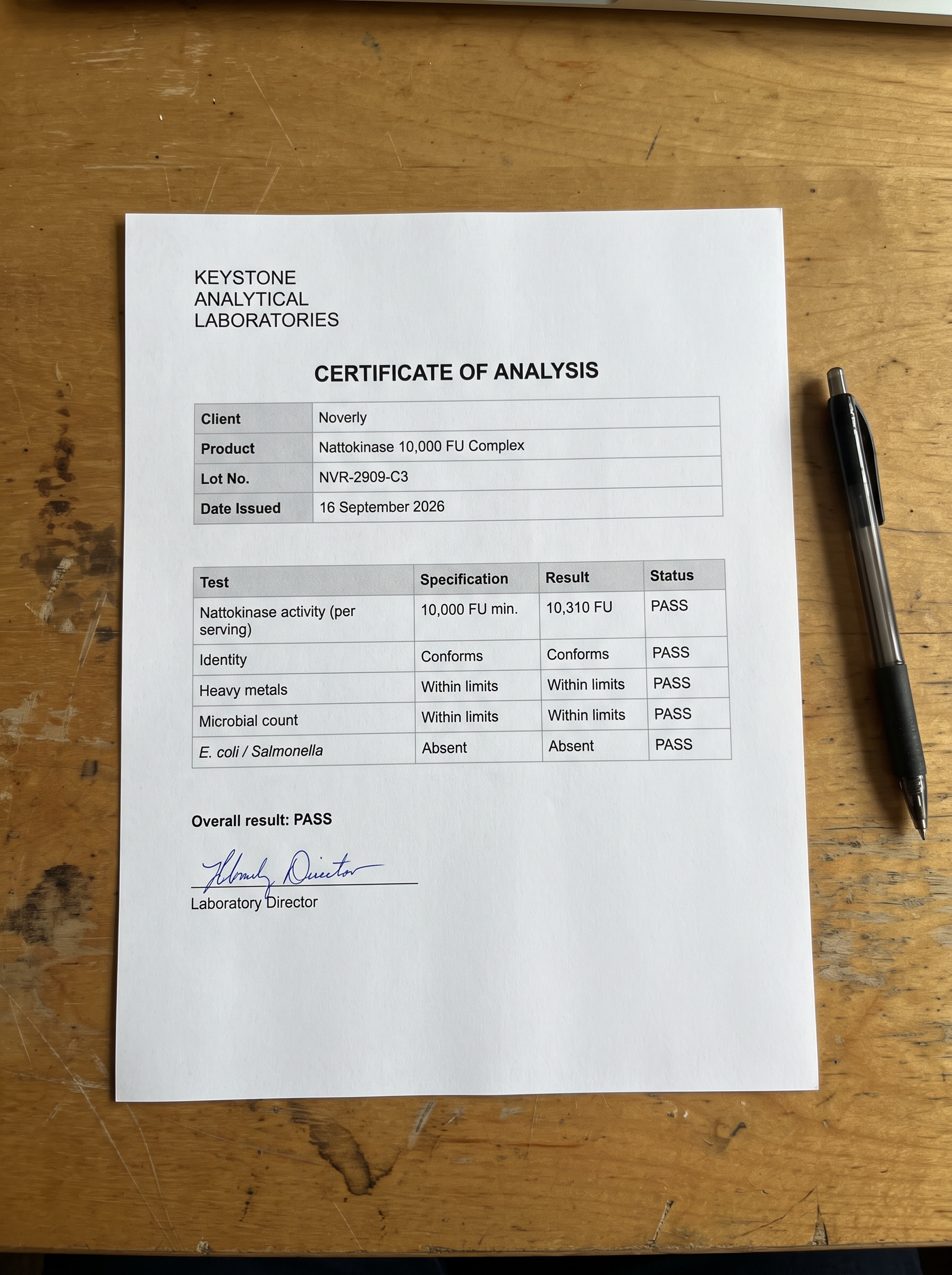
I needed the real thing. So I tracked down a lab that specializes in fermented nattokinase — and went to watch how they actually make it.
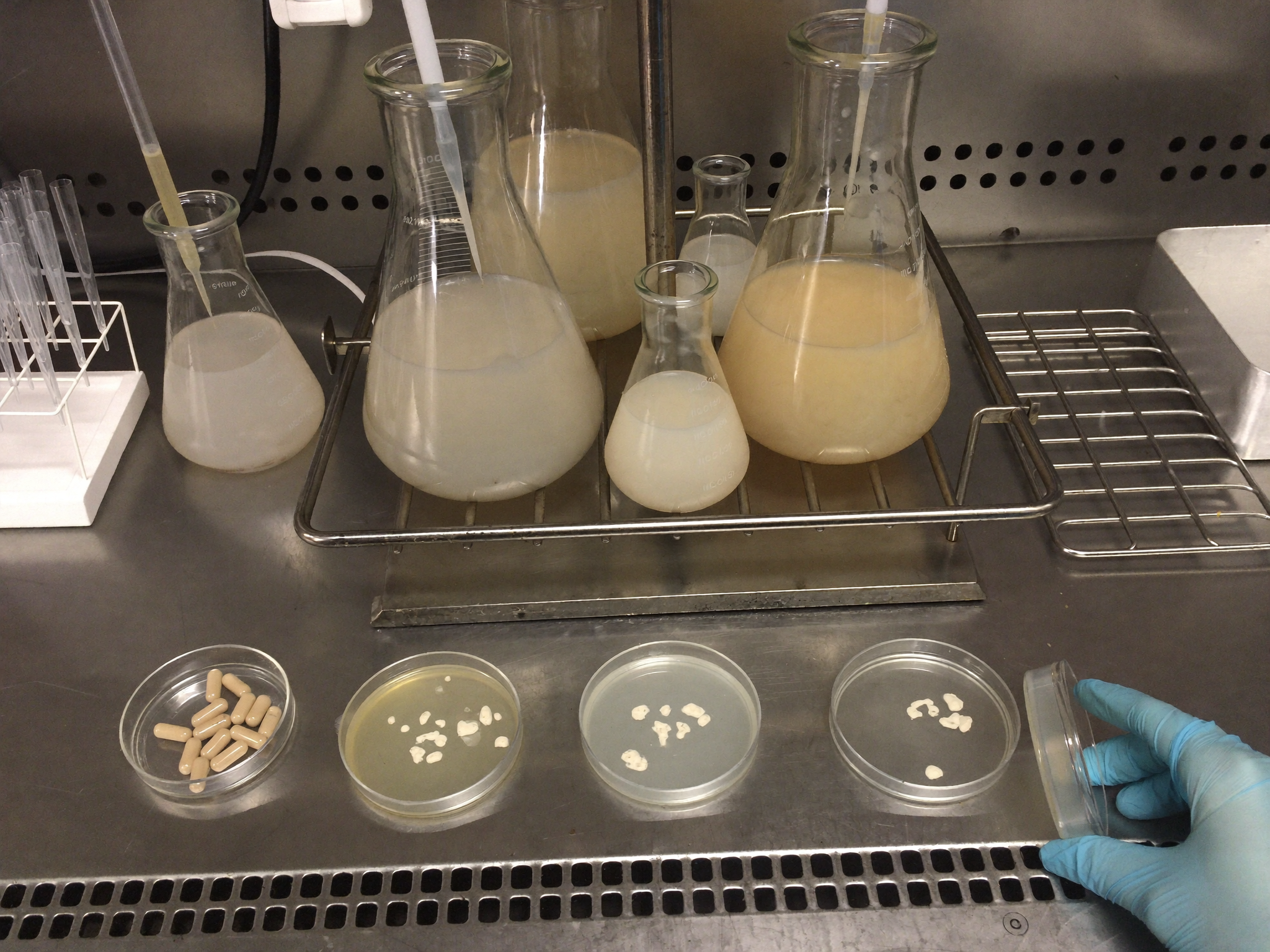
Flasks full of ferments that didn't hold. Batch after batch, tested and retested. Getting a ferment to hit 10,000 FU of real activity — instead of the sawdust everyone else ships — took months.
But it worked.
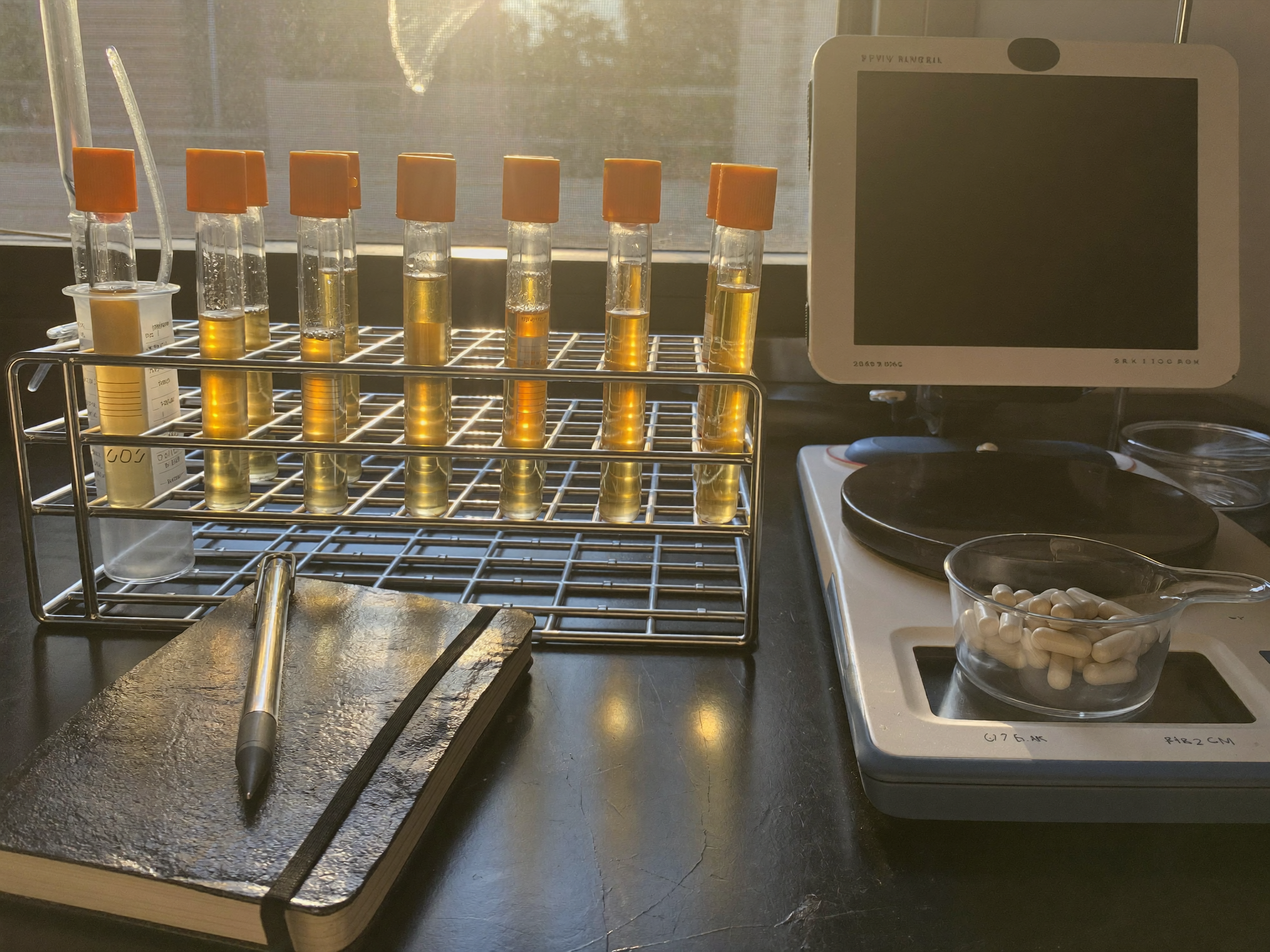
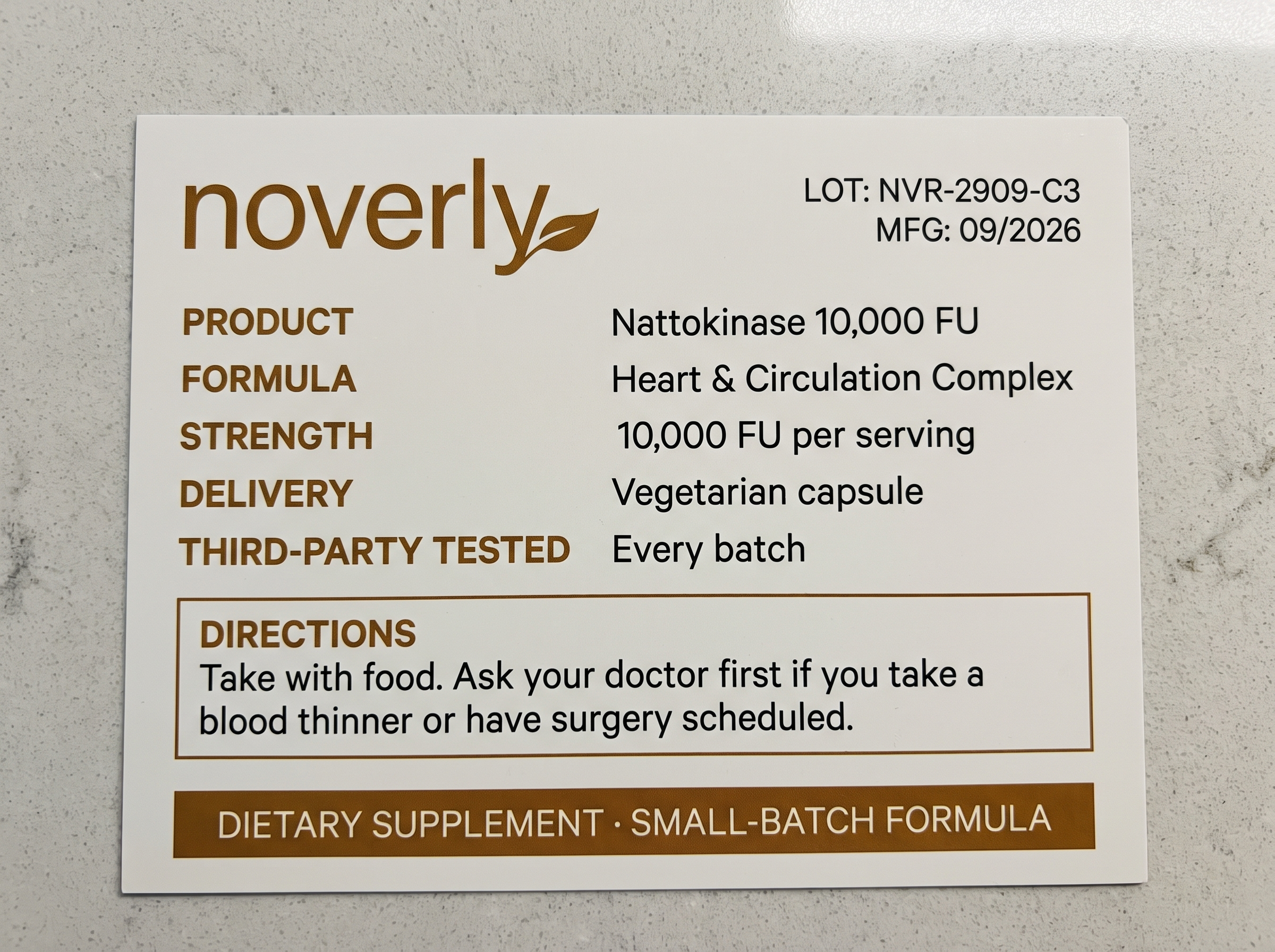
10,000 FU. Aged garlic, pine bark, grape seed, CoQ10, bromelain and turmeric around it. And every batch third-party tested — so nobody has to take my word for what's inside.
The Night I Finally Tried It. Changed Everything.
With food, exactly as the label says. That's the whole thing.
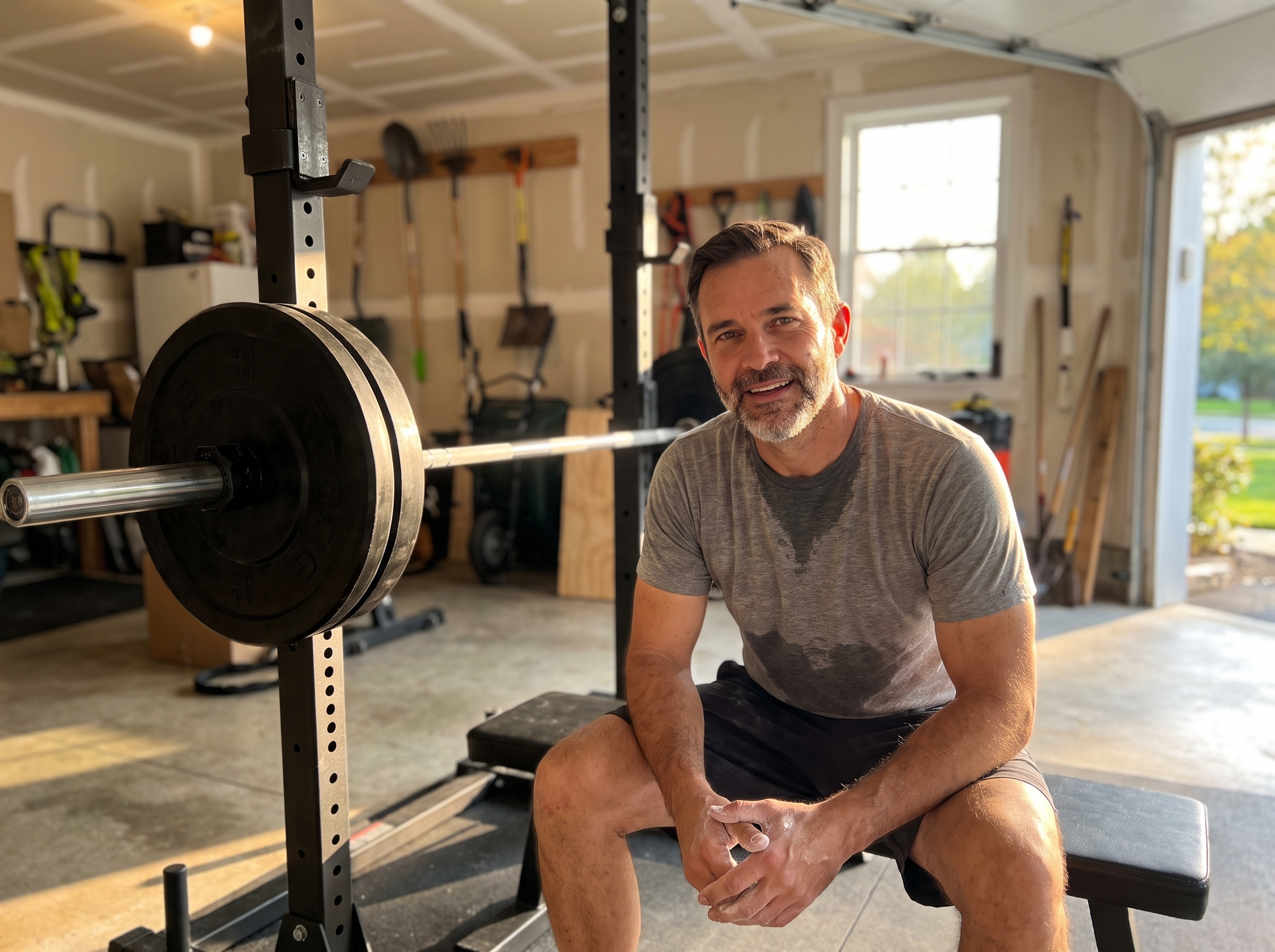
Barely there. One morning the cuff read a little lower and I wrote it off as noise. I didn't let myself believe it yet — I wanted to see if it held.

The heavy, full-headed feeling after a hard session started letting up. The same feeling I used to chase with a pint of blood — except this time it didn't come back two days later.
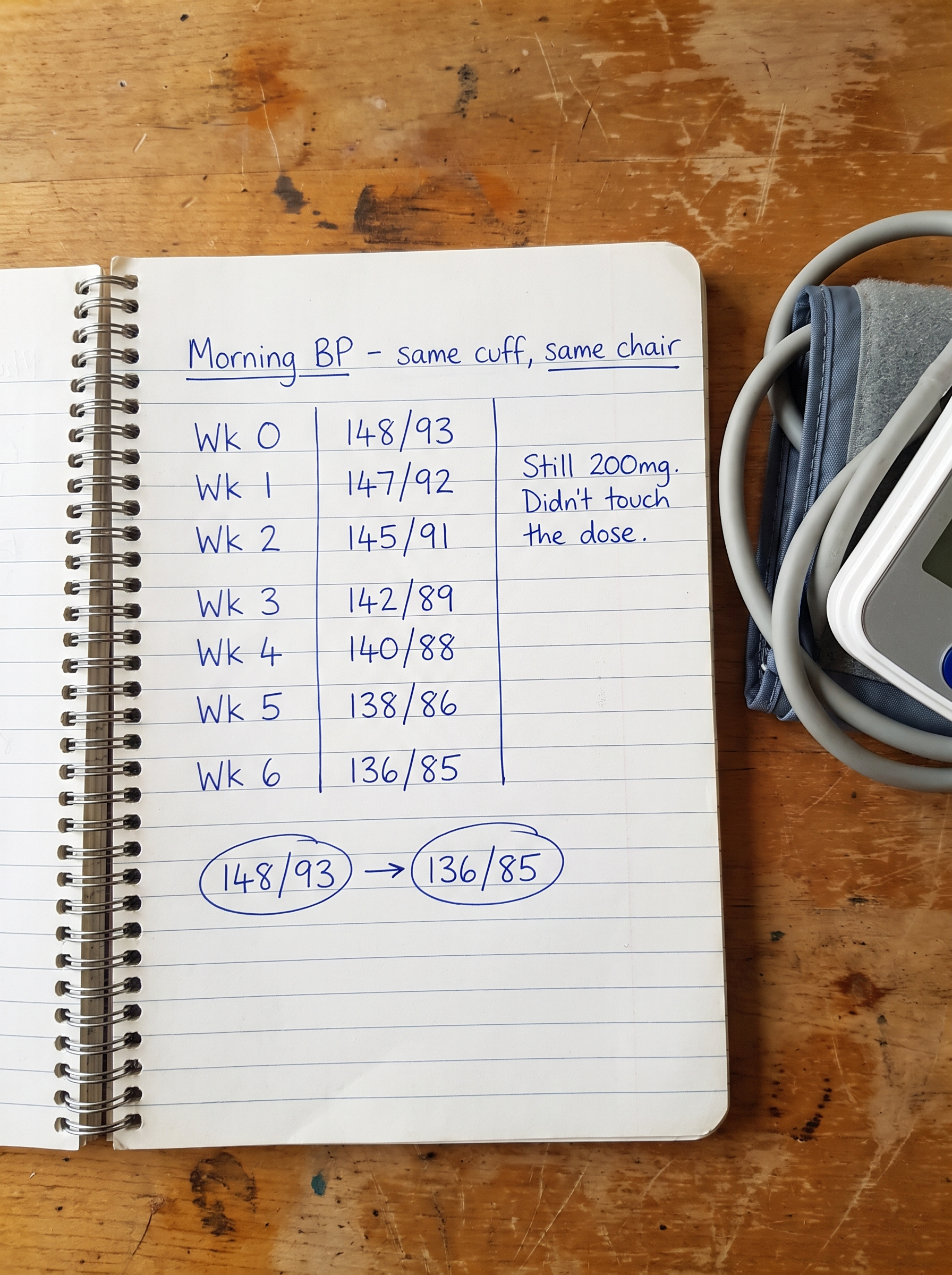
My morning cuff stopped starting with a 14. Sounds like nothing. If you've watched that number every day for two years, it's everything.
I didn't come down off my dose. Not by a milligram. I texted my wife: "Still 200." She knew exactly what I meant.
I'd been writing my morning readings in a spiral notebook the whole way — same cuff, same chair. They dropped from 148/93 to 136/85.
You Can Keep Your Dose. Forever.
Then I did the thing that would either prove I was right or make me look like a fool. I put it out there and told men to test it on themselves.
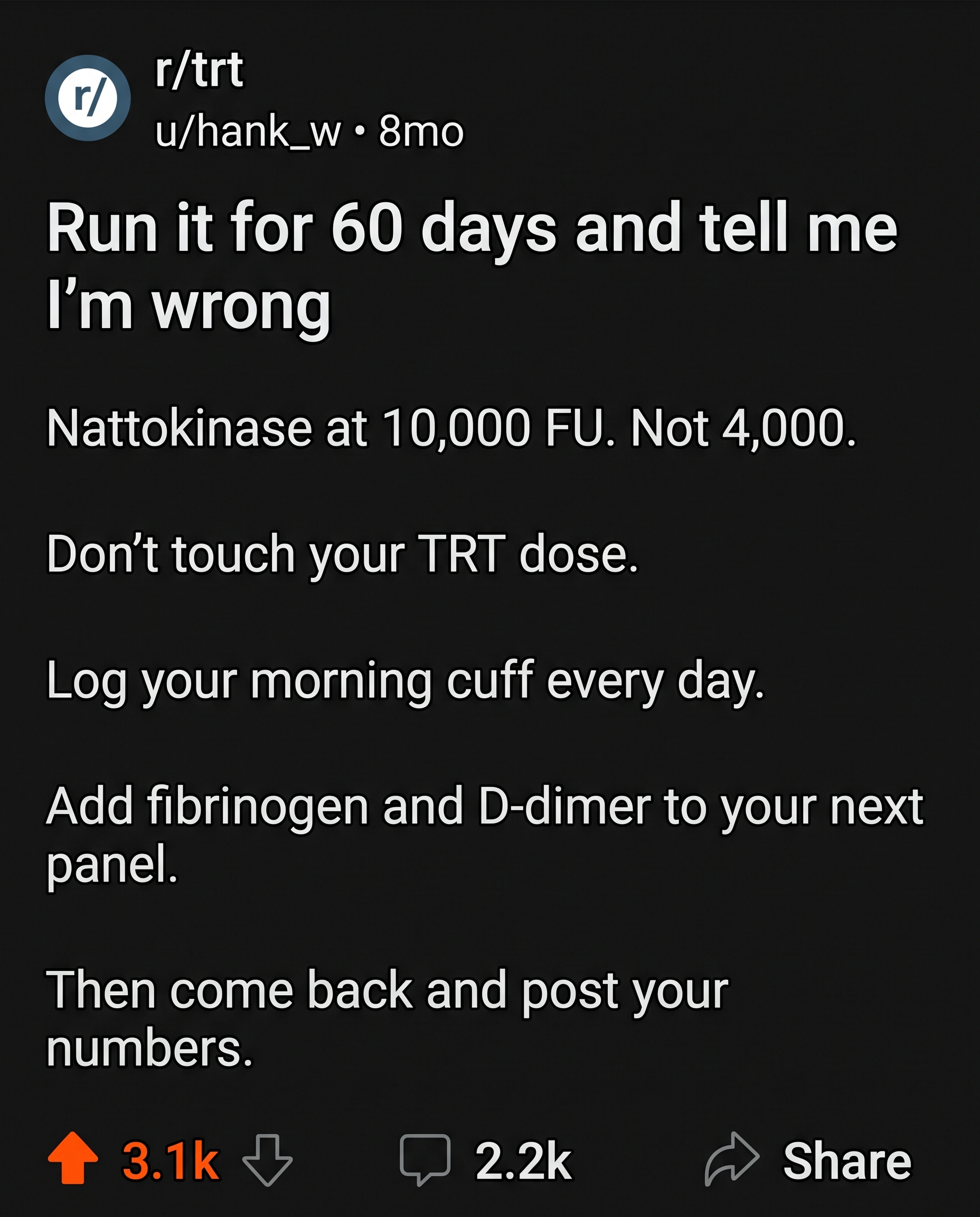
Within a couple weeks, 40 men had tried it. Not one told me I was wrong.
Lower morning readings. Fibrinogen coming down on the next panel. Same dose. The same story, again and again — on the same protocols. Then it was hundreds. Then thousands.
Don't Take My Word For It — Take Theirs
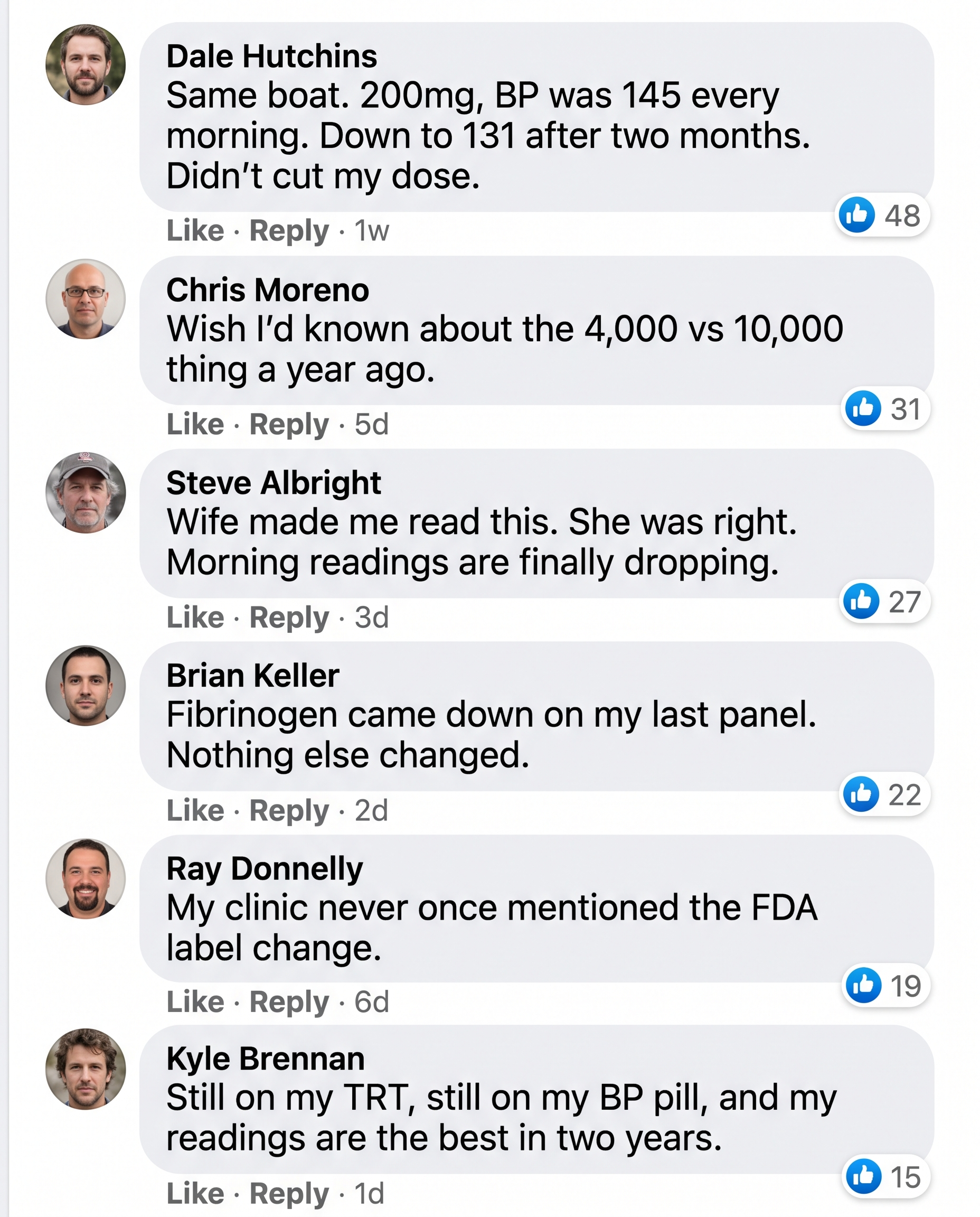
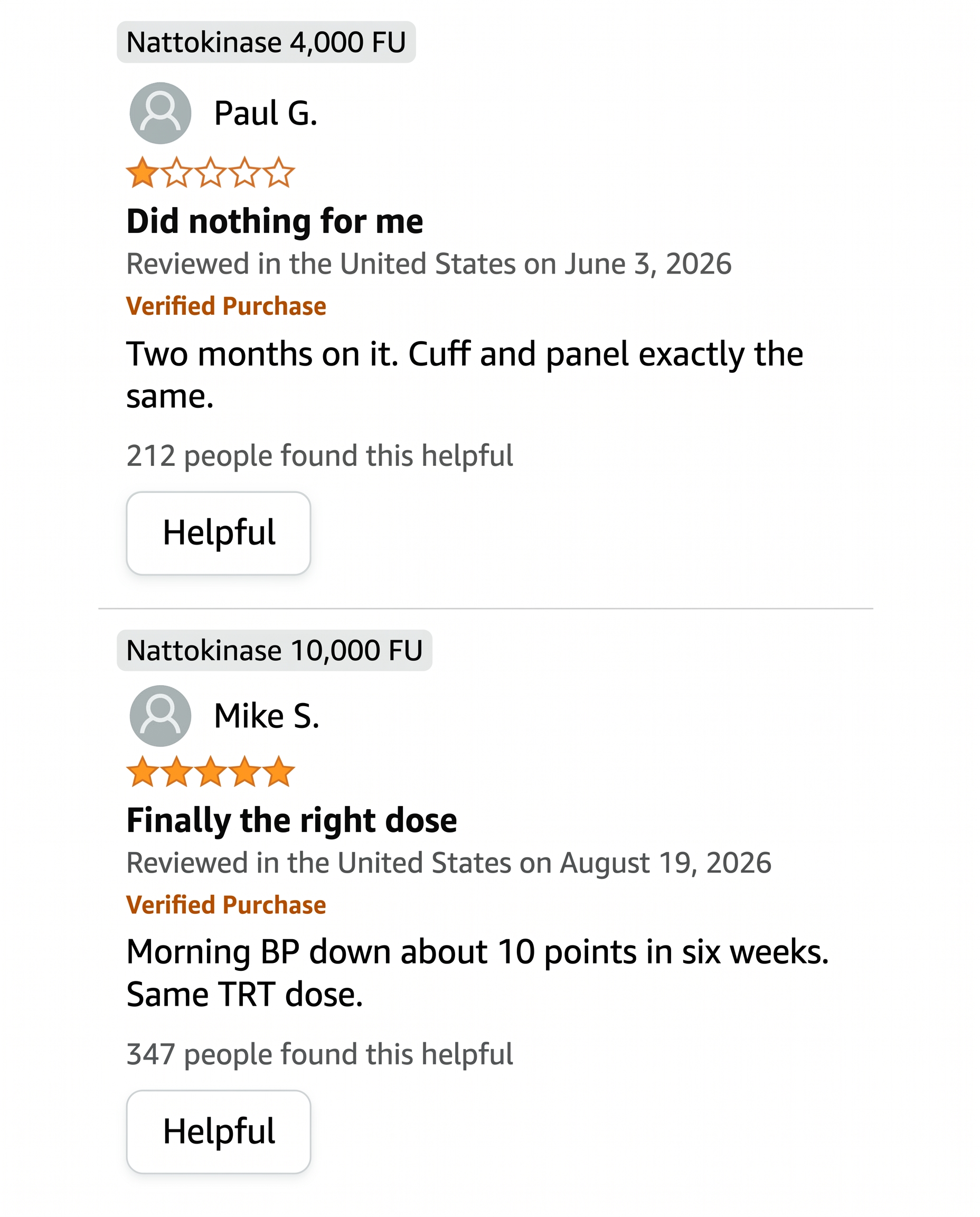
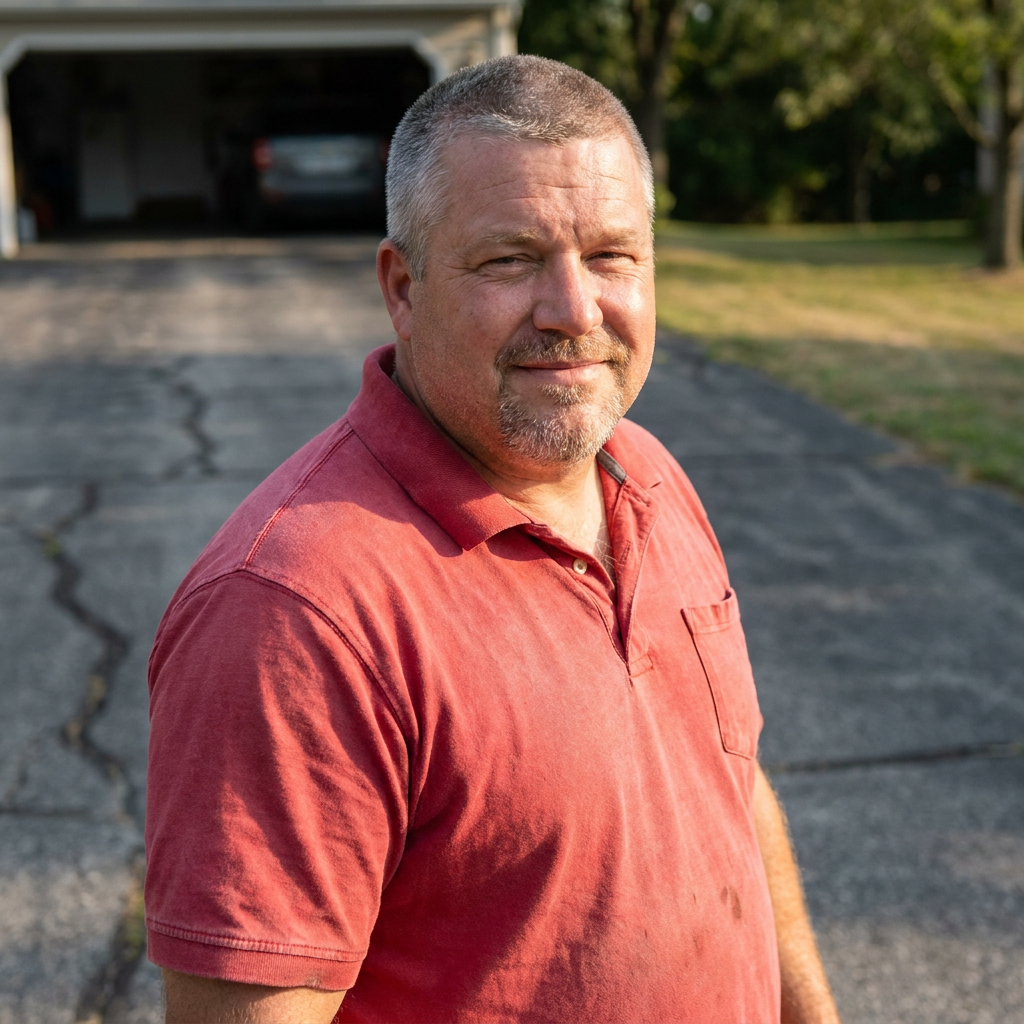
"Two years of giving blood every eight weeks and my cuff still read 140-something. Six weeks on this, I'm averaging 128/80 — same 180 a week, didn't touch my dose."
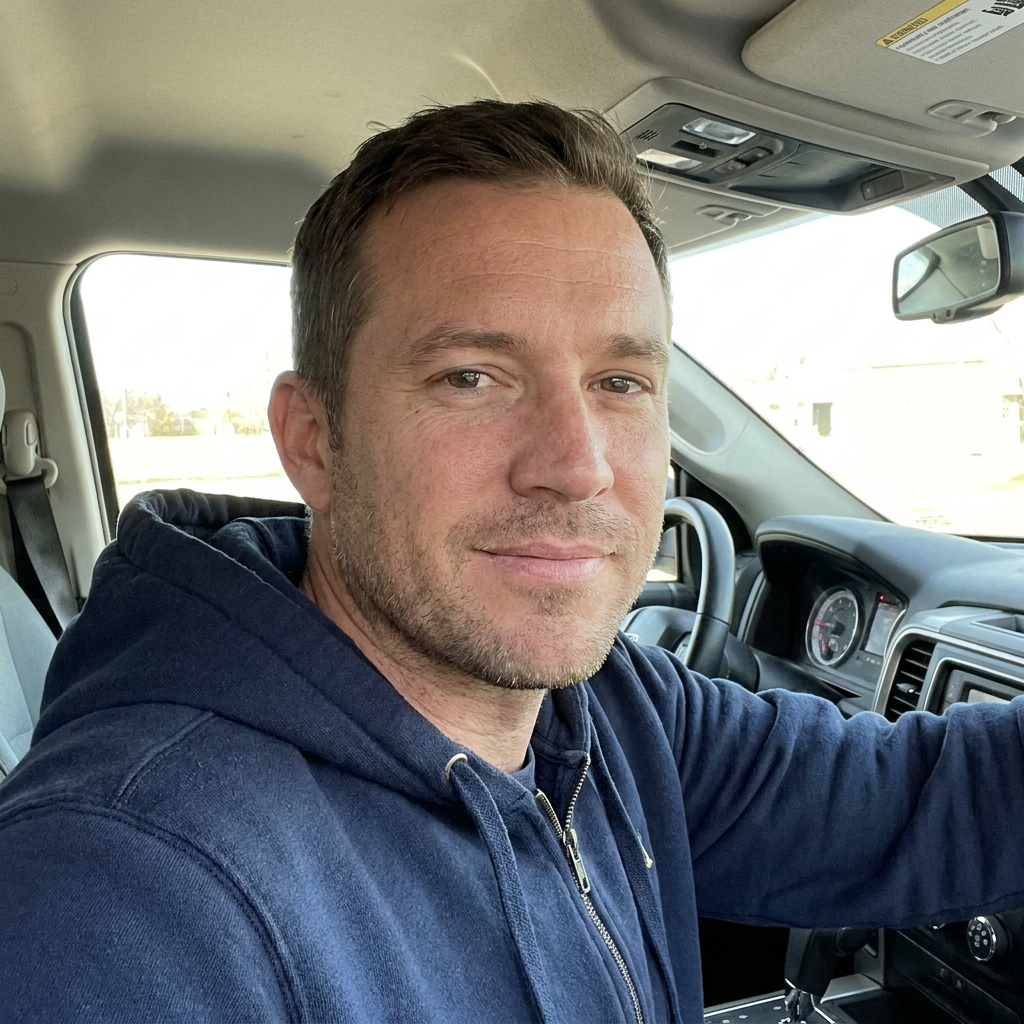
"I'd already tried nattokinase — 4,000 FU, did nothing. Turns out I was taking a fraction of the dose. Different animal at 10,000."
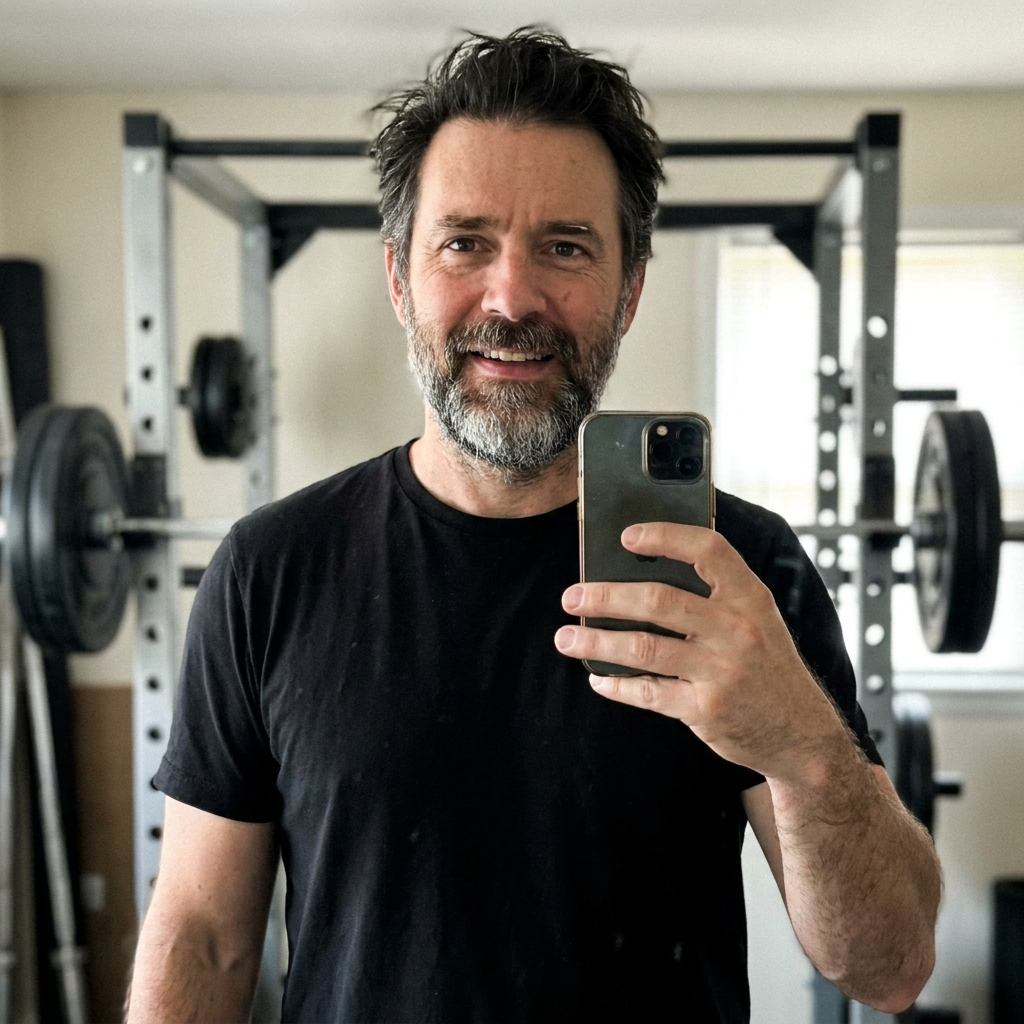
"Doc wanted a statin and a BP pill at 44. I put fibrinogen on my next panel and watched it come down. First time I've walked in there with numbers of my own."

"Four stars because it does nothing for hematocrit — I'm still at 52, and they say so up front. What moved was my morning pressure and my fibrinogen. I'll take it."
You Have Two Choices Right Now
Keep going as-is
Another pint in the chair. Another script at 45. Another dose cut that takes back your energy — and a scaffold that keeps building under all three numbers.
Try the studied dose
10,000 FU of fermented nattokinase, third-party tested, at the dose the research actually used — for 90 days, with the risk entirely on us. Keep your dose.
I'm Not Selling You Hype. I'm Showing You What Worked.
Try Noverly Nattokinase 10,000 FU for 90 days. If it doesn't move anything — if your morning cuff reads the same, if your next panel looks the same — send it back. Even if the bottle is empty. Full refund. No questions.
- 10,000 FU of nattokinase — near the dose the 1,062-person study used, not the 2,000–4,000 FU most bottles hide.
- Fermented the slow way so the activity on the label is real.
- Aged garlic, pine bark, grape seed, CoQ10, bromelain and turmeric around it.
- Third-party tested every batch — independent proof, not "just trust us."
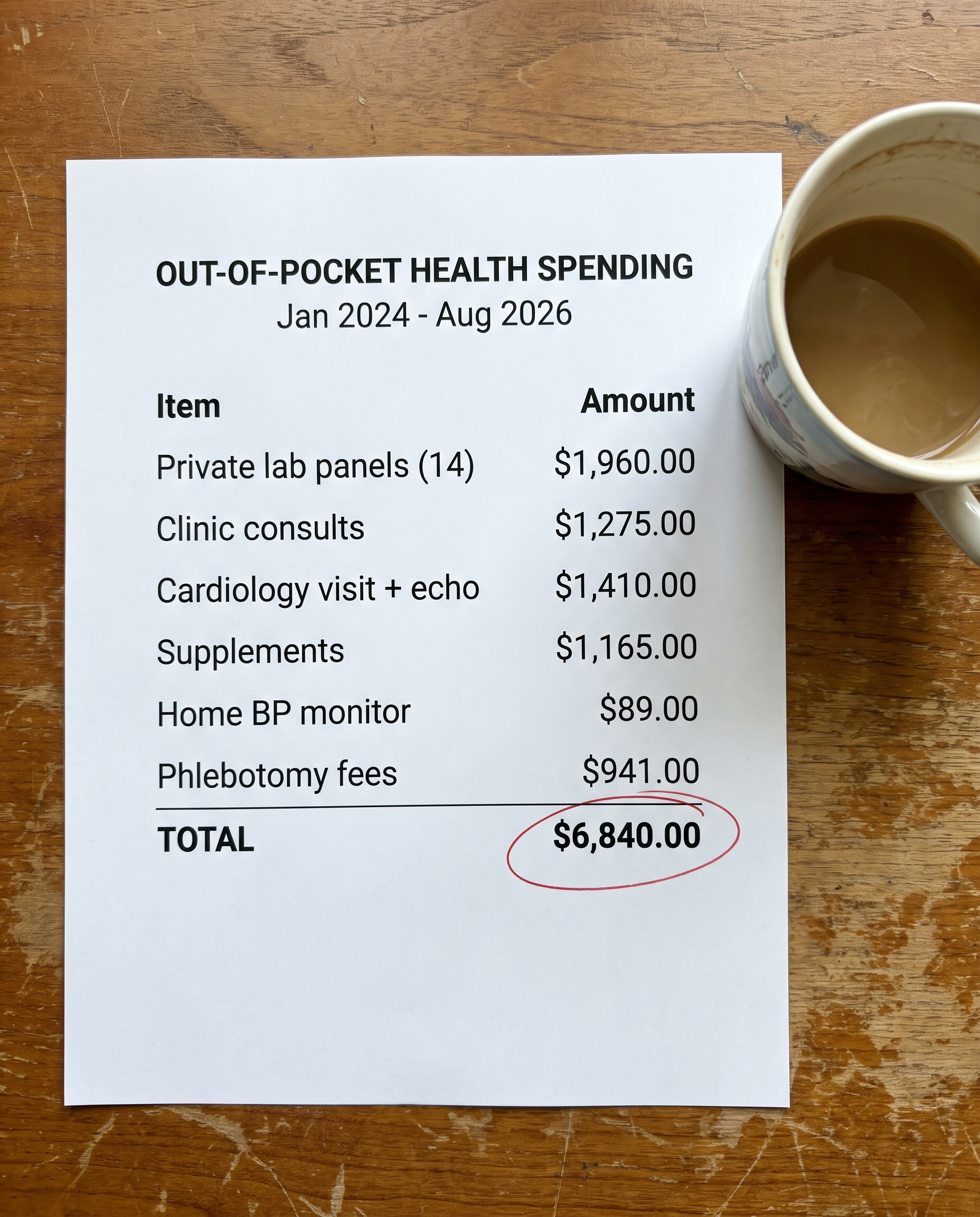
I spent years and the better part of seven thousand dollars chasing this — private panels, clinic consults, a cardiologist who shrugged, bottle after bottle. This one small bottle did what none of it could.
Here's Exactly What Happens When You Order
You click the button, choose your supply, and get an order confirmation within a few minutes. (Check spam — sometimes it lands there.)
Your bottle ships with a tracking number.
Take it with food, as directed on the label. Keep your TRT protocol and everything your doctor prescribed — this goes after the fibrin scaffold the scripts only manage around. If you take warfarin, a DOAC, daily aspirin or any other blood thinner, or you have surgery coming up, talk to your doctor before you start.
Most men notice the cuff first — morning readings drifting down. Log it and see for yourself. Then add fibrinogen and D-dimer to your next panel.
If your numbers don't look different, email us. Full refund, keep the bottle. No questions.
One more thing: order today and you also get our short "First Week Guide" by email — it answers what every man asks: "Can I take it with my TRT?" "Will it change my hematocrit?" (No — and why that's the wrong number to watch.) "What do I add to my next panel?" Keep your protocol and let this go after the scaffold running underneath it.
That's it. No extra pills. No fillers. Just nattokinase at the dose the research actually used.
This Isn't Amazon. We Make Small Batches.
Two Questions To Ask Yourself
If the answer to both is no, here's the whole thing in one line:
If it doesn't work, you get your money back. If it does, you get to keep your dose.
One more thing. That thread I found — the one buried with the comment that changed everything — picks up new men every week, all searching for the exact thing you just found on this page.
P.S. — People ask why Noverly doesn't just make a giant batch and flood the shelves. The ferment and the activity test are exactly the parts everyone cuts to save money, and verifying them takes time. I'd rather it run out for a week than ship the 4,000 FU shortcut that started this whole mess.
You've Been Burned Before. Here's Why This Is Different.
90 days. Full refund. Keep the bottle. If it's not working — Day 7, Week 2, Day 89, any time — just email us.
You've been burned enough times. I know the feeling of losing hope again.
Out of thousands of bottles, only a handful ever came back. Either it works for you, or you pay nothing.
Wherever you are right now — still booking the next pint, still staring at a statin script, still being told "just lower your dose" — you can be the next man that thread found. Your first lower reading could be a few weeks away.
The morning I first tried it, I almost didn't. I'd been let down so many times I figured I was the one guy nothing worked for. My numbers had climbed every quarter for two years, and "lower your dose" was the only answer I'd ever gotten.
So I took it anyway. Practically certain I was wasting money again. Week two, the cuff started with a 13 instead of a 14 — I took it twice to be sure.
Week six, I walked into my clinic with a notebook of my own readings and asked them to add fibrinogen and D-dimer to the panel. I sat in the truck afterwards, just… not doing the math for once. I texted my wife from the parking lot.
It's the small things that get me now. A morning reading I don't dread. A lab email I open right away. Not being asked to choose between feeling like myself and having a heart.
Maybe you're where I was — thinking "he got lucky, it won't work for me." I thought that too. Don't take my word for it. I've shown you the research, the lab test, and the reviews. But if your cuff keeps climbing and your panel keeps coming back flagged, give yours the same 90 days I gave mine. Then come back and tell me.
— Mark Tomczak, Men's Hormone-Health Researcher
© 2026 Noverly · Terms · Privacy · Contact