Top Blood Pressure Researcher: I Found The Real Reason You Feel Dizzy, Drained And Dead In The Bedroom On Blood Pressure Meds And Nothing Helps
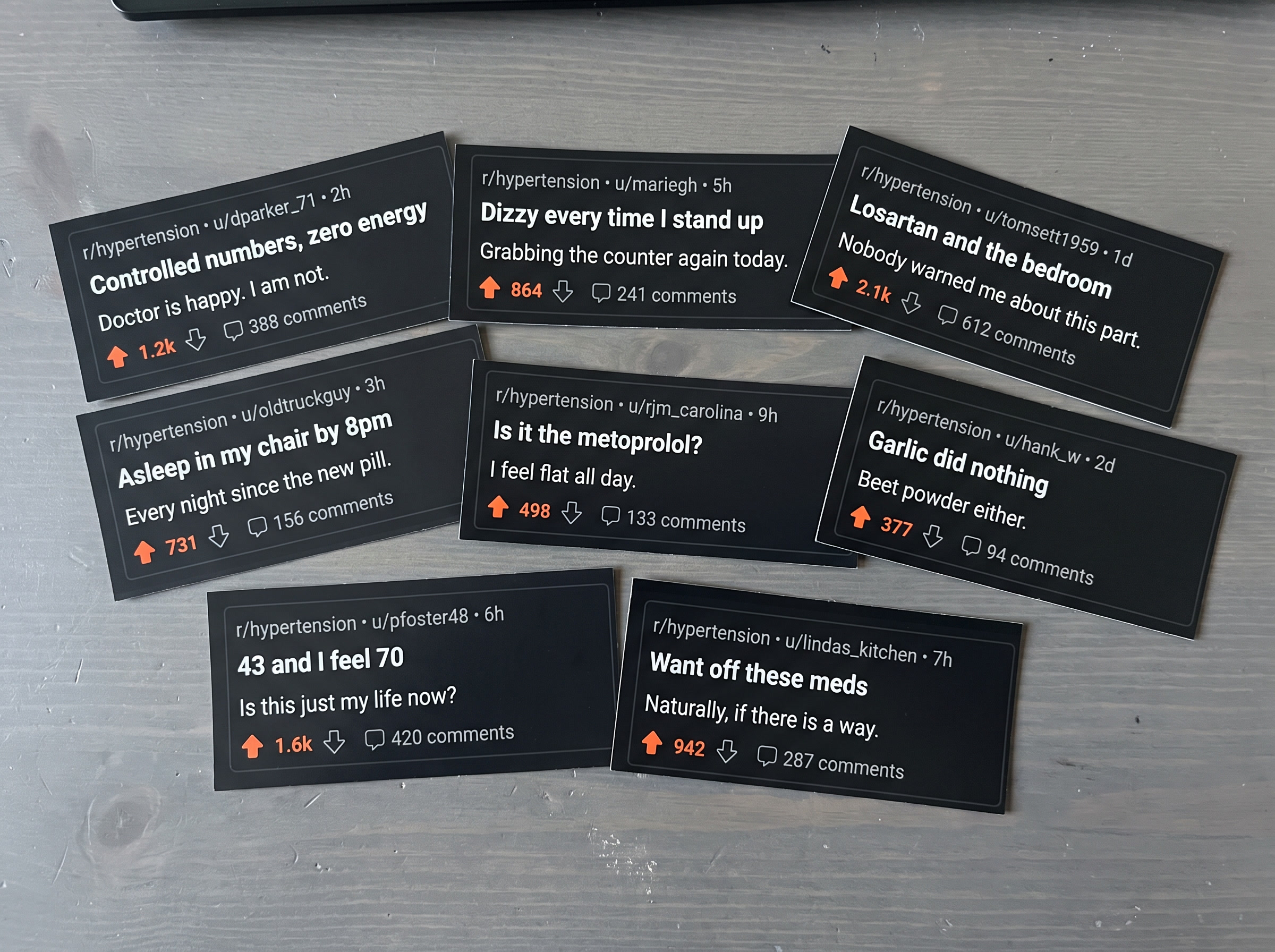
We all kept failing for the same reason. I studied 36,000+ men on blood pressure meds who felt dizzy, drained and done in the bedroom — and it explained the one thing every prescription switch and every “natural BP” bottle quietly misses.

Numbers your doctor calls “well controlled” on a pill that turns you grey every time you stand up.
Asleep in the chair by eight. A heart rate that won't climb on a walk. A bedroom that went quiet the month the prescription started.
And a quiet dread that shows up every time the doctor says “let's try something else.”
Nothing works.
And I didn't understand why. It seemed like I was doing everything right — and I only felt worse.
I felt old. Like my body had been swapped for a worse one at fifty-one. Nobody gets what it does to you — how it takes a little more every month.
For my doctor it was a footnote on a chart. For me it was the thing I never said to my wife in the dark.
I felt exactly like that for six years. Until…
I found 36,000 men living the exact same trade.
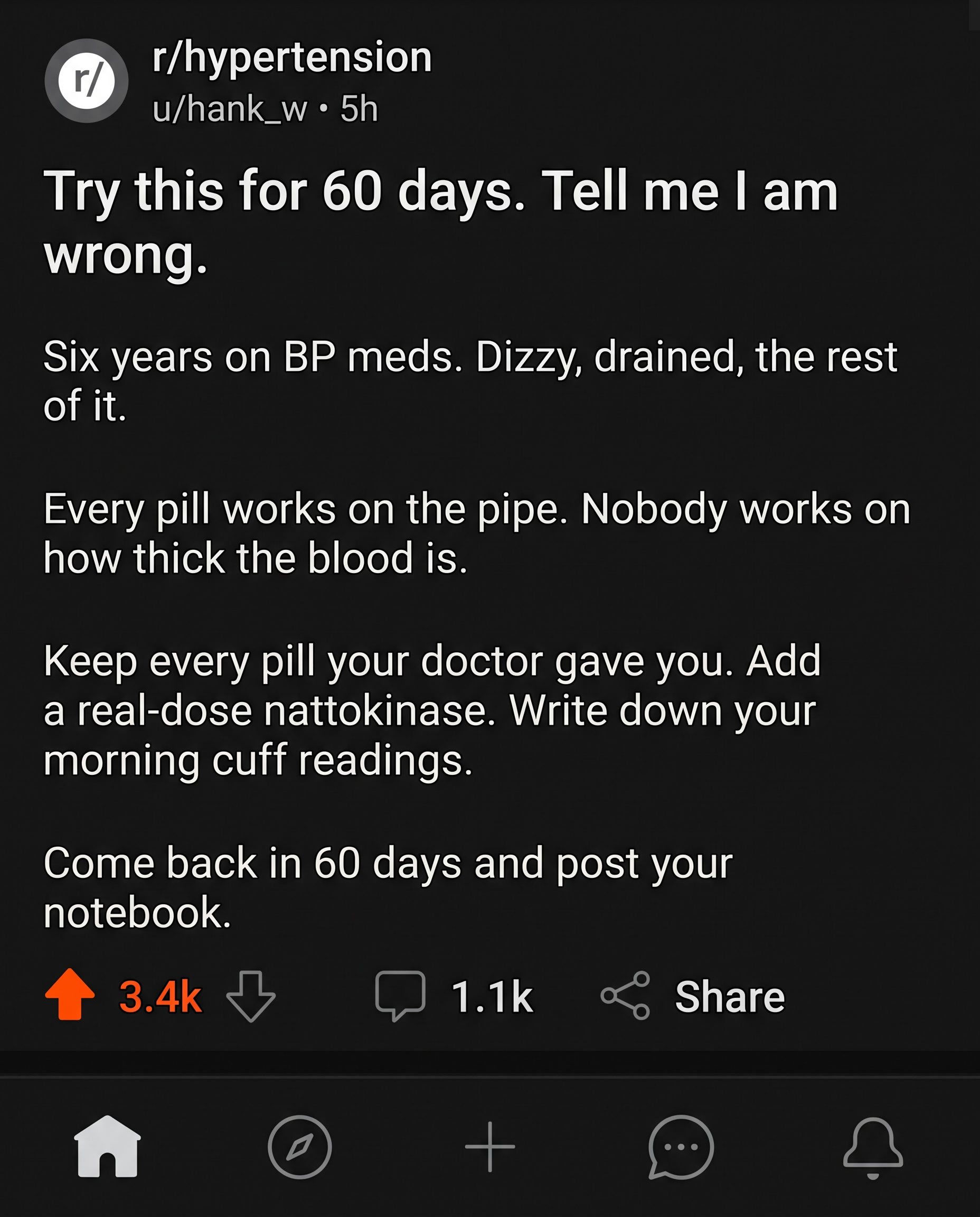
I opened the thread expecting the usual advice. Cut the salt. Give the new pill time. Just manage it.
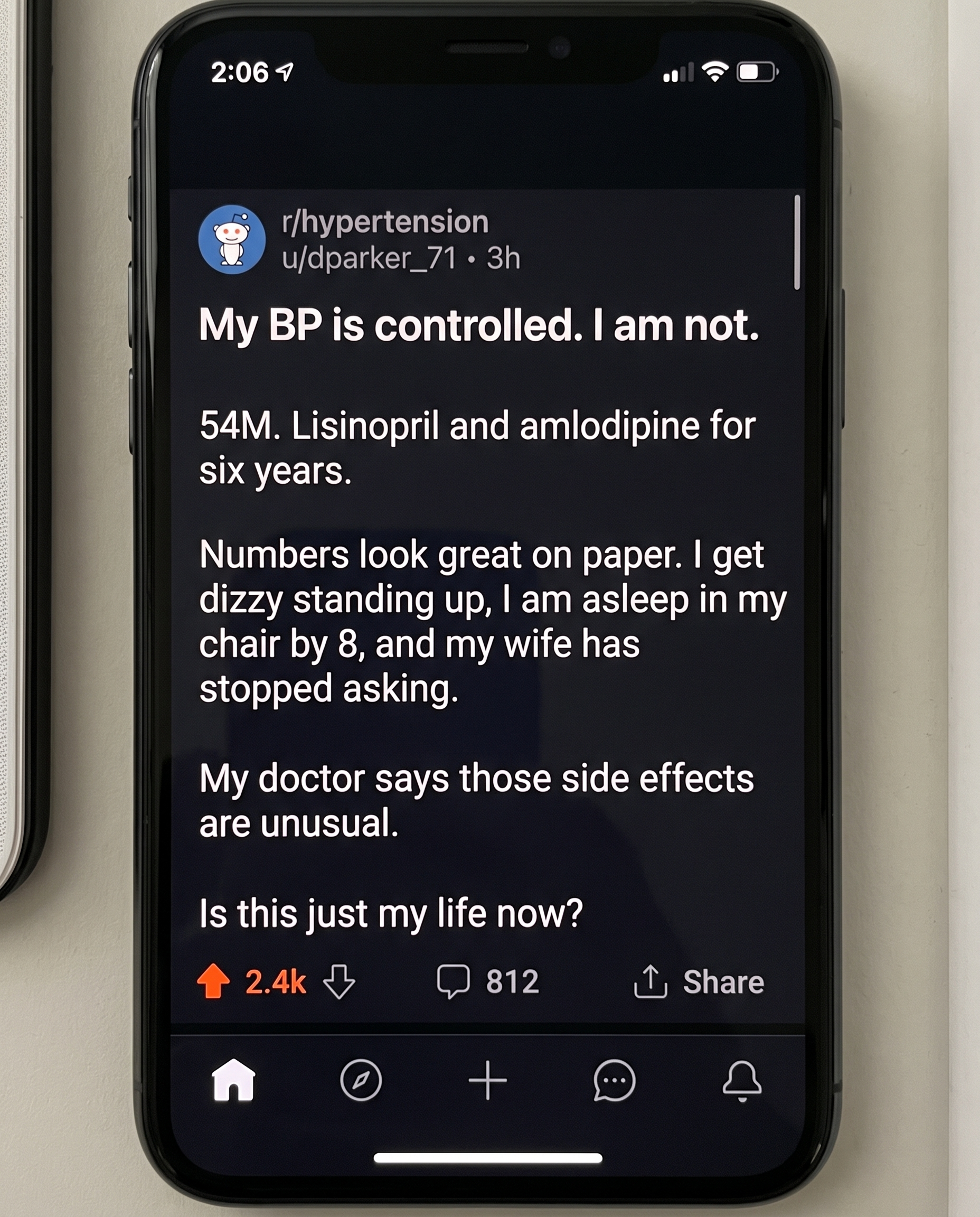
Instead I saw thousands of people using my exact words:
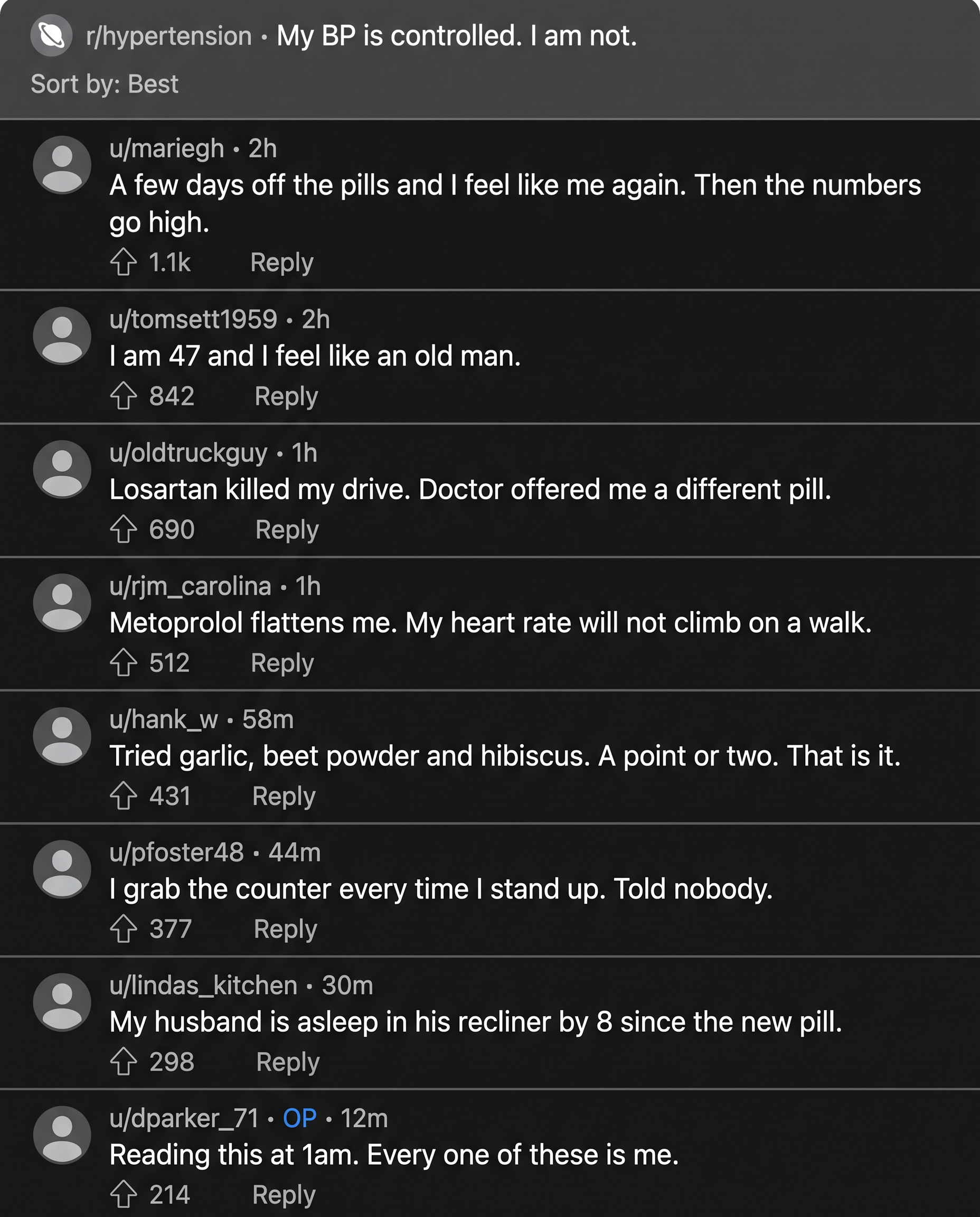
Different men. Different prescriptions. But everyone described it with the same words.
Not similar words. The exact same ones.
There was a reason for that. And buried in the replies, one person explained why every single thing we'd tried had failed.
Then I Saw Something That Made No Sense
One reply. No pitch, no product, no explanation — just a few lines, like they were tired of repeating it.
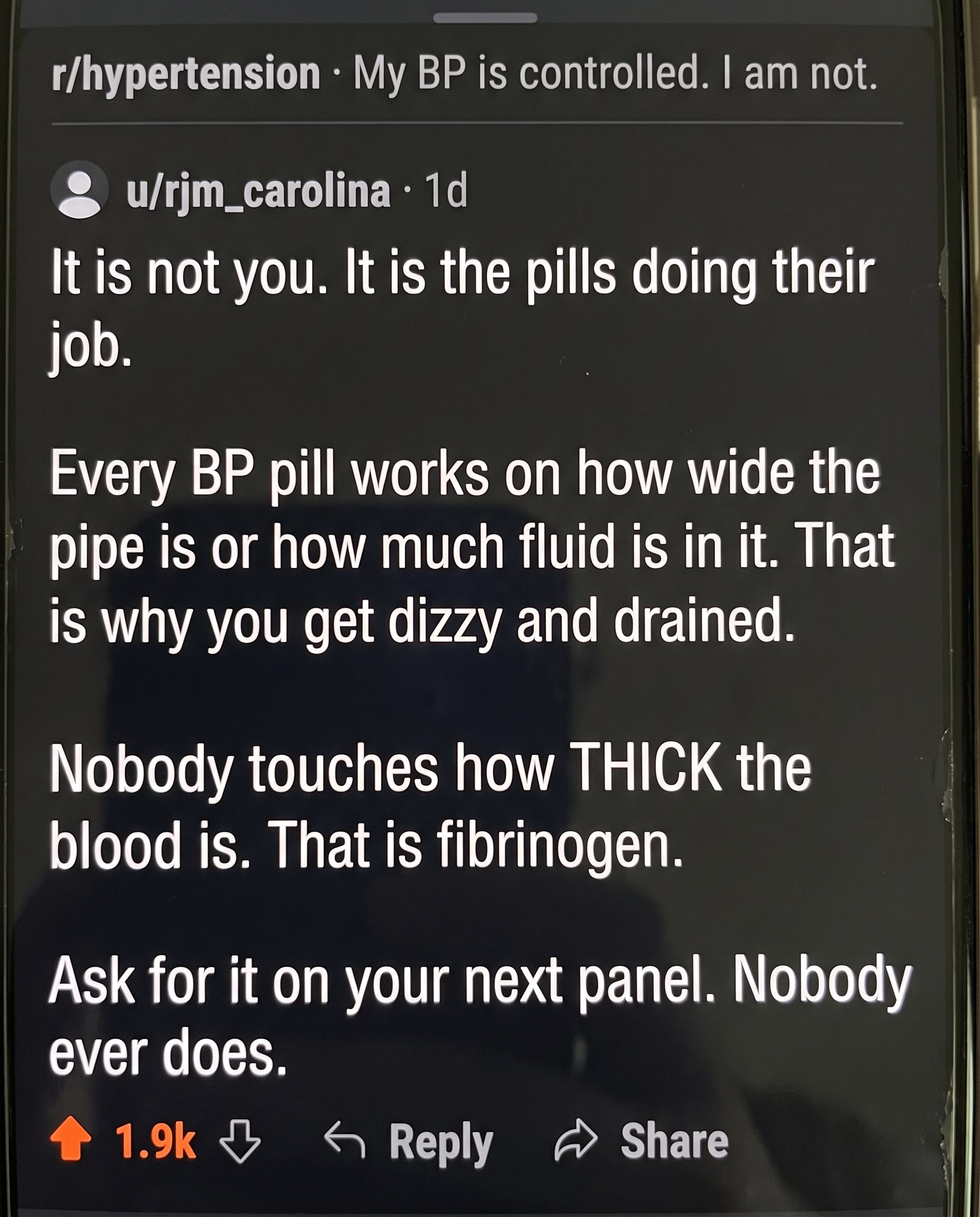
I stared at it for twenty minutes.
How thick my blood is? Not my salt? Not my dose?
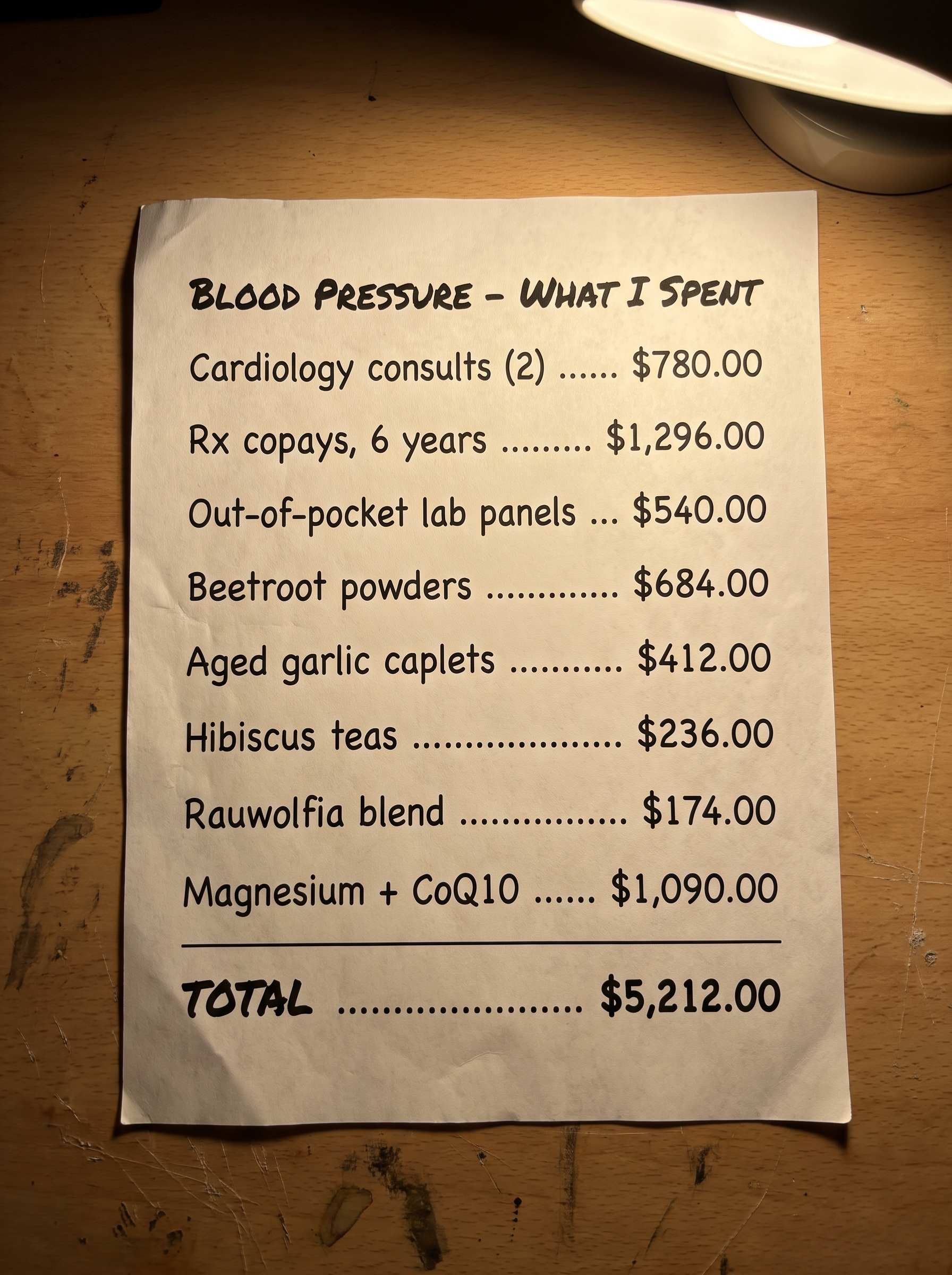
I'd spent six years switching pills. Money on cardiologists. Metoprolol that flattened me. Beet powder, garlic and hibiscus off the internet that did nothing.
And it wasn't any of that — it was a lever nobody had ever measured?
At 2 a.m., I found the research. And it changed everything.
It Wasn't Your Fault. It Was Biology.
Your blood pressure isn't one dial. It has three levers — and every pill you've been handed pulls the same two. I ended up calling it the Two-Lever Trap.
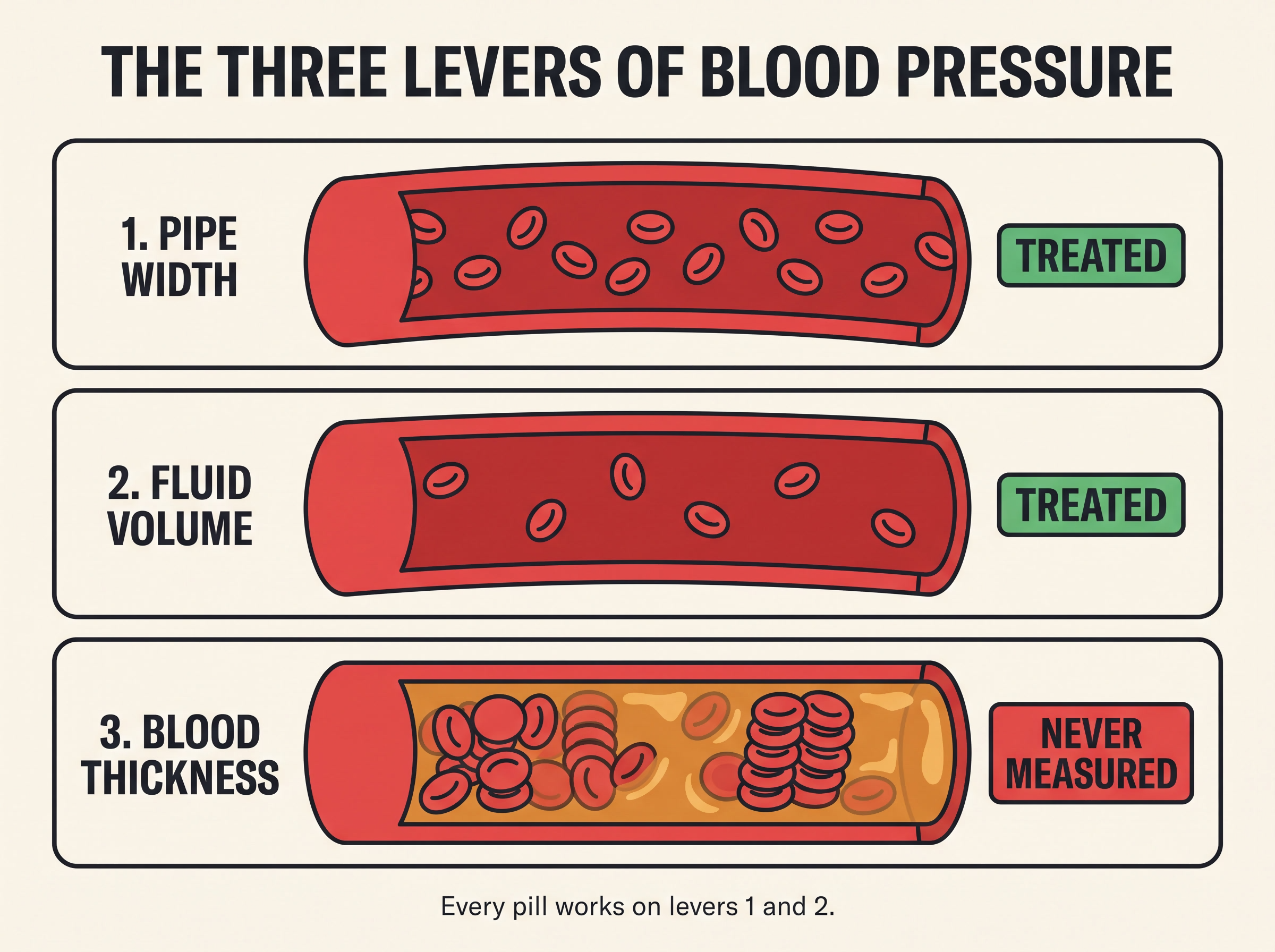
The Three Things The Two-Lever Trap Was Doing — Simultaneously
1. The Thick Blood Nobody Measured
Fibrinogen thickens your plasma and stacks red cells like coins, so the blood pushes back harder and the pressure climbs. It runs high in hypertension — and it isn't on your standard panel.
2. The Pill That Squeezes Everything Else
So the pills loosen the pipe, slow the pump and drain the tank until the number comes down. That's the dizzy stand, the drained afternoons and the quiet bedroom — the pills working exactly as designed.
3. Every Fix You've Been Offered Pulls The Same Two Levers
Switch pills, or grab beet powder, garlic and hibiscus off the natural shelf — every one pulls the same two levers. Not one touches how thick the blood is.
Three symptoms. One trap. All unresponsive to anything aimed at the pipe instead of what's inside it.
And let me be plain: your prescription is real medicine. It does exactly what it says on the number, and nothing on this page is a reason to stop, skip or change a dose on your own. That's your doctor's call — always.
What Didn't Work — And Why
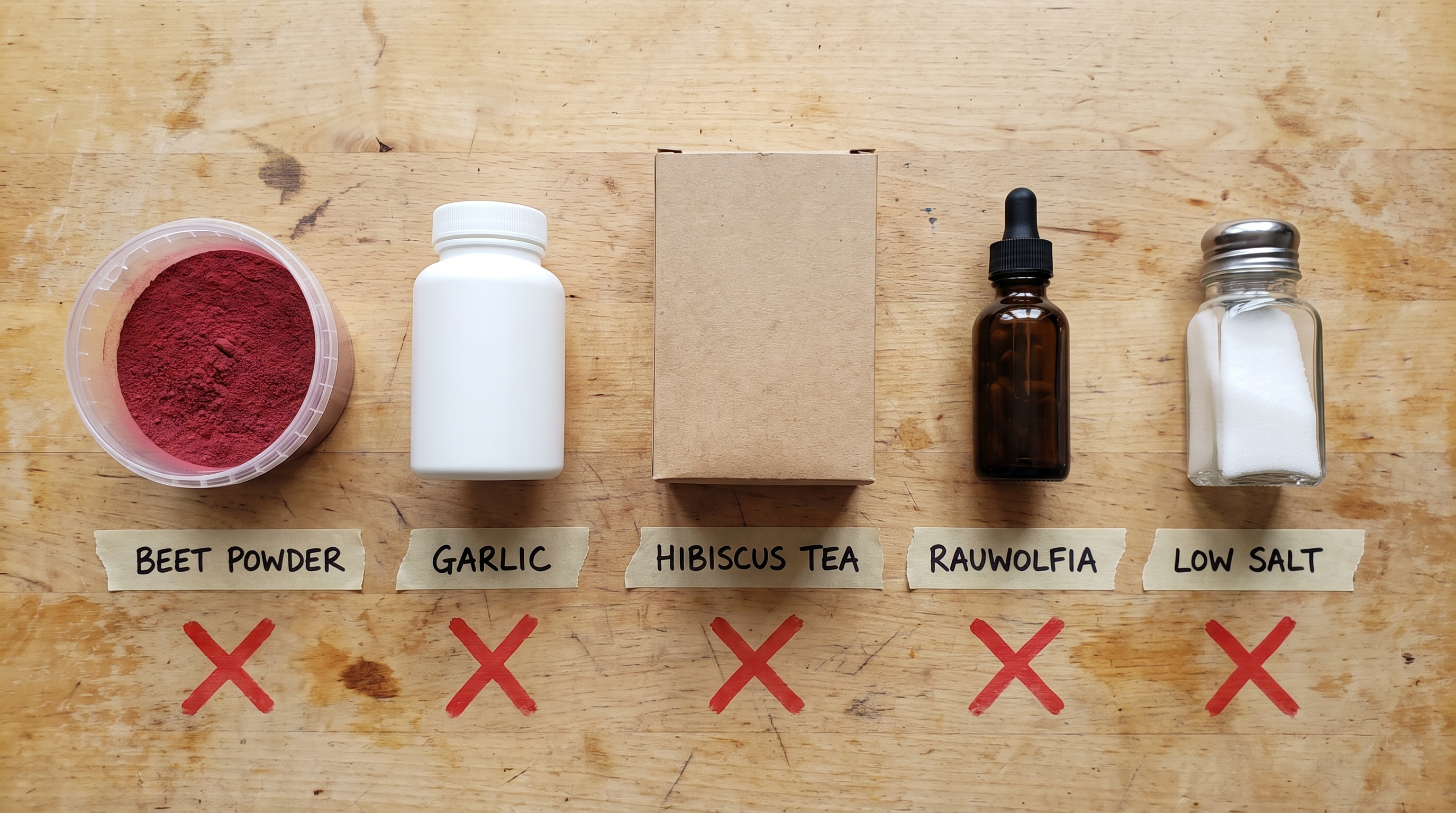
Switching pills traded the cough for the ankles and the ankles for the fog — lisinopril, losartan, amlodipine, metoprolol all pull the same two levers, so the price just changed shape.
Beet powder, garlic and hibiscus relax the pipe, work the wall or drain a little water. You didn't try the wrong brand — you tried the same lever six times. That's why so many men swear “natural BP stuff” does nothing.
Low salt, magnesium and rauwolfia blends moved a point or two without touching the thickness running all three problems at once.
I Tried To Buy Exactly What I Needed. It Didn't Exist.
So the next morning, I went to buy nattokinase. Or I tried to.
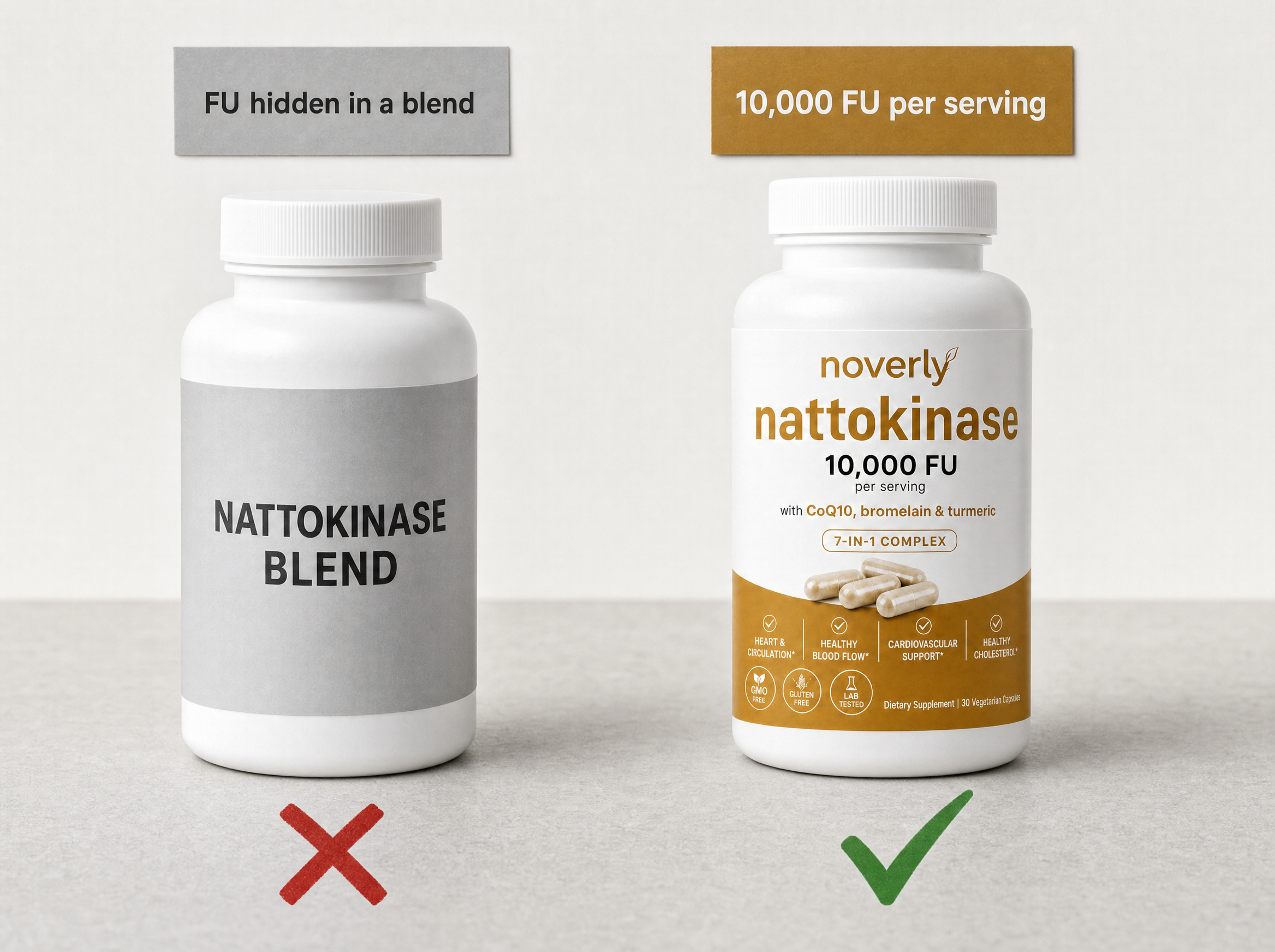
Every bottle I could get my hands on. The capsules labelled in milligrams that never said FU at all. The “heart blends” with a dozen extras and the enzyme buried at the bottom. The cheap tubs that wouldn't say how much was in them.
A couple hundred dollars, gone.
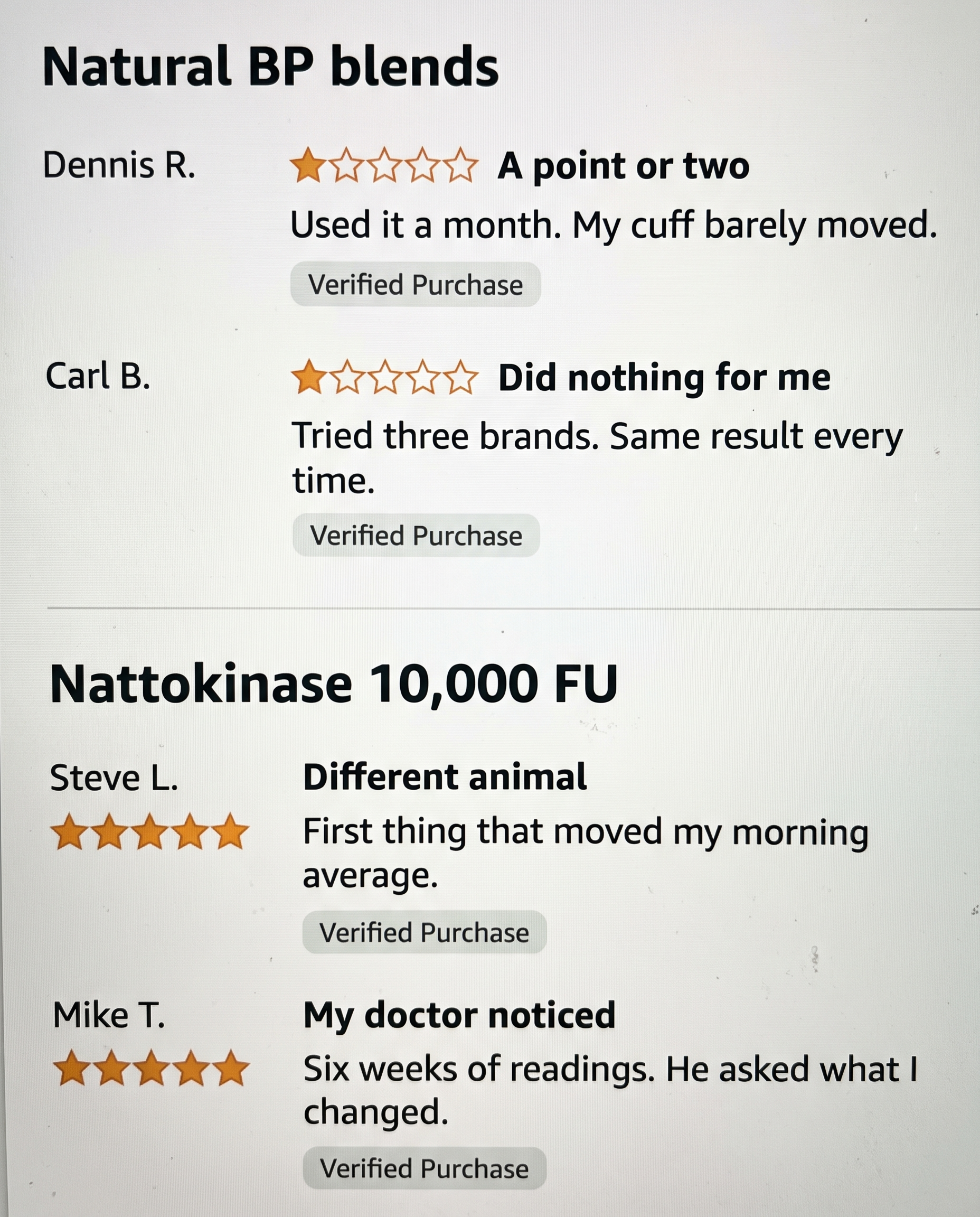
And after weeks on them? My cuff didn't move a point.
I started second-guessing the whole thing. Maybe I'd read it wrong.
So I went back to the research one more time.
That's when I found what actually works.
The version that actually works isn't just “nattokinase.” It's the enzyme measured in FU — real activity — at 10,000 FU per serving, five times the 2,000 FU that lowered blood pressure in the double-blind trial.
Milligram-only labels are a weight, not a result. Blends hide the dose. Cheap ferments lose their activity before they ever reach you.
I needed the real thing. So I tracked down a lab that ferments it properly — and went to watch how they actually make it.
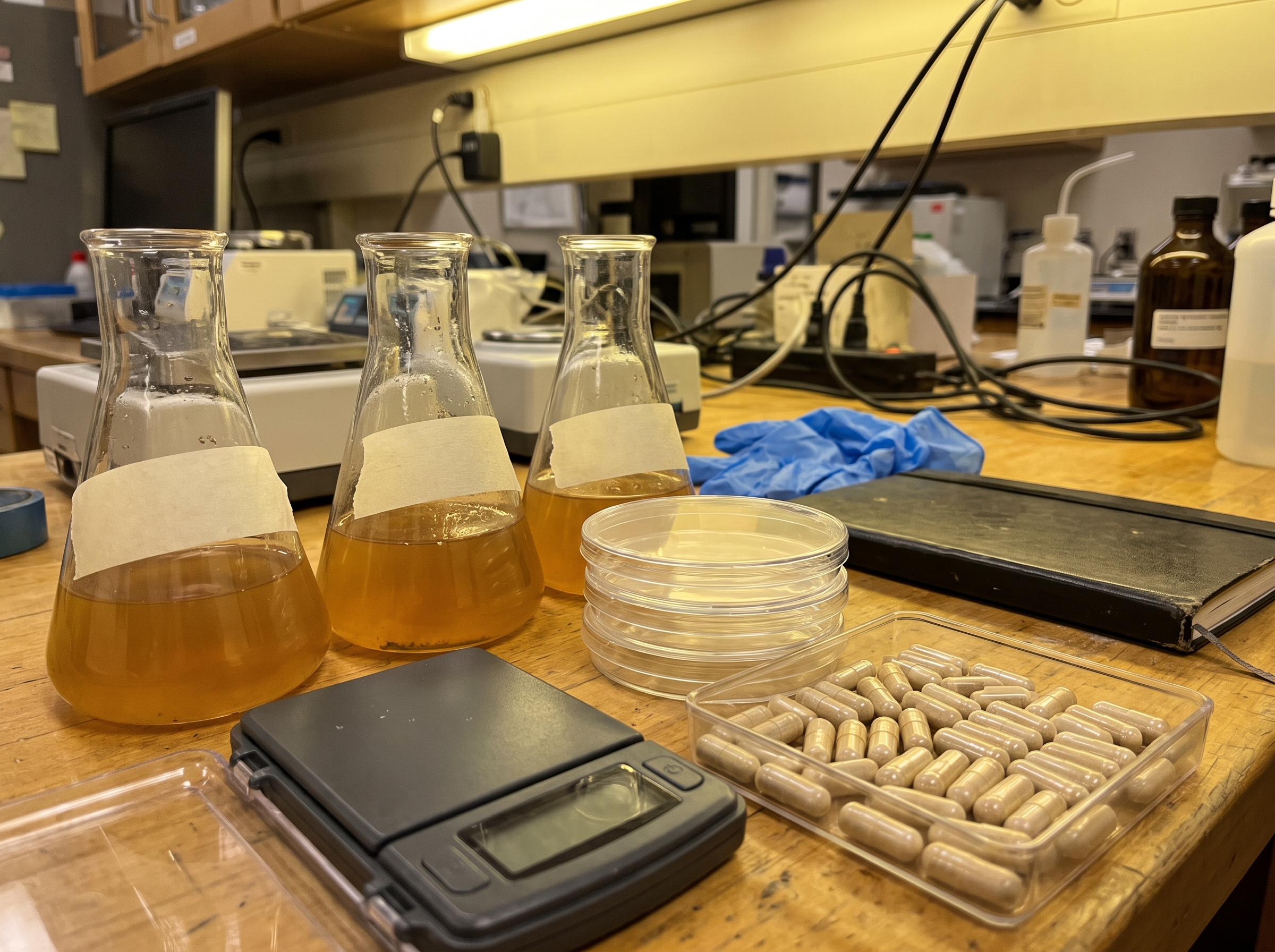
Flasks full of ferments that didn't hold. Batch after batch, assayed and re-assayed. Getting nattokinase to measure a true 10,000 FU — instead of the milligrams-of-powder shortcut everyone else ships — took months.
But it worked.
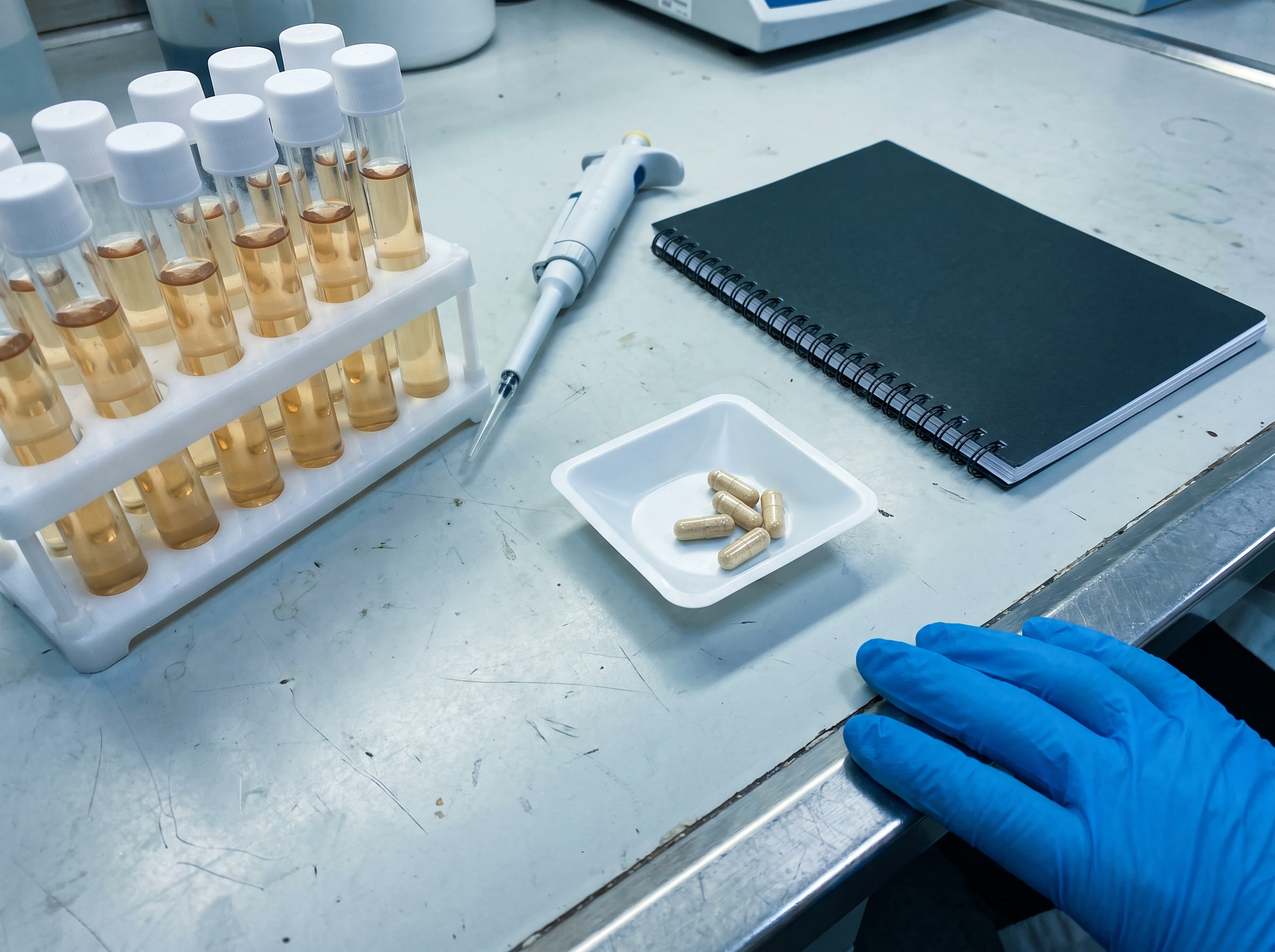
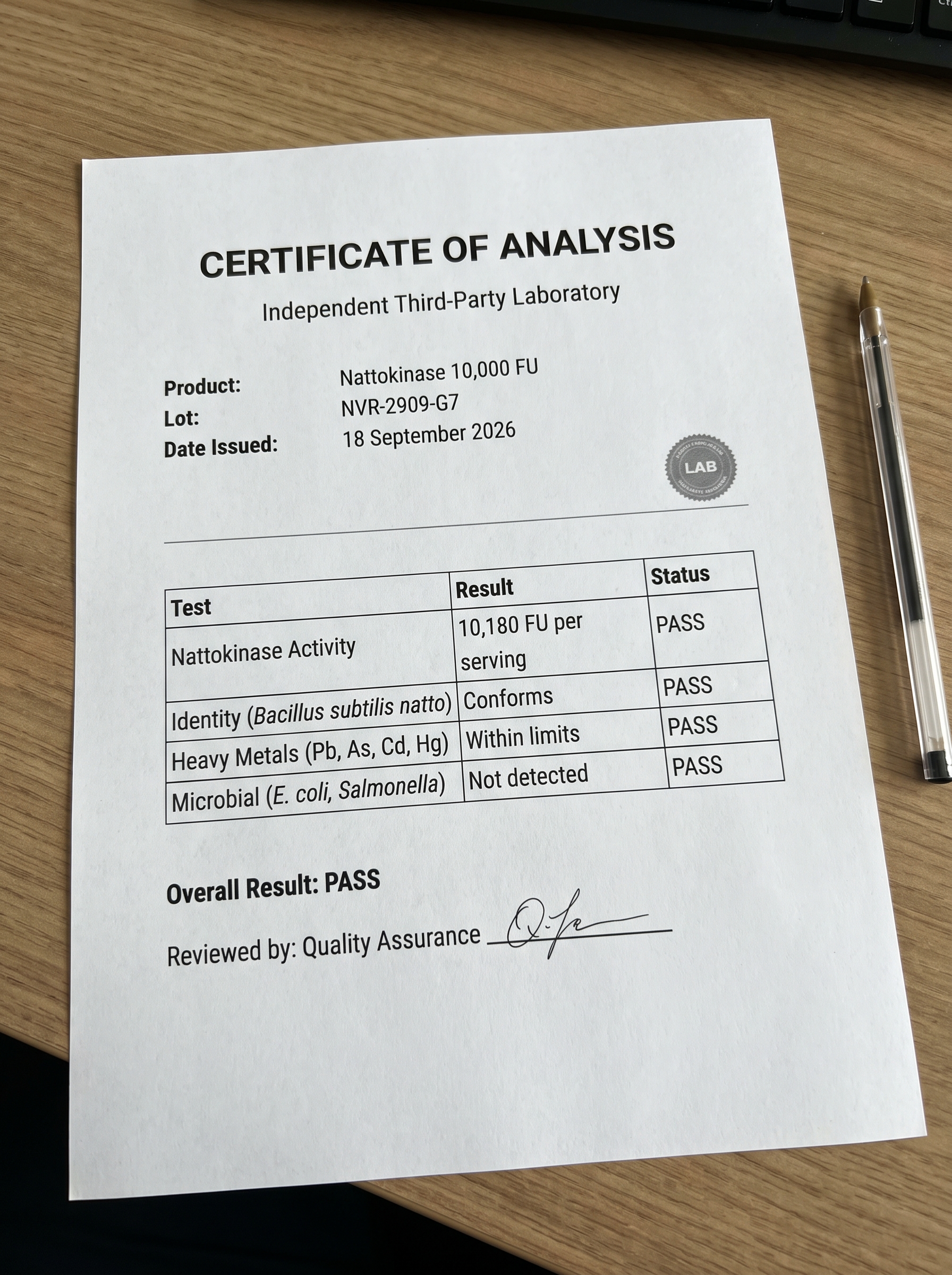
Real enzyme activity. The full 10,000 FU per serving. A 7-in-1 heart and circulation complex around it. And every batch third-party tested — so nobody has to take my word for what's inside.
The Morning I Finally Tried It. Changed Everything.
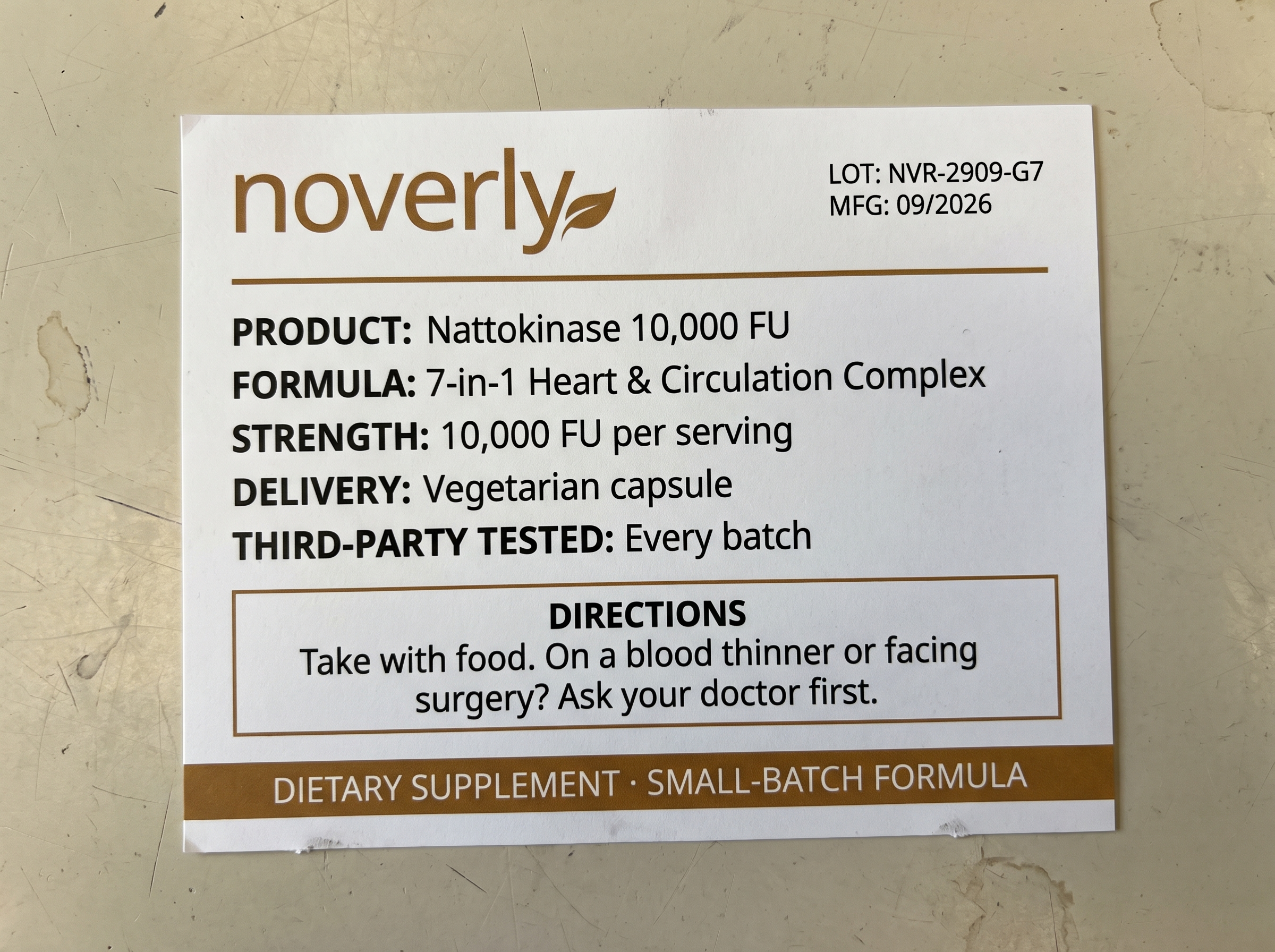
With breakfast, as the label directs. That's the whole thing.
Nothing. I took my pills like always and wrote my morning reading down like I have for six years. I didn't let myself believe anything yet — I wanted to see if it held.

The morning readings stopped bouncing. Three readings, five minutes apart, landing closer together and a little lower. That's when I knew it was reaching something nothing else had touched.
Three mornings in a row under 137 on the top number. Sounds like nothing. If you've watched that cuff for six years, it's everything.

My wife caught me grinning at the cuff at six in the morning. I showed her the notebook. She'd been asking me for two years to “just talk to the doctor about it.” Now I had something to talk to him with.
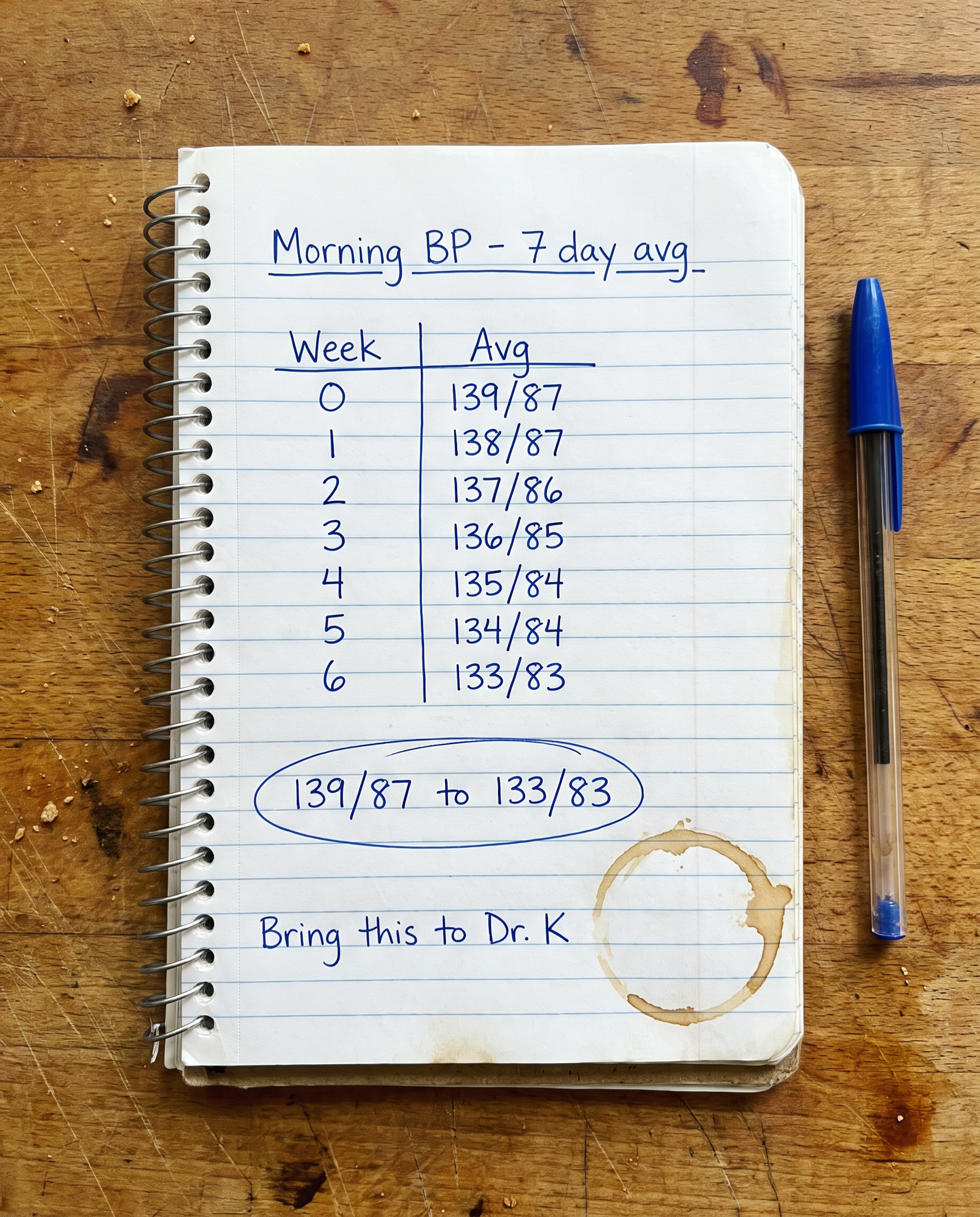
I took the notebook to my next appointment and didn't ask him for anything. He read it twice and brought up lowering a dose himself. I'd been writing down every morning reading the whole way — the seven-day average went from 139/87 to 133/83.
You Can Get Your Numbers Back. Forever.
Then I did the thing that would either prove I was right or make me look like a fool. I put it out there and told men to test it on themselves.
Within a couple weeks, 40 men had tried it. Not one told me I was wrong.
Steadier mornings. Readings drifting down. Notebooks carried into appointments. The same story, again and again — on the same prescriptions. Then it was hundreds. Then thousands.
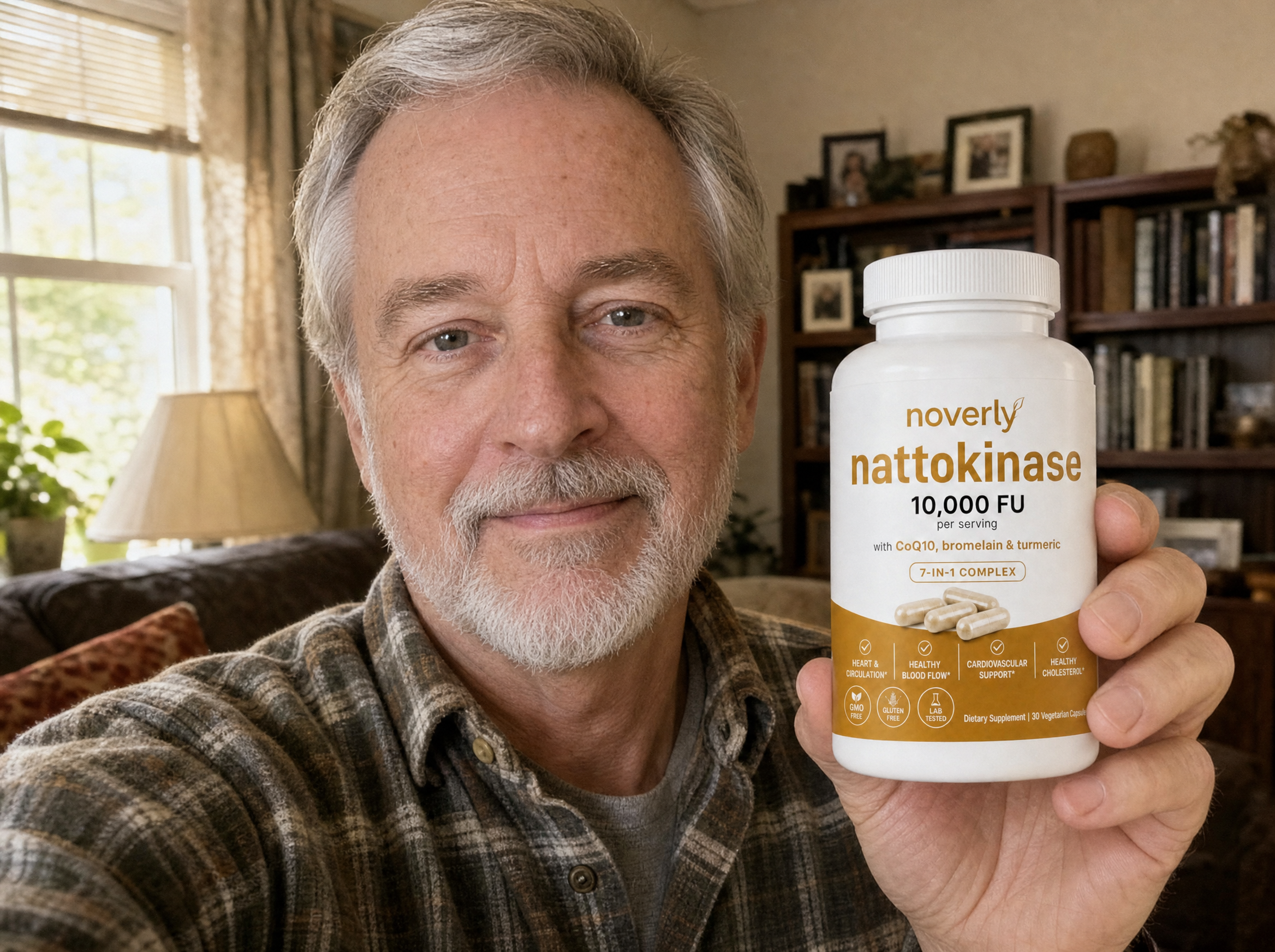
Don't Take My Word For It — Take Theirs
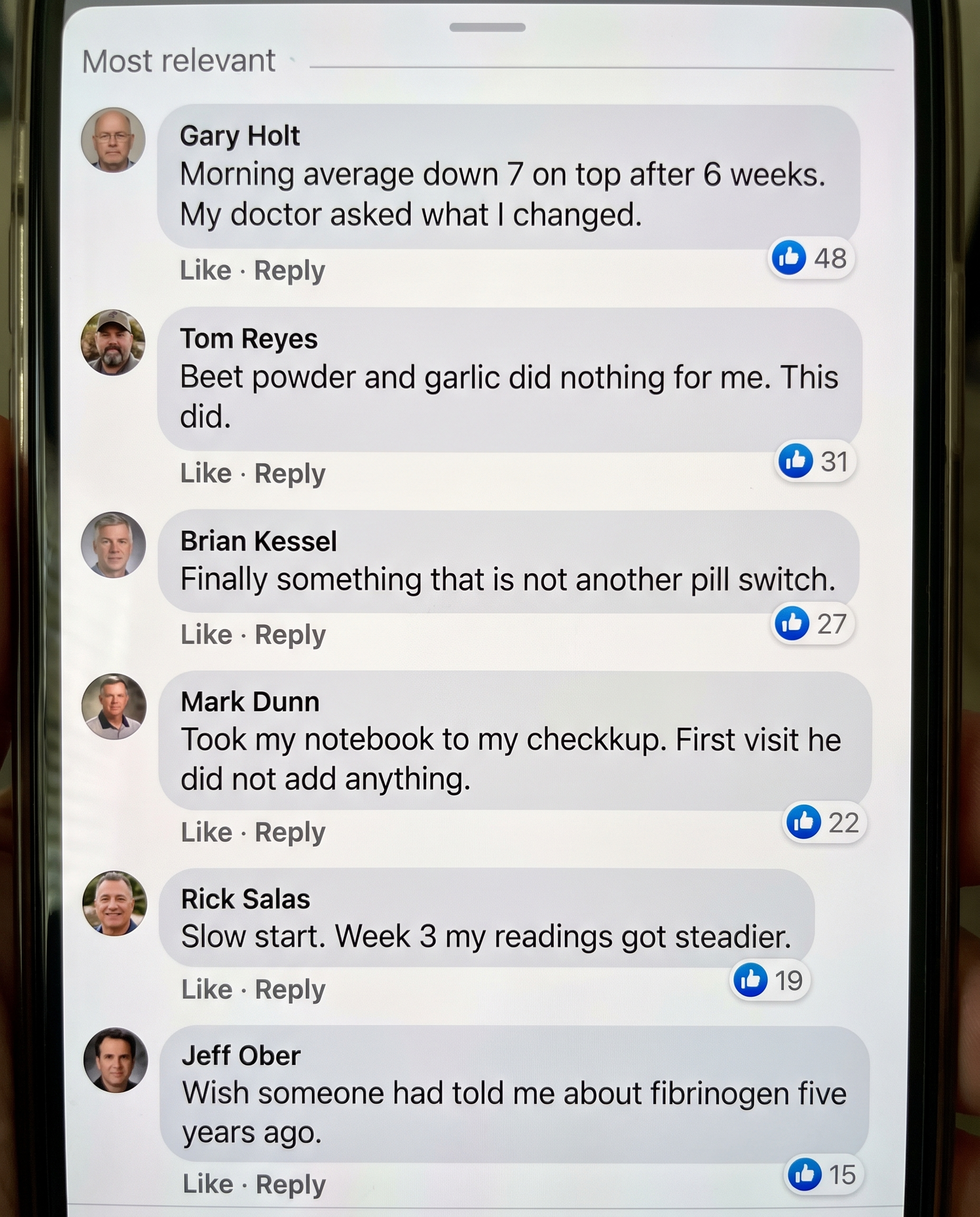

"Six years on lisinopril and every visit he added something. This time he took my notebook, went quiet, and talked about cutting back."

"Beet powder, garlic, hibiscus — a point or two, every time. This is the first thing that worked on something different."

"I'm an engineer. I wanted the reason, not a pep talk. Three levers and I'd only ever been treated on two — that made sense of everything."

"Nothing for two weeks and I almost quit. It isn't a replacement for my meds — but my morning average is down five."
You Have Two Choices Right Now
Keep going as-is
Another pill switch that trades one side effect for another. Another tub off the natural shelf working the same two levers. More mornings grabbing the counter, and a number that's fine while you're not.
Try the third lever
The full 10,000 FU, third-party tested — every morning for 90 days, alongside everything your doctor has you on, with the risk entirely on us.
I'm Not Selling You Hype. I'm Showing You What Worked.
Try Noverly Nattokinase 10,000 FU for 90 days. If it doesn't move anything — if your cuff reads the same in week eight as it did on day one — send it back. Even if the bottle is empty. Full refund. No questions.
- 10,000 FU per serving — measured enzyme activity, not milligrams of powder.
- Five times the 2,000 FU used in the double-blind blood-pressure trial.
- A 7-in-1 heart & circulation complex — CoQ10, bromelain, turmeric and aged garlic around the enzyme.
- Third-party tested every batch — independent proof, not “just trust us.”
I spent six years and more than five thousand dollars chasing this — cardiologists, copays, pill after pill, tub after tub off the natural shelf. This one small bottle did what none of it could.
Here's Exactly What Happens When You Order
You click the button, choose your supply, and get an order confirmation within a few minutes. (Check spam — sometimes it lands there.)
Your bottle ships with a tracking number, so you can follow it the whole way.
Take it with breakfast, as the label directs. Keep taking every prescription exactly as written — this goes after the lever they don't touch. If you take warfarin, a DOAC, daily aspirin or any other blood thinner, or you have surgery coming up, talk to your doctor before you start.
Most men notice the cuff first — readings steadier, a few points lower. Write down every morning reading and see it for yourself.
If your numbers haven't moved, email us. Full refund, keep the bottle. No questions.
One more thing: order today and you also get our short “First Week Guide” by email — it answers what everyone asks: “Can I take it with my blood pressure meds?” “What time of day?” “How do I ask my doctor for a fibrinogen test?” Keep taking your existing medication and let this go after the lever it never touches.
That's it. No extra pills. No fillers. Just nattokinase at the dose the research actually supports.
This Isn't Amazon. We Make Small Batches.
Two Questions To Ask Yourself
If the answer to both is no, here's the whole thing in one line:
If it doesn't work, you get your money back. If it does, you get a notebook your doctor can't ignore.
One more thing. That thread I found — the one buried with the comment that changed everything — picks up new men every week, all searching for the exact thing you just found on this page.
P.S. — People ask why Noverly doesn't just make a giant batch and flood the shelves. Enzyme activity is exactly the part everyone cuts to save money, and measuring it takes time. I'd rather it run out for a week than ship a capsule that says 10,000 FU and doesn't hit it.
You've Been Burned Before. Here's Why This Is Different.
90 days. Full refund. Keep the bottle. If it's not working — Day 7, Week 2, Day 89, any time — just email us.
You've been burned enough times. I know the feeling of losing hope again.
Out of thousands of bottles, only a handful ever came back. Either it works for you, or you pay nothing.
Wherever you are right now — still grabbing the doorframe when you stand, still asleep in the recliner by eight, still being told “that side effect would be unusual” — you can be the next man that thread found. Your first steady reading could be a week away.
The morning I first tried it, I almost didn't. I'd been let down so many times I figured I was the one man nothing worked for. Six years of pills, and “that side effect would be unusual” was the only answer I'd ever gotten.
So I took it anyway. Practically certain I was wasting money again. Day 7, three readings in a row landed within two points of each other — I took a fourth to be sure.
Week ten, my doctor lowered a dose. His call, made off my notebook. I walked out to the truck and sat there a minute before I called my wife.
It's the small things that get me now. A notebook my doctor actually reads. A dose that went down instead of up. Not bracing every time he opens my chart.
Maybe you're where I was — thinking “he got lucky, it won't work for me.” I thought that too. Don't take my word for it. I've shown you the research, the lab test, and the reviews. But if you're dizzy, drained and tired of pretending you're fine, give yours the same 90 days I gave mine. Keep every pill your doctor has you on, write your readings down, then come back and tell me.
— Russell Pemberton, Blood Pressure Researcher & Educator
© 2026 Noverly · Terms · Privacy · Contact