8 Reasons Why Thousands Of Prediabetics in Your Area Are Switching to Noverly Pure R-Alpha Lipoic Acid

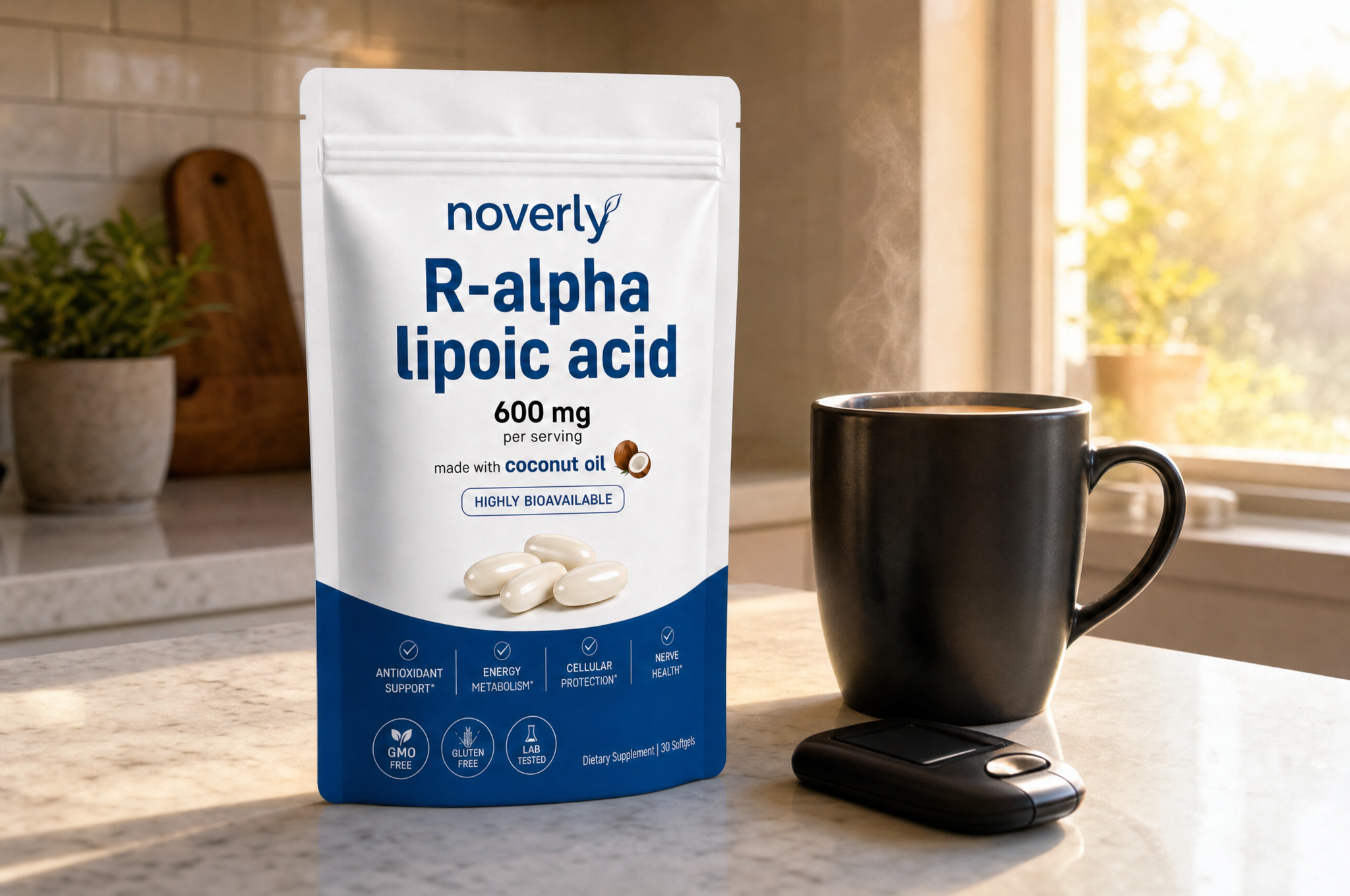
Noverly is one ingredient: 600 mg of R-(+)-alpha lipoic acid suspended in coconut oil, not dry powder. It opens the muscle’s GLUT4 glucose doors without needing your insulin — with zero S-form competing for the same transporter. One softgel with your coffee. It stacks with everything you already take and replaces nothing.
You were told the morning number is a willpower problem. It’s a transport problem — your insulin can’t open the doors any more, and the bottle you already tried was half a molecule fighting itself for the doorway.
Reason #1: Opens The Muscle’s GLUT4 Doorway Without Waiting For Insulin — Within Hours Of The First Softgel
Most people assume a creeping fasting number means the pancreas is wearing out. The pancreas is usually fine. The lock on the other end is what failed.
Most of your blood sugar is supposed to go into skeletal muscle, and it has exactly one way in: transporters called GLUT4. They sit parked inside the cell until insulin knocks and orders them up to the surface.
In insulin resistance, the knock stops working. The doors stay parked — so your liver’s normal 4 a.m. glucose release, the dawn phenomenon, lands in a bloodstream that can’t clear it. That is why 6:47 a.m. is your worst number of the day, and why walking after dinner fixes your post-meal reading and never touches your fasting one.
Reason #2: Berberine Works On Your Liver At Under 1% Absorption. This Works On Your Muscle At Around 30%.
Almost everything a prediabetic gets handed works on the supply side. Berberine is the biggest: an AMPK activator telling your liver to manufacture less sugar overnight.
R-alpha lipoic acid runs near 30% — and it isn’t even working the same organ. Berberine reduces how much sugar gets made. R-ALA increases how much gets taken in. One is the tap; the other is the drain. Your fasting number is a drain problem.
Then there’s the alpha lipoic acid you already bought. Nineteen dollars, 600 mg on the front, and no R on the back panel anywhere. That means racemic — a 50/50 blend of two mirror images.
Only the R-form occurs in your body and binds the enzymes it’s built for. The S-form is a manufacturing byproduct that competes with R for the very same transporter — so it isn’t inert, it’s in the way. Your 600 mg was really 300, and that 300 was fighting the other half for the doorway.
Here’s the part nobody says out loud. A prediabetic is worth almost nothing to the system managing you. A diabetic is a coded, billable, lifetime patient — quarterly A1C, monthly refill, permanent chart line. Your doctor isn’t the villain; he has seven minutes and a pad. But nobody in that chain earns a dollar from the fasting number you still have.
You didn’t fail alpha lipoic acid. You were handed the blank half of it.
Reason #3: 600 mg Moved Fasting Glucose 9.2 mg/dL In Pooled Human Trials
Thousands of prediabetics are already past the guesswork on this.
Dose–response meta-analysis, 16 randomized trials, n = 1,035. Endocrine Connections, 2022.
The largest fasting-glucose reduction landed at exactly 600 mg a day — the dose in this pouch. A separate 2019 pooled analysis put A1C at −0.35%.
Stabbing morning numbers. The post-dinner spike. The A1C that decides the appointment. The exact things being measured, at the exact dose in the pouch.
Reason #4: Recharges Your Own Vitamin C, E, Glutathione And CoQ10 Back Into Service
Every antioxidant you swallow gets used once. It neutralises a free radical, becomes spent, and then waits to be regenerated — and in a body running high glucose, that regeneration queue is backed up permanently.
Alpha lipoic acid is the exception in the whole cabinet. It is a redox recycler: after doing its own work, it reduces other spent antioxidants back to their active form. Vitamin C, vitamin E, glutathione and CoQ10 all go back into service.
That is the half of the job that has nothing to do with your meter. Sugar sitting in your blood generates the oxidative load behind the complications you are actually afraid of: the nerves, the retina, the kidney filter.
90-Day Guarantee — order with confidence.
Reason #5: Works In Water AND Fat — In A Coconut-Oil Carrier, Not A Dry Powder Capsule
What sets Noverly apart isn’t only what it leaves out. It’s whether the molecule gets in at all.
Alpha lipoic acid is both water- and fat-soluble, and it is the only common antioxidant that is. Vitamin C works in the watery interior of a cell. Vitamin E works in its fatty membrane. ALA works in both — which is how one molecule reaches the muscle cell’s cytoplasm and the membrane those GLUT4 transporters have to dock into.
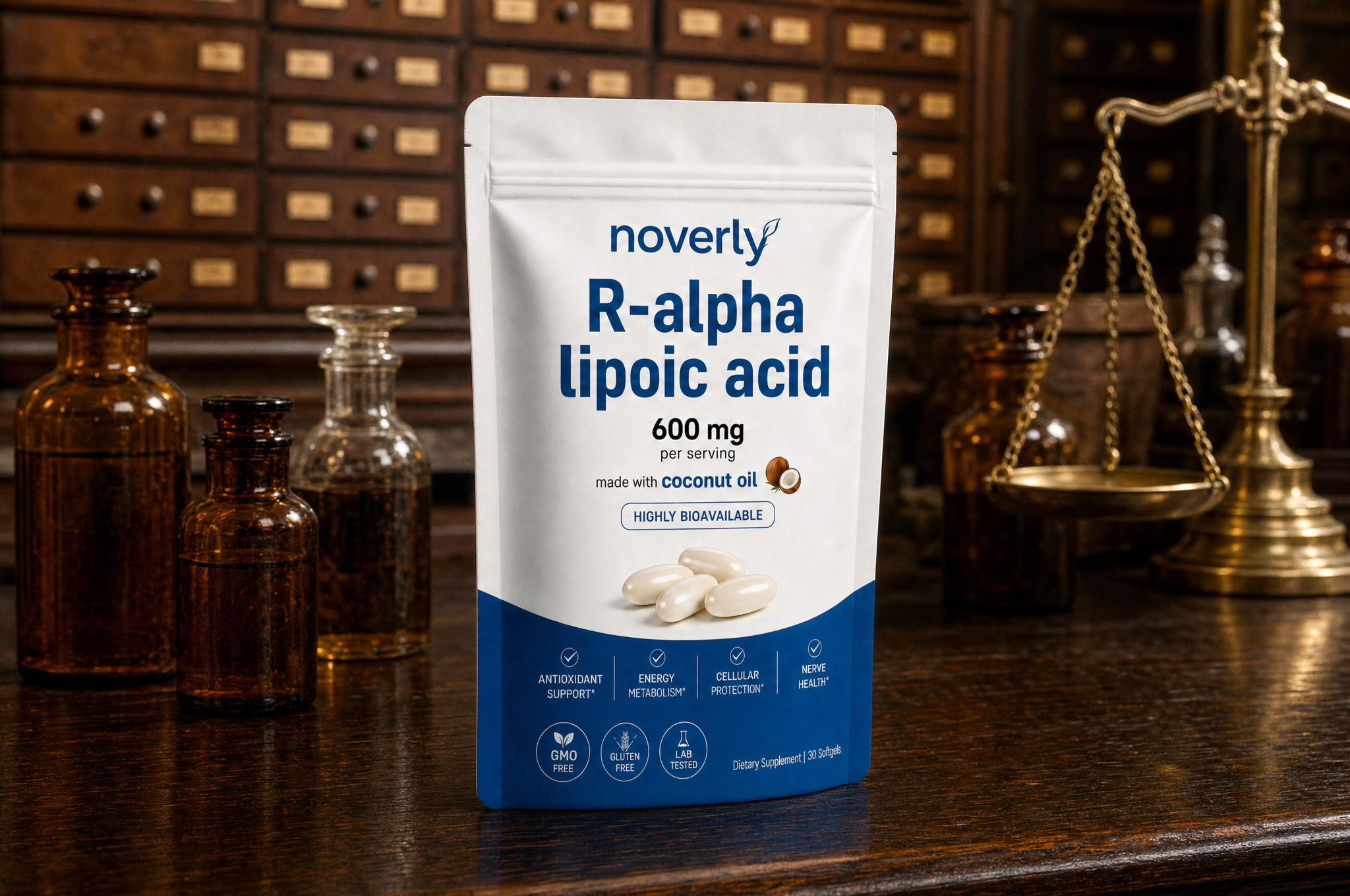
But fat-soluble means it needs fat to be absorbed. Most alpha lipoic acid on the shelf is dry powder in a hard capsule, swallowed with a glass of water — exactly the wrong vehicle for half of what the molecule can do. Noverly is suspended in coconut oil in a softgel. The carrier is the delivery system, not a filler.
And it is one ingredient. Most “blood sugar support” formulas stack twelve or fourteen at doses no trial ever used, because a long label sells better than a real dose:
The mechanism paper is not obscure. Estrada and Klip published it in Diabetes in 1996. Five years later the same group ran the follow-up and titled it “The Antihyperglycemic Drug α-Lipoic Acid.” Not supplement. Drug.
And it has been exactly that in Germany since 1966, dispensed as Thioctacid® and still Rx-only in Austria, Switzerland, Hungary and the Czech Republic. Sixty years of dispensing records.
So why has no American endocrinologist mentioned it? The reason is boring, not sinister. You cannot patent a molecule the body already makes. No patent, no way to recover the billion dollars an FDA approval costs, so nobody filed — and no rep ever walked into your doctor’s office with a dosing card.
90-Day Guarantee — order with confidence.
Reason #6: Stacks With The Statin And Blood-Pressure Pill You Already Take — Where Berberine Collides With Them
One softgel with your coffee, same time daily. Nothing else changes.
Berberine is a potent CYP3A4 inhibitor — the liver enzyme that clears statins, blood-pressure pills, blood thinners and SSRIs. Most people your age take one. R-alpha lipoic acid has minimal known interactions, and being insulin-mimetic rather than insulin-secreting, its action is glucose-dependent — it won’t drive you low the way a sulfonylurea can.
On a glucose-lowering drug? Tell your doctor and watch two weeks. On levothyroxine, separate by four hours.
Reason #7: Trusted By Prediabetics Who Were Told To Just Watch It And Come Back In Six Months
Thousands have already moved off the racemic bottle — most of them after years on berberine, cinnamon and chromium.
Every one of them was sitting in the 108–125 range with a follow-up already booked. Not a stock photo among them.
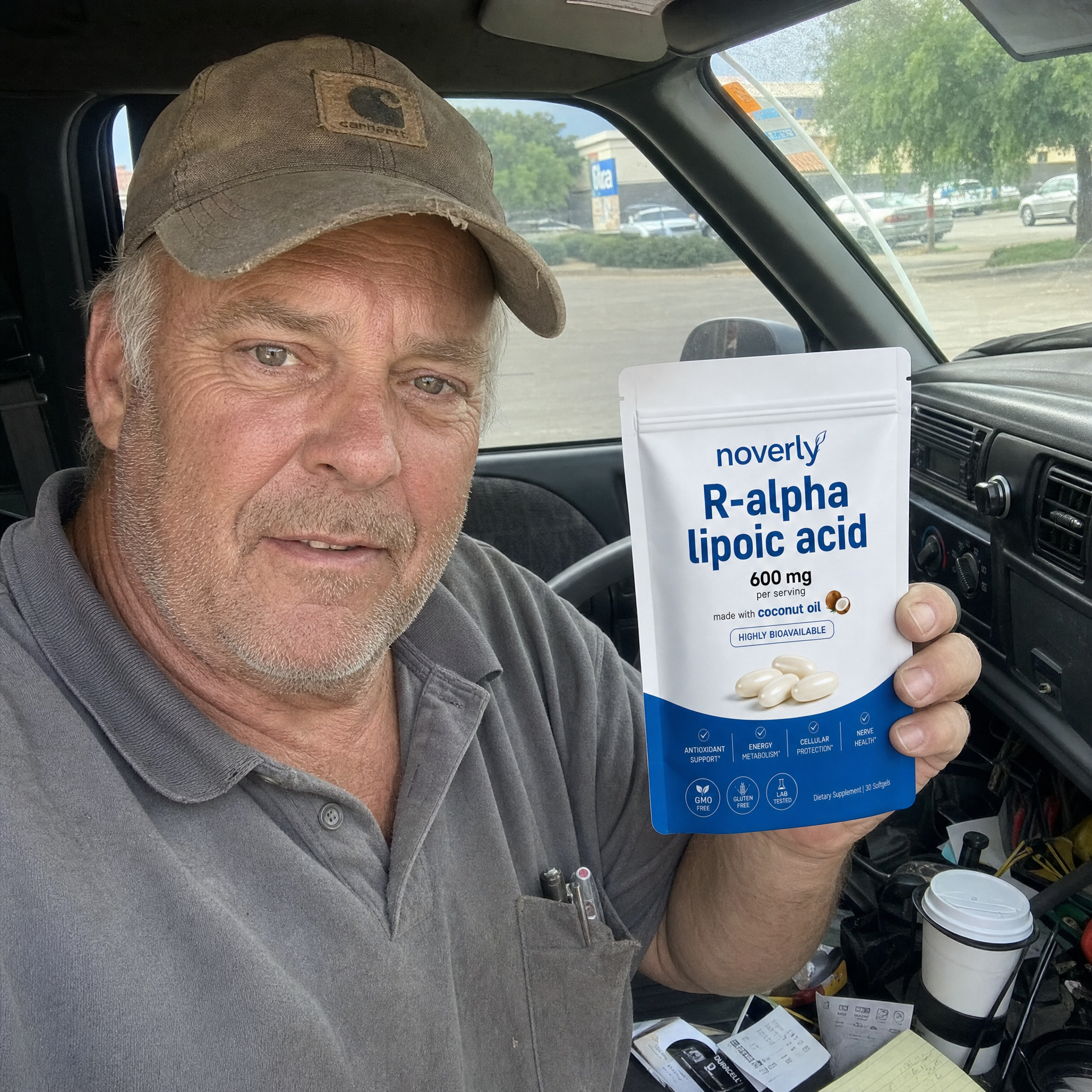
Doc said one more bad A1C and we start metformin. I’d been on berberine eight months, nothing. Switched in April. Fasting went 117 to 101 and my A1C came back 5.7 — first time in four years it moved the right way.
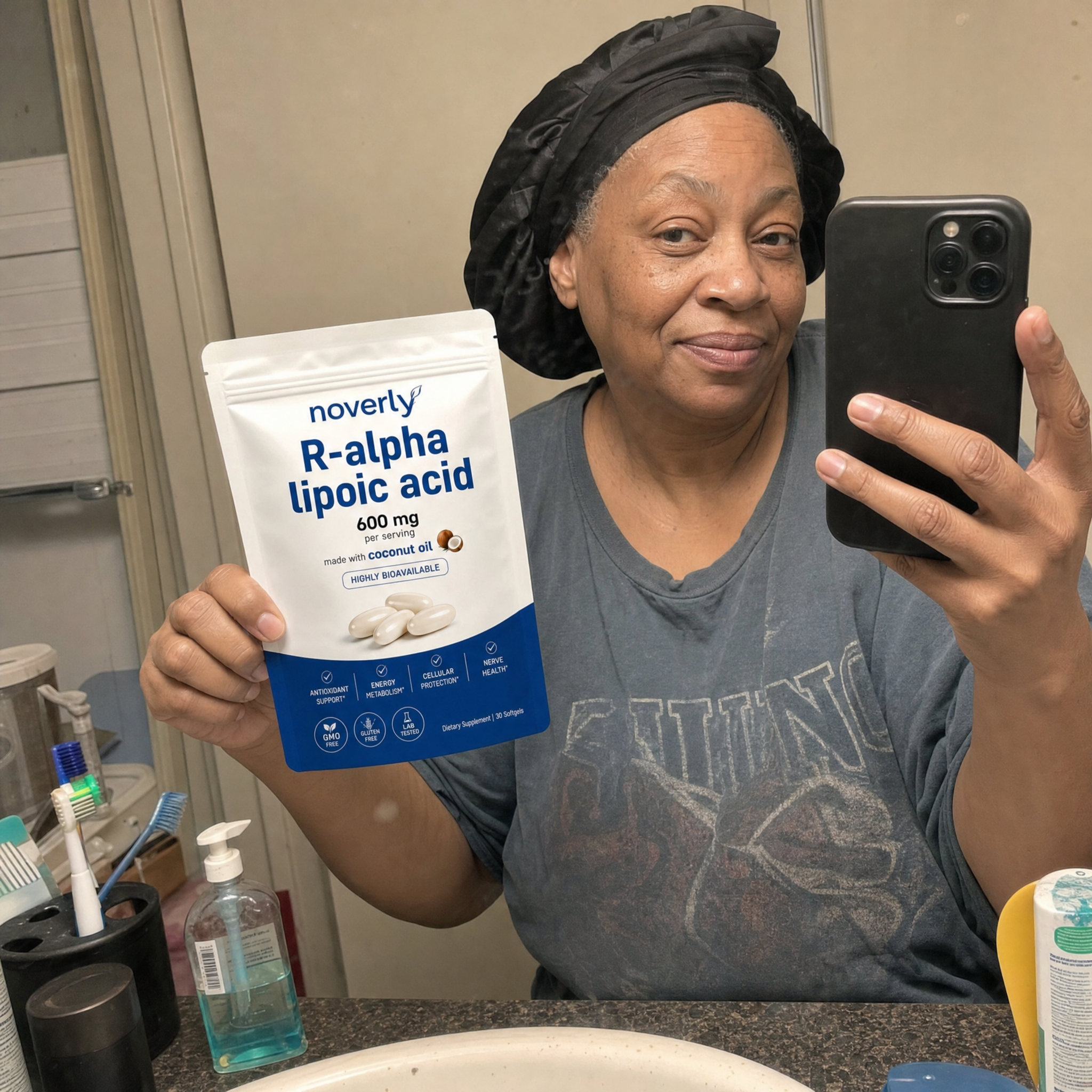
I bought the $19 bottle twice. Twice. Nobody told me half of it was the wrong half. Six weeks on the R-form and my morning number finally stopped starting with a 1.
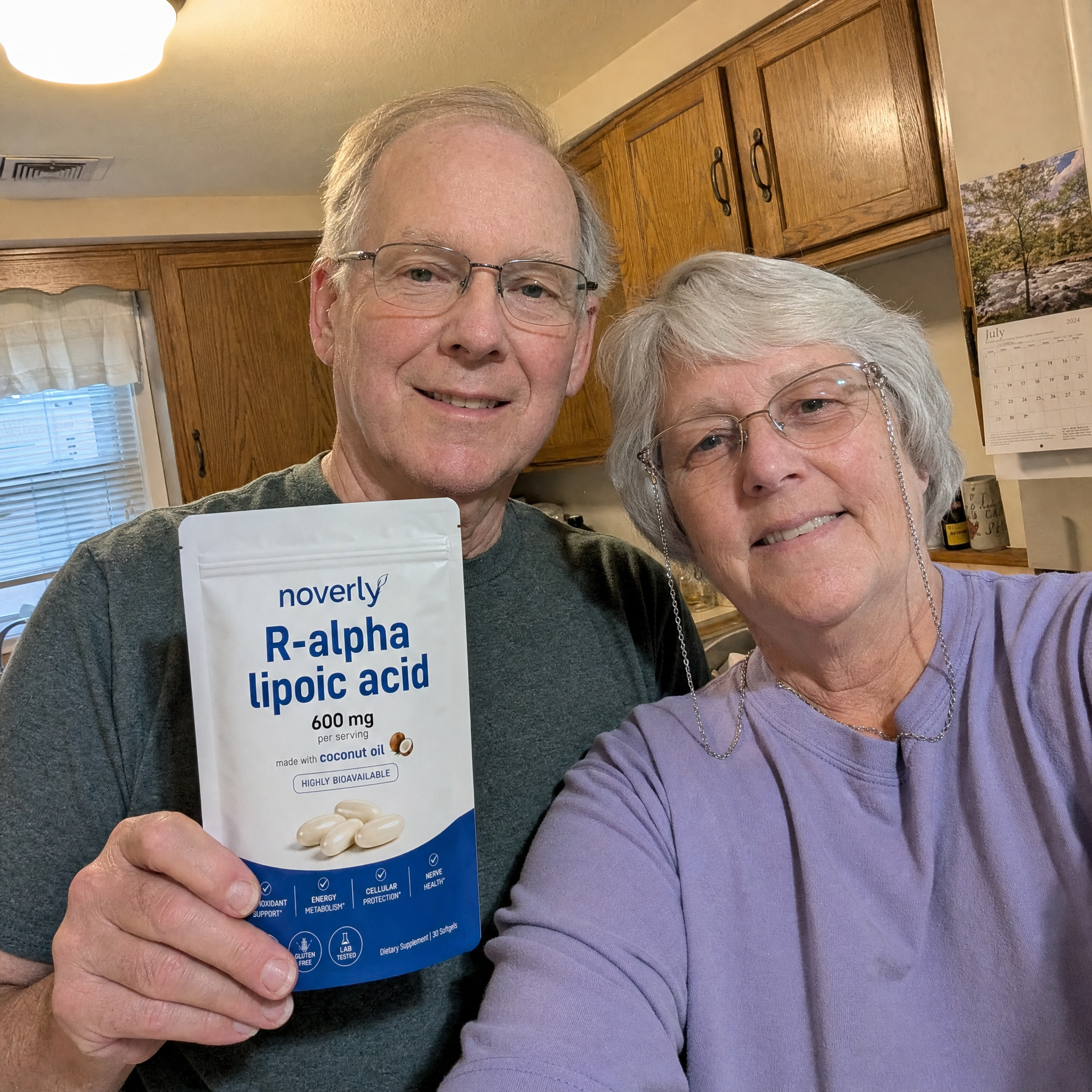
Carol here because Frank won’t. His mother lost a foot at 71 and he’s been terrified of that number ever since. He was 119 in May. He was 98 this morning, and he made me take this picture.
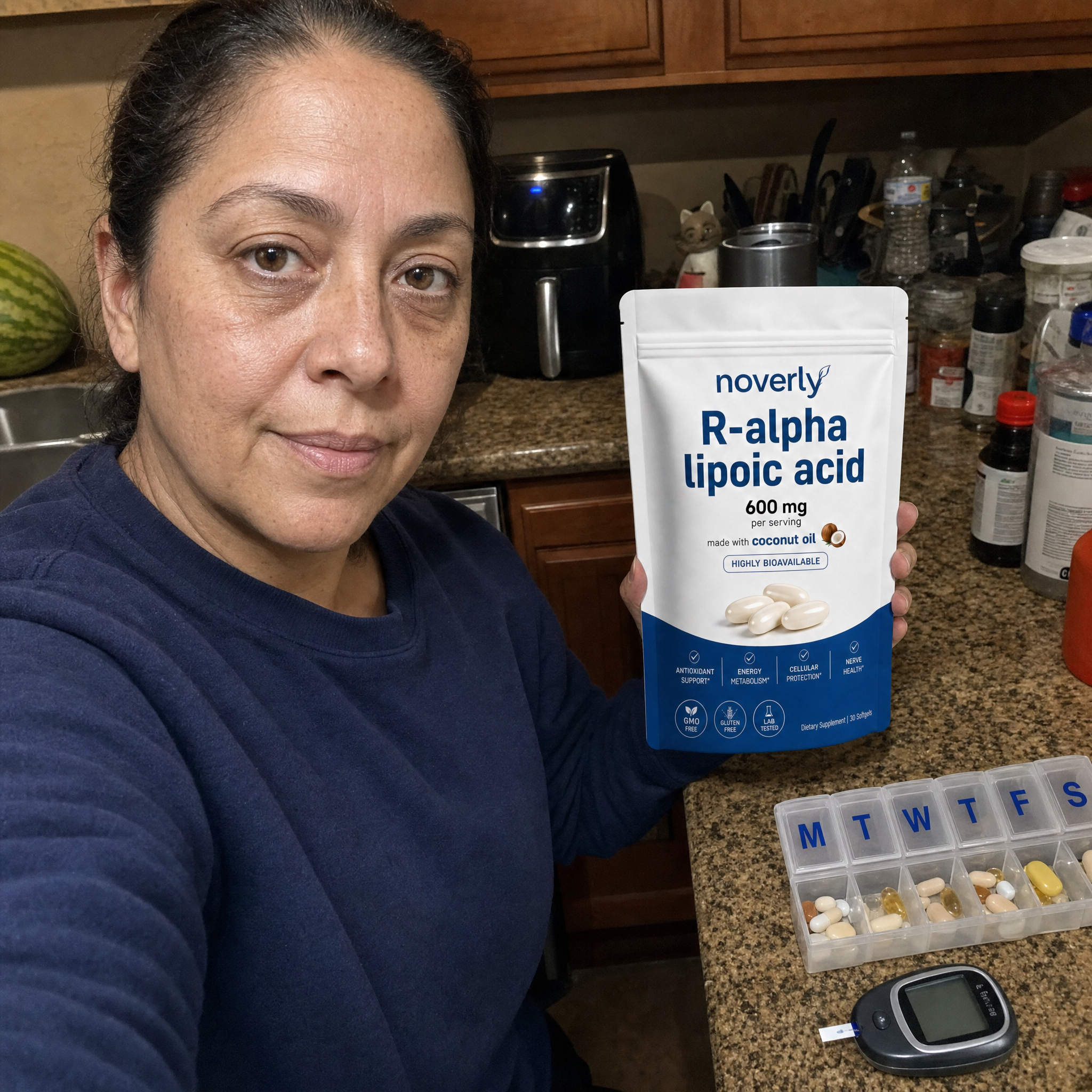
It goes in the same tray as my blood pressure pill and my magnesium. Nothing to reorganize, nothing to stop taking. My endocrinologist asked what I changed and this time I actually told her.
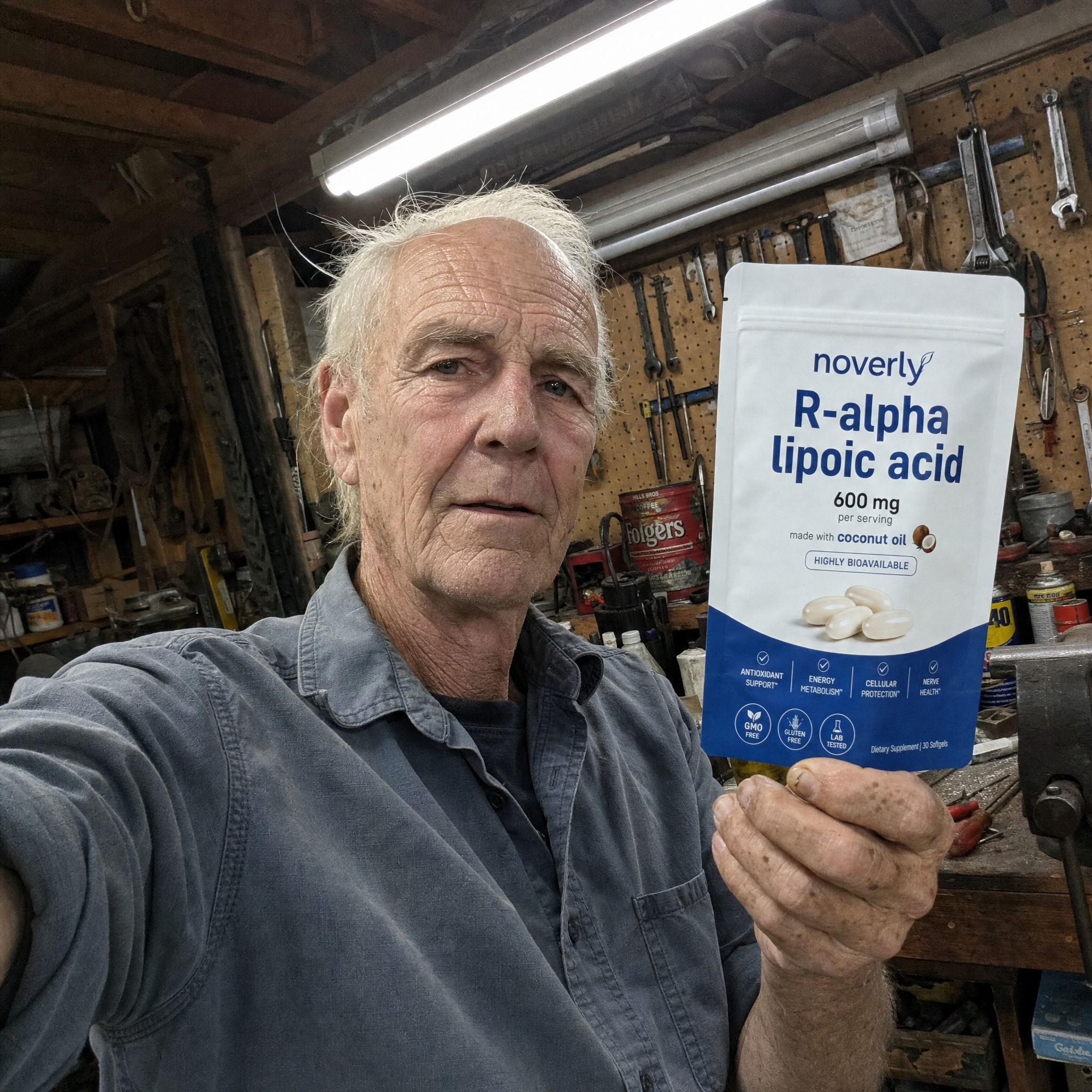
Cinnamon. Chromium. Apple cider vinegar. A Costco jar of every one of them. This is the only thing where the number on the meter actually moved and then stayed moved.
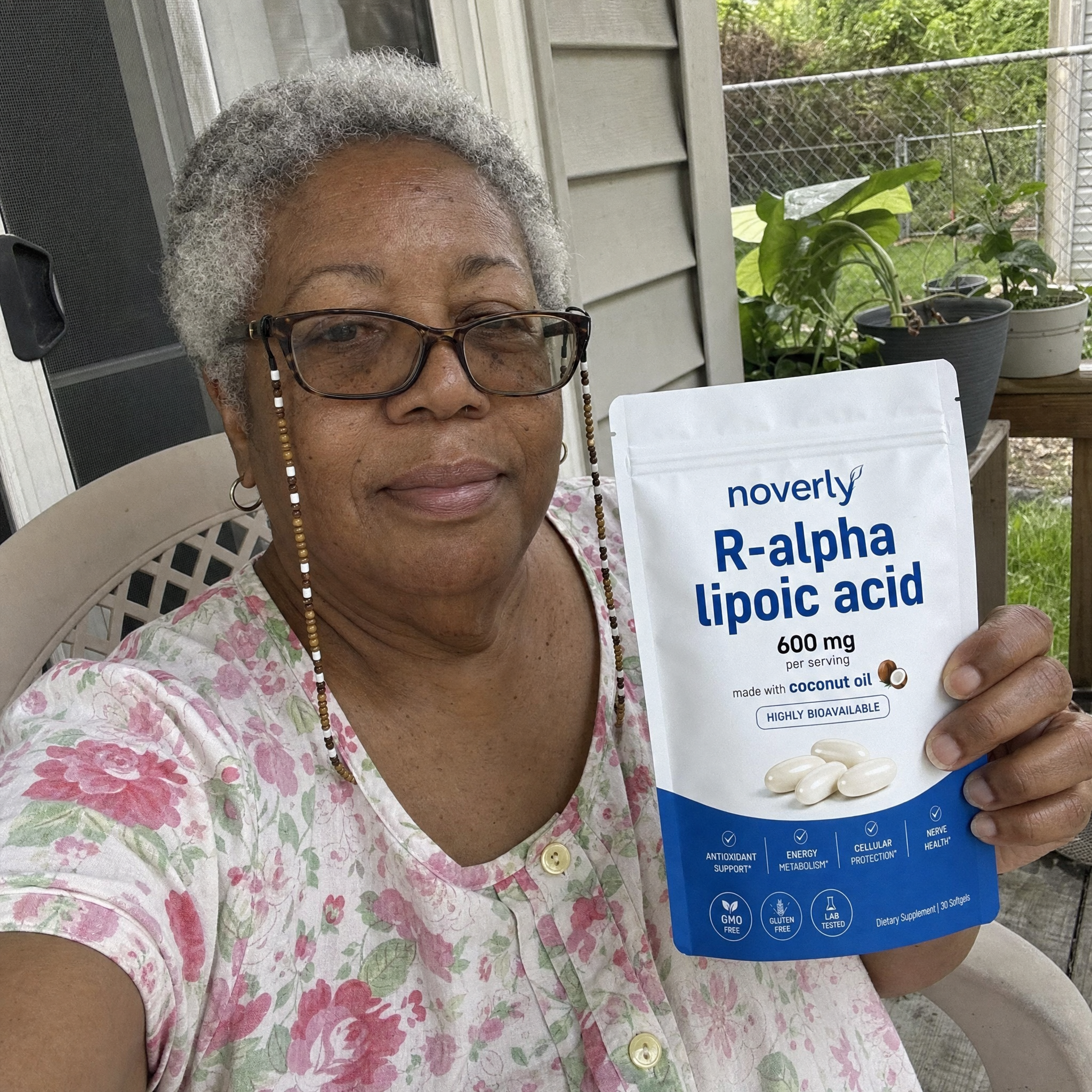
I used to fast a day and a half before a draw to make the number look better than it was. I didn’t do that this time. Didn’t need to. 104, honest.
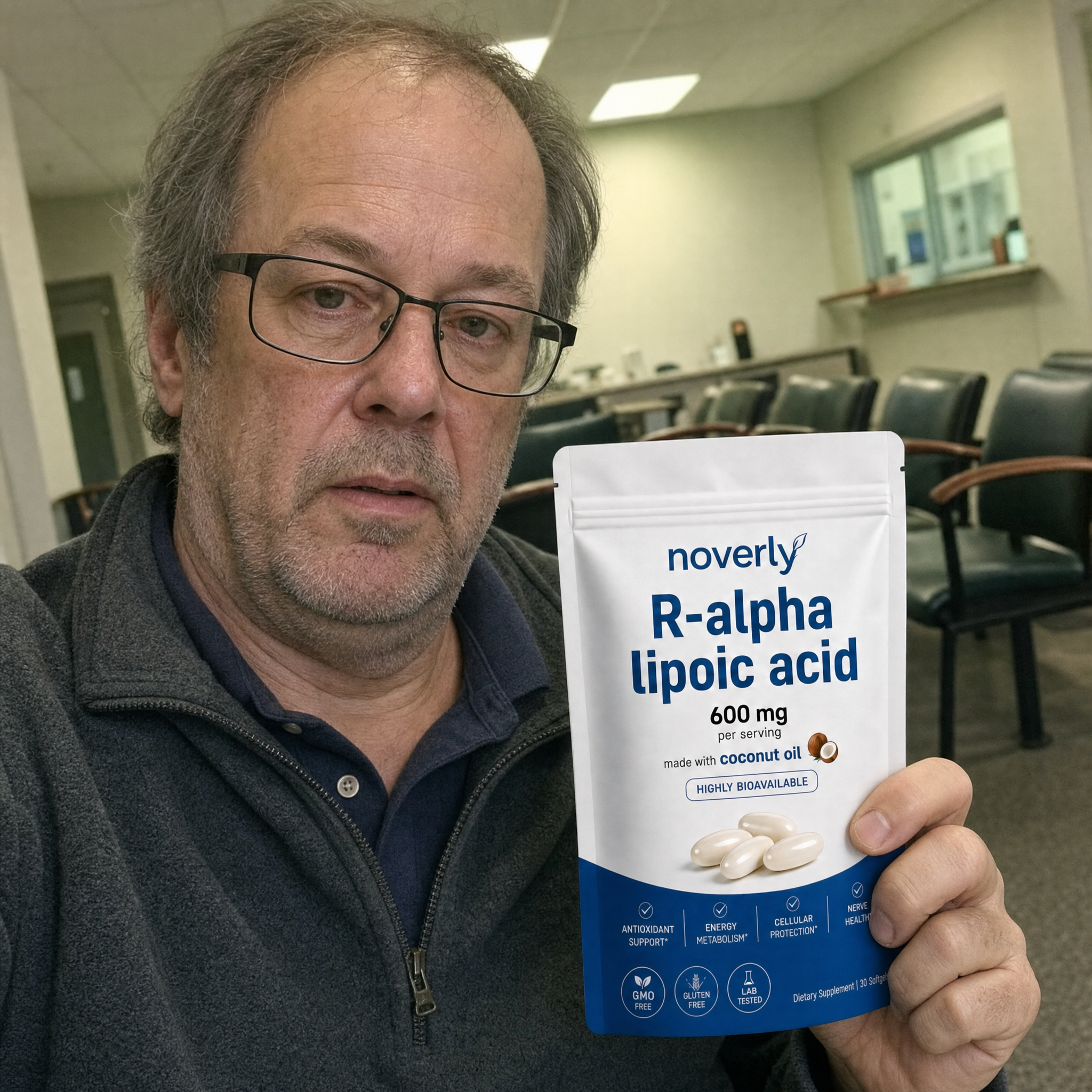
Sitting in the waiting room right now holding a printout that says 5.8. It said 6.2 in January. I did not change my diet and I did not start a drug. I changed one bottle.
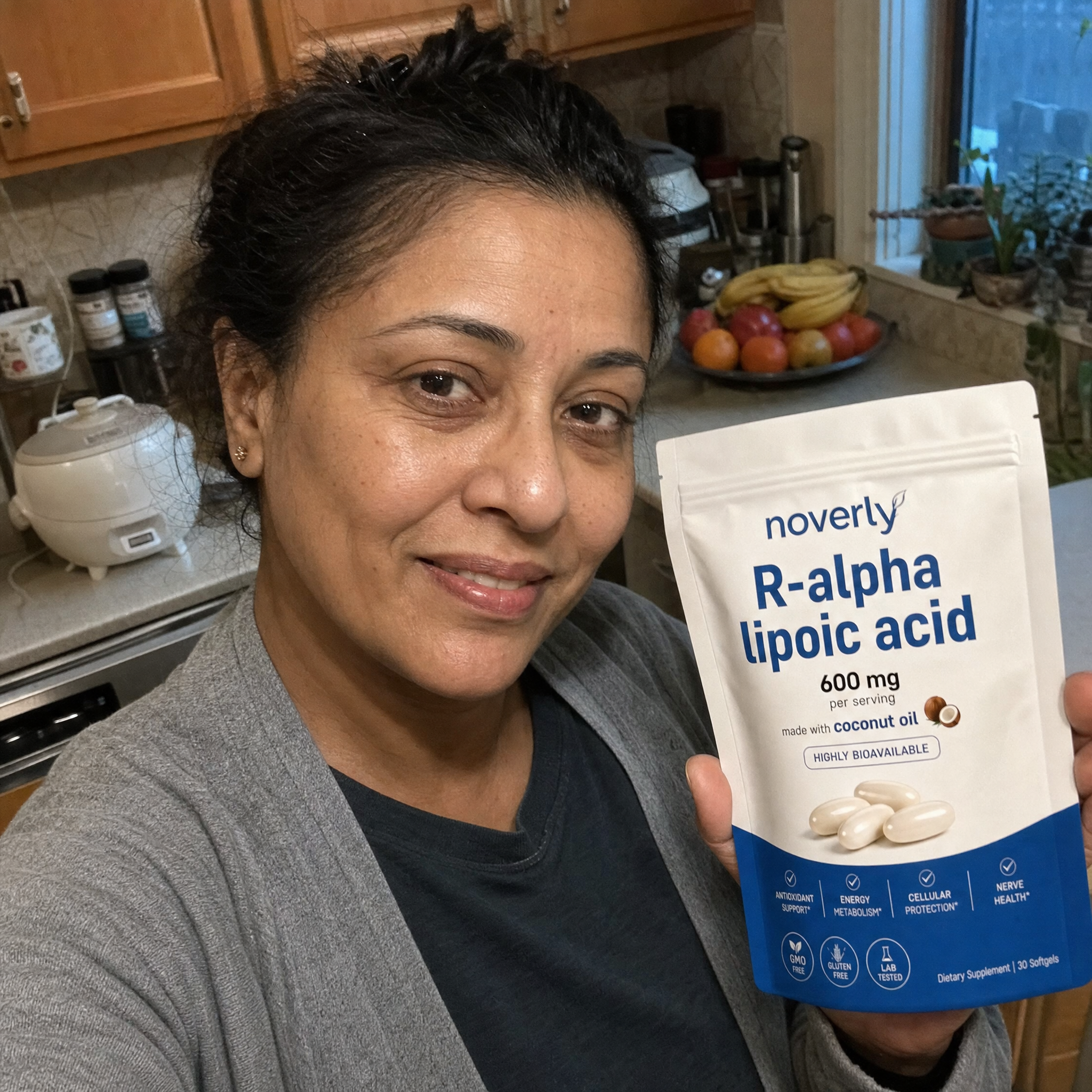
Gestational diabetes twenty years ago and I’ve watched it creep every year since. 112 down to 96 in about seven weeks. My husband is on it now too.
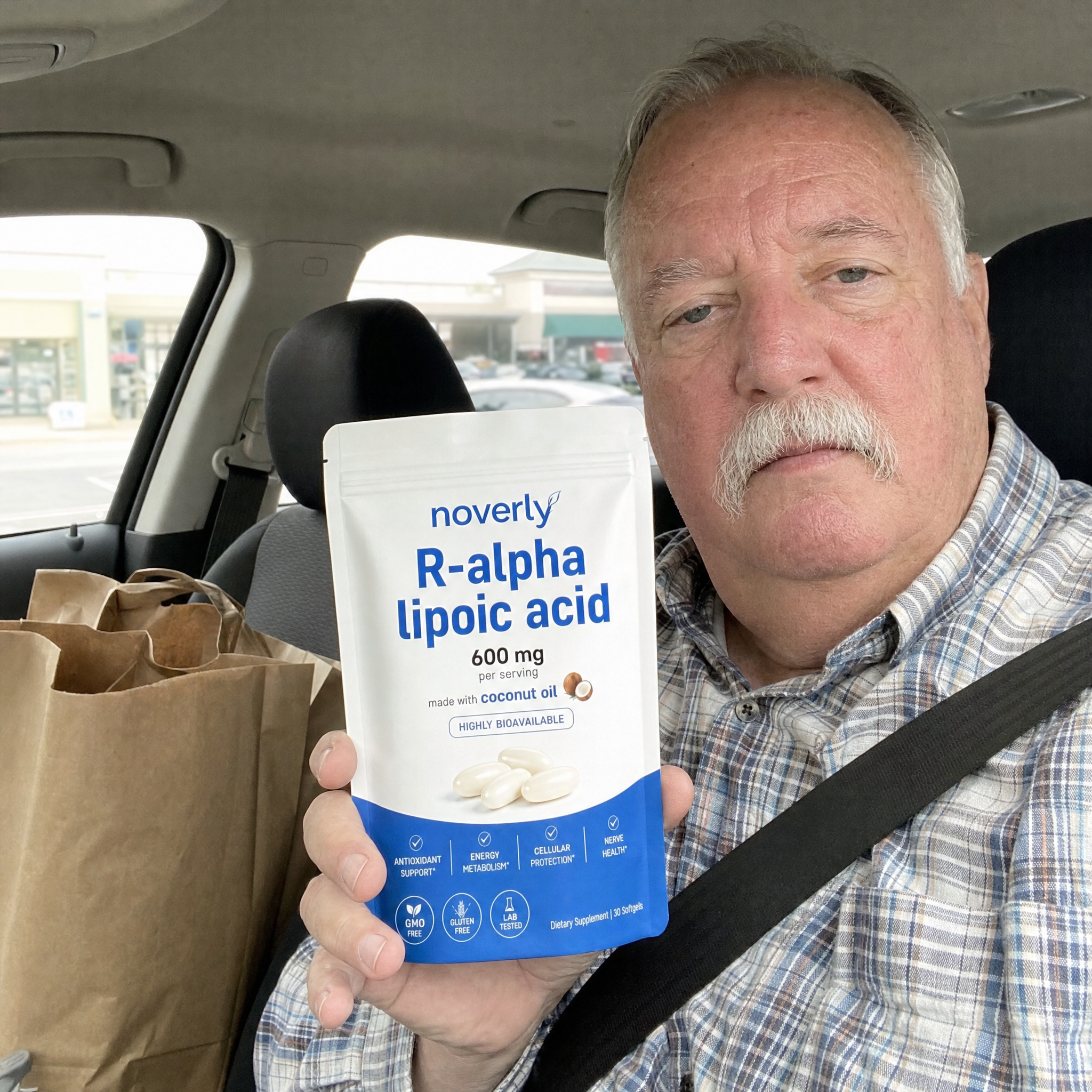
I bought it because the label actually says R-form. That’s the whole reason. Everything else on that shelf just says “alpha lipoic acid” and hopes you don’t turn it over.
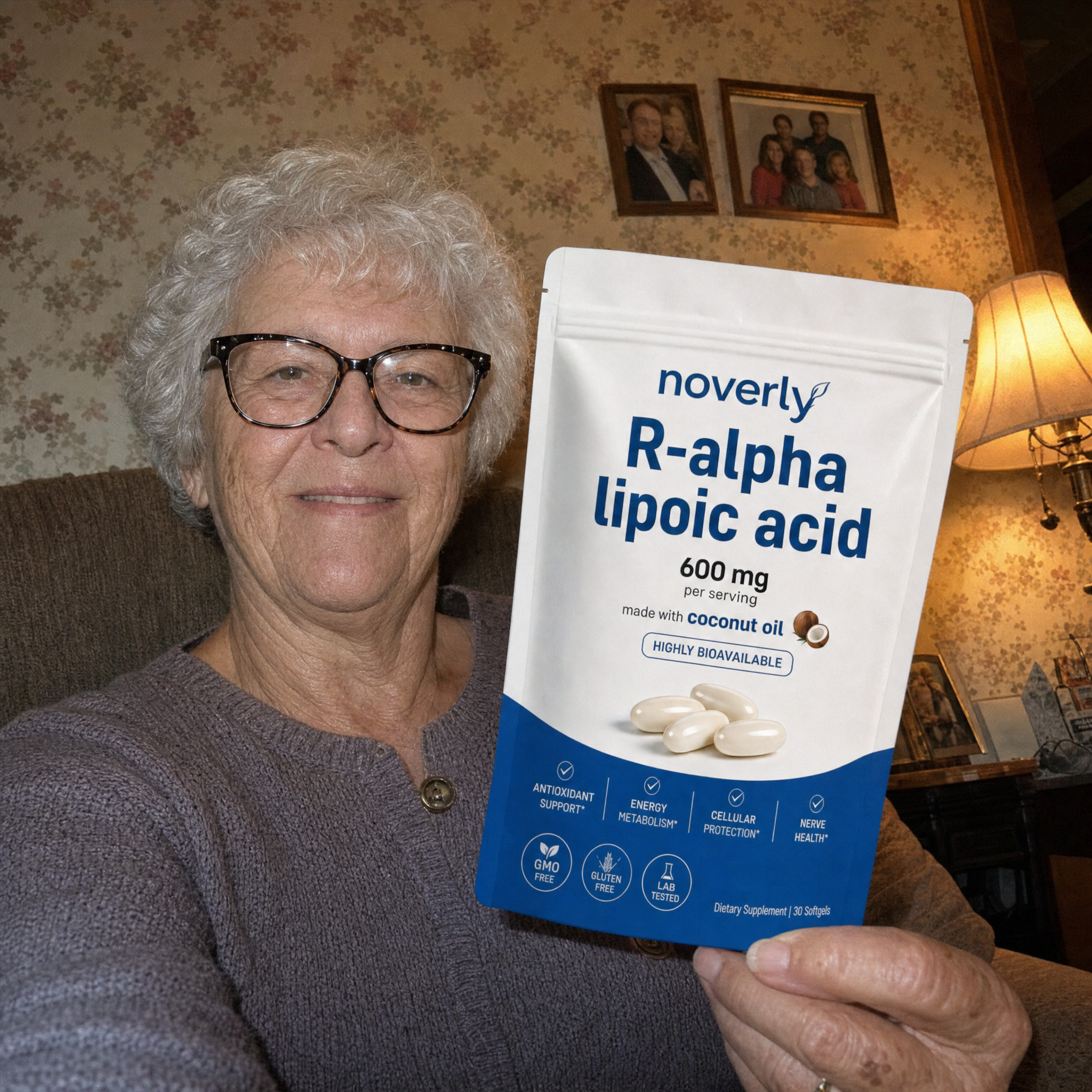
Started in June. It is not overnight — it took me about nine weeks to see a real change. But 121 came down to 107, and my doctor has stopped bringing up the pill.
← swipe →
Reason #8: 90 Days — One Full A1C Cycle — Or Every Penny Back
guarantee
We stand behind every pouch.
If your fasting number hasn’t moved in 90 days, you get a full refund. No questions, no forms, empty pouch included.
Final Call: Your Next Draw Is Already On The Calendar

If it went 5.9, then 6.1, then 6.2 while you cut the carbs and walked after dinner. If the follow-up is already booked and you’re quietly planning the thirty-six-hour water fast to game it. If your doctor has said the word metformin out loud once already — you don’t need another quarter of guessing.
Join the prediabetics taking the pure R-form at the 600 mg the research landed on.
Click here to check availability
(Limited stock. It is not sold on the supplement aisle, and batches sell out.)
90-Day Guarantee — order with confidence.
 Harold M.
I have a shoebox of alpha lipoic acid bottles and not one of them says R-form anywhere. Turns out that was the whole problem. Started this in May at 118 fasting. Last week I was 99 three mornings in a row. A1C went 6.1 to 5.7. My wife thinks I changed my diet. I did not change my diet.
241 people found this helpful
 Deborah R.
Two years of “we’ll watch it” and then last visit it was “let’s talk about metformin next time.” I went home and started reading about isomers instead. Nine weeks on this and my fasting is averaging 101 instead of 114. She actually looked up from the screen. No stomach problems, no jitters, nothing.
167 people found this helpful
 Ray V.
Four stars and I’ll be honest about why. Nothing happened for the first month and I nearly quit. It was week seven before my mornings started reading under 110 consistently. Also 30 softgels is exactly 30 days, so if you miss the reorder you are out. It does work. Just do not expect a two-week miracle like some of these reviews.
318 people found this helpful
 Janet W.
Berberine wrecked me. Cramping, gas, and it plateaued after about six weeks anyway. This is one softgel with coffee and I forget I took it. Fasting was 113 when I started and it has been sitting at 97 to 102 for the last month. I take it alongside my statin with no issues, but I did tell my doctor first.
129 people found this helpful